

- P-ISSN 2671-8197
- E-ISSN 2733-936X
_한글.jpg)
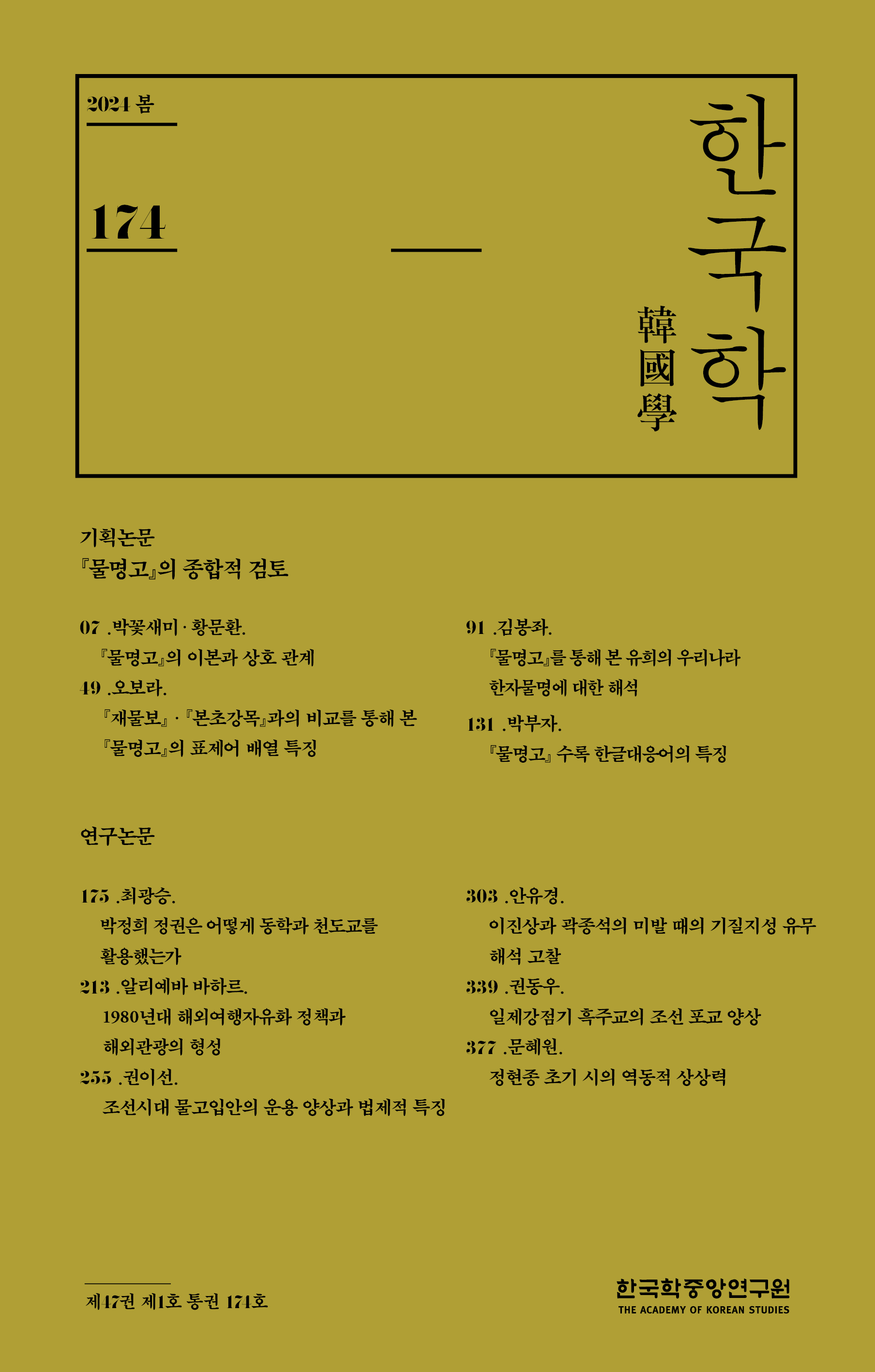
『물명고』의 한글대응어에 대한 국어학적 연구는 그간 언어 내적인 측면에서 음운론적, 형태론적 특징을 밝히고 어휘를 일람하는 데에 집중되어 왔으나 이러한 접근이 『물명고』에서 한글대응어를 제시함에 있어 관련된 다른 문헌과는 어떤 차이가 있는지 그 특징을 제대로 보여주기는 어려웠다. 이에 이 글에서 크게 按語와 관련된 특징, 분포와 관련된 특징, 항목 수와 관련된 특징으로 나누어 『물명고』에 수록된 한글대응어의 특징을 살펴본 것이다. 그 결과 『물명고』에서는 한자물명뿐 아니라 한글대응어에 대해서도 고증의 과정을 담은 按語를 베풀고 있음이 확인되었다. 기존 어휘집의 한글대응어에 대한 비판과 근거 제시, 새로운 대안이나 과제 제시가 유희의 ‘按語’에 고스란히 드러나 있는 것이다. 분포와 관련해서는 『재물보』 등의 물명서와 달리 상위표제어뿐 아니라 개별 하위어와 유의어에 대해서도 한글대응어를 제시했다. 분포와 관련된 이러한 특징은 항목 수와 관련된 특징에도 영향을 미쳐 『물명고』가 부류별 최다 한글대응어를 수록하고 있다는 특징을 보였다.
Korean linguistic research on vocabulary written as Korean old vernacular included in Mulmyeonggo(物名攷) has focused on revealing phonological and morphological characteristics and listing vocabulary from an internal aspect of the language. However, it is difficult to adequately show how this approach differs from other related materials in presenting vocabulary written as Korean old vernacular in Mulmyeonggo. Accordingly, in this paper, we considered the characteristics of vocabulary written as Korean old vernacular in Mulmyeonggo to reveal how it differs from other related materials. As a result of my research, Mulmyeonggo presents vocabulary written as Korean old vernacular based on thorough historical research; this explains the process of argument through criticism and presentation of evidence for vocabulary written as Korean old vernacular included in the existing lexicon and the presentation of new alternatives or tasks, which is apparent in the author’s own views(按語). Regarding distribution, vocabulary written as Korean old vernacular is presented in a very detailed manner, including both high-level entries and individual hyponyms. It is also presented for synonyms. These characteristics related to distribution also affected the features related to the number of vocabulary items. As a result, when examined by category, Mulmyeonggo was characterized by having the most vocabulary written as Korean old vernacular.



학술지 홈페이지 이용 환경은 크롬 브라우저 사용을 권장합니다.