

- P-ISSN 1225-0163
- E-ISSN 2288-8985



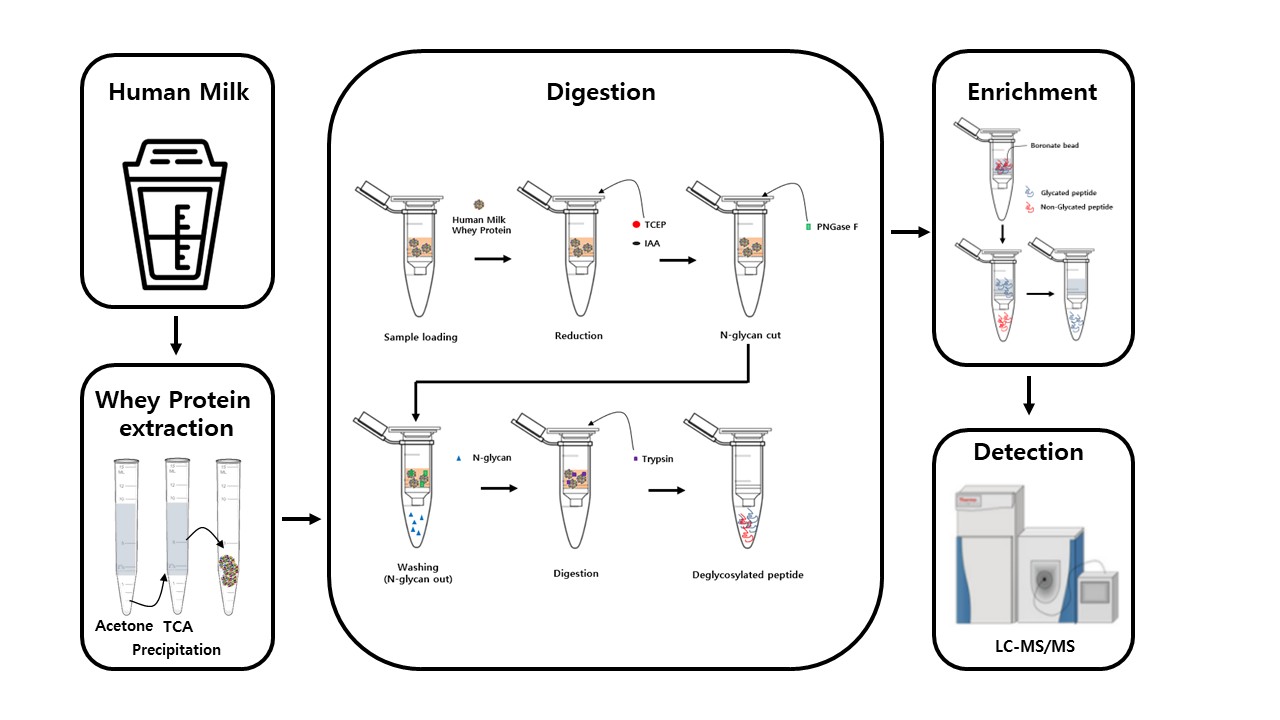
Many studies have shown that advanced glycation end-products (AGEs) and glycation adducts are significantly linked to aging and disease. Particularly, the level of glycation in human milk is important because the AGE intake is closely related to AGE levels in infants. In this study, we used human milk samples obtained from four primiparae and four multiparae. We isolated proteins using acetone and trichloroacetic acid (TCA) precipitation. A total of 67 glycated proteins and 122 glycated peptides was quantified; among them, 19 glycated peptides were differentially expressed. We confirmed that the degree of glycation differed according to fertility. The study provides a foundation for using proteomics to evaluate the mother's milk quality and link between maternal health and human milk quality.






학술지 홈페이지 이용 환경은 크롬 브라우저 사용을 권장합니다.