

- P-ISSN 1225-0163
- E-ISSN 2288-8985



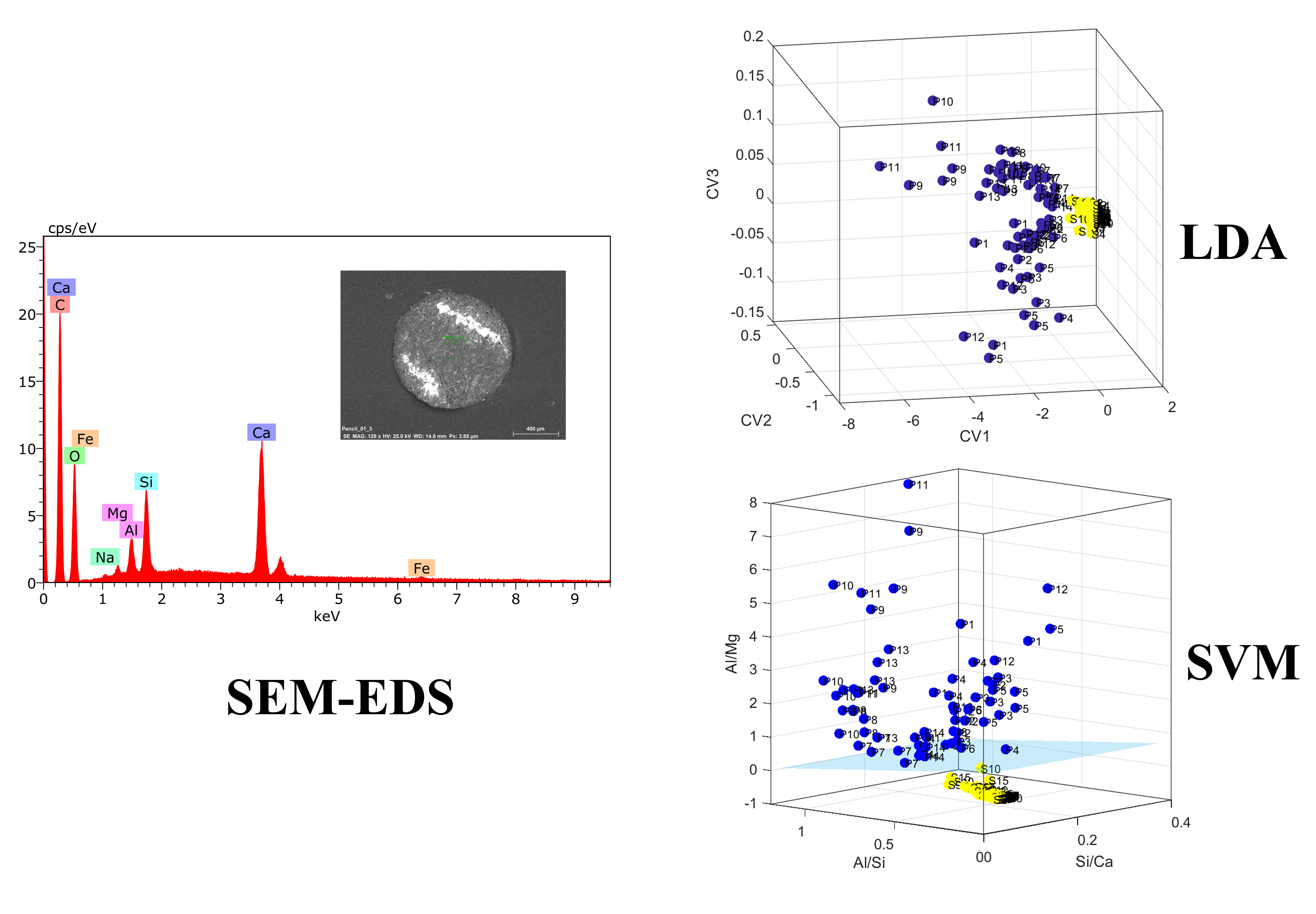
In forensic document examination, it is often necessary to determine whether a handwriting mark has been forged or altered by identifying whether it was written with a pencil or a mechanical pencil. Pencil and mechanical pencil leads are composed of graphite or activated carbon mixed with clay or resin, depending on the type of pencil. Particularly, the difference in the clay can be a good criteria for distinguishing between pencil leads and mechanical pencil leads. In this study, the surface of handwriting marks written with 14 types of pencils and 15 types of mechanical pencil leads was analysed using SEM-EDS. Clay is composed of minerals such as talc, pyrophyllite, kaolinite, smectite and illite, etc., with the primary elements being silicon (Si), aluminium (Al), magnesium (Mg), and oxygen (O). In pencil handwriting mark, the presence of clay resulted in an increasing trend of Mg < Al < Si elemental content, while in mechanical pencil handwriting mark, the weight % of Mg, Al, and Si were significantly lower, with Al being particularly minimal or absent. Additionally, carbon (C) from the pulp and calcium (Ca) from calcium carbonate filler were considered as background components due to the influence of the paper. Linear discriminant analysis (LDA) and support vector machine (SVM) were applied to the ratios of Al/Mg, Al/Si, Si/Ca, and Ca/C to classify the handwriting mark. This study provides a crucial method for distinguishing between pencil and mechanical pencil in handwriting mark, contributing to the verification of handwriting addition, forgery or alteration in the forensic document written by pencil-type instrument.






This website recommended the use the Chrome browser for journal website.