- P-ISSN 1225-0163
- E-ISSN 2288-8985



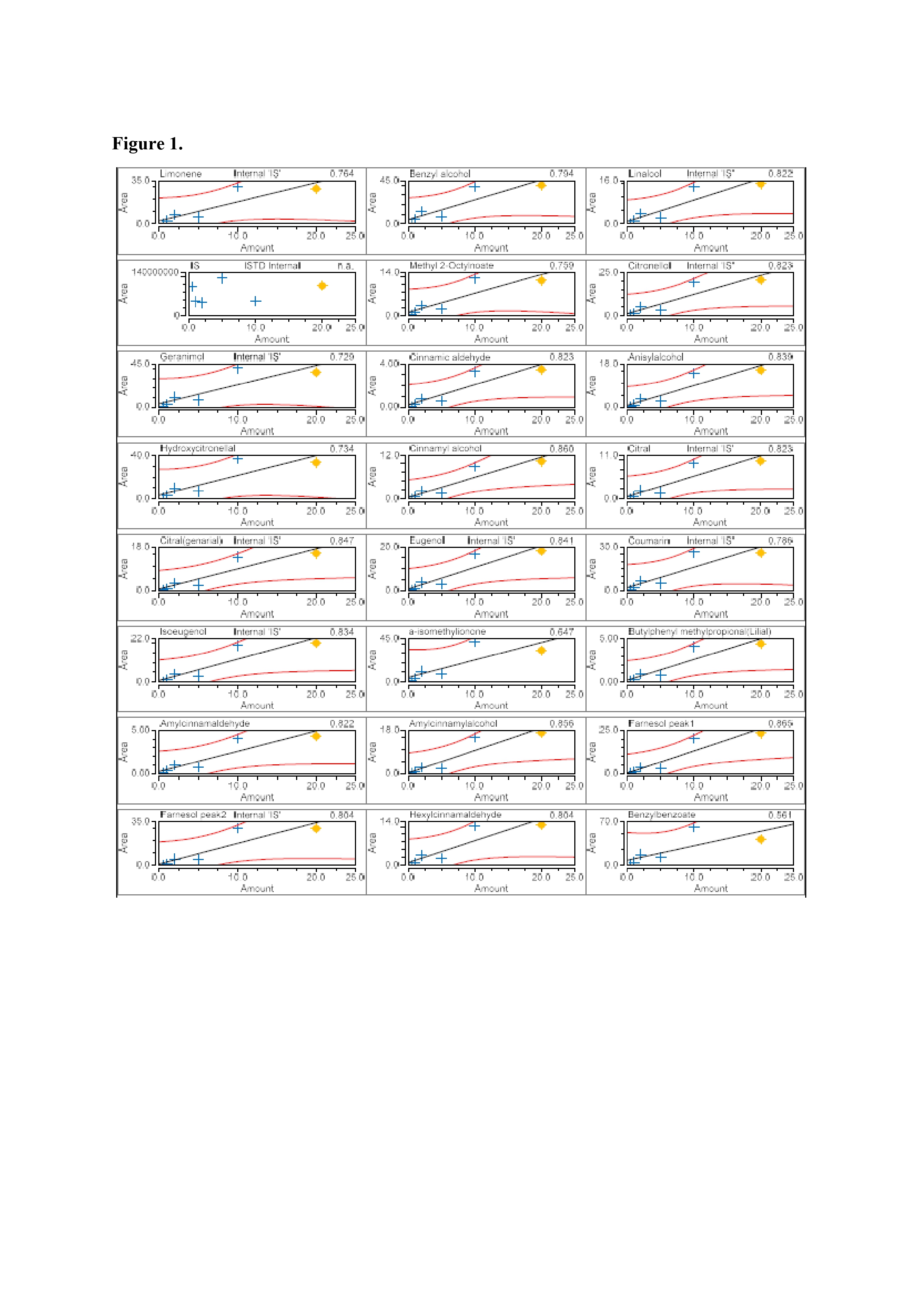
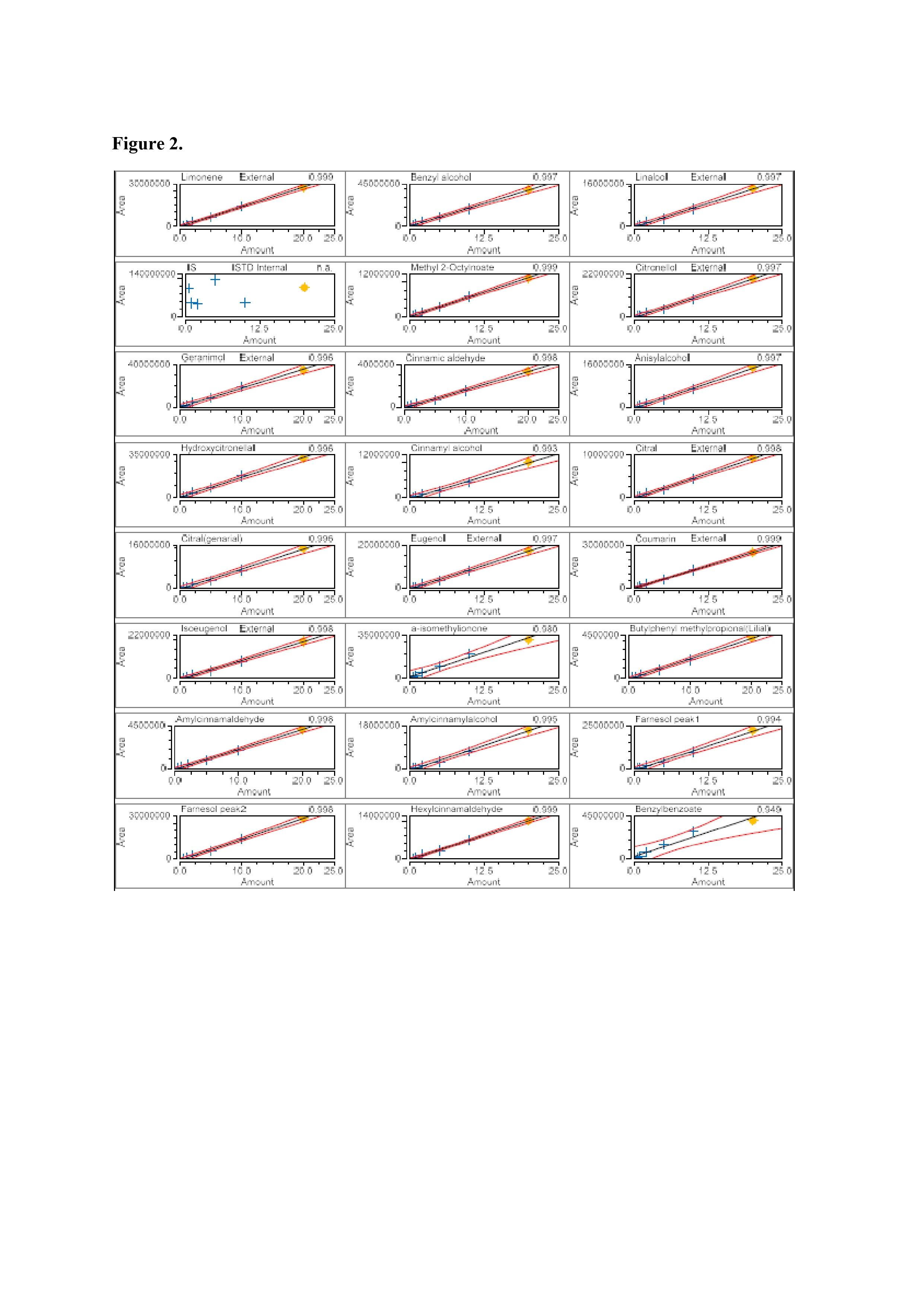
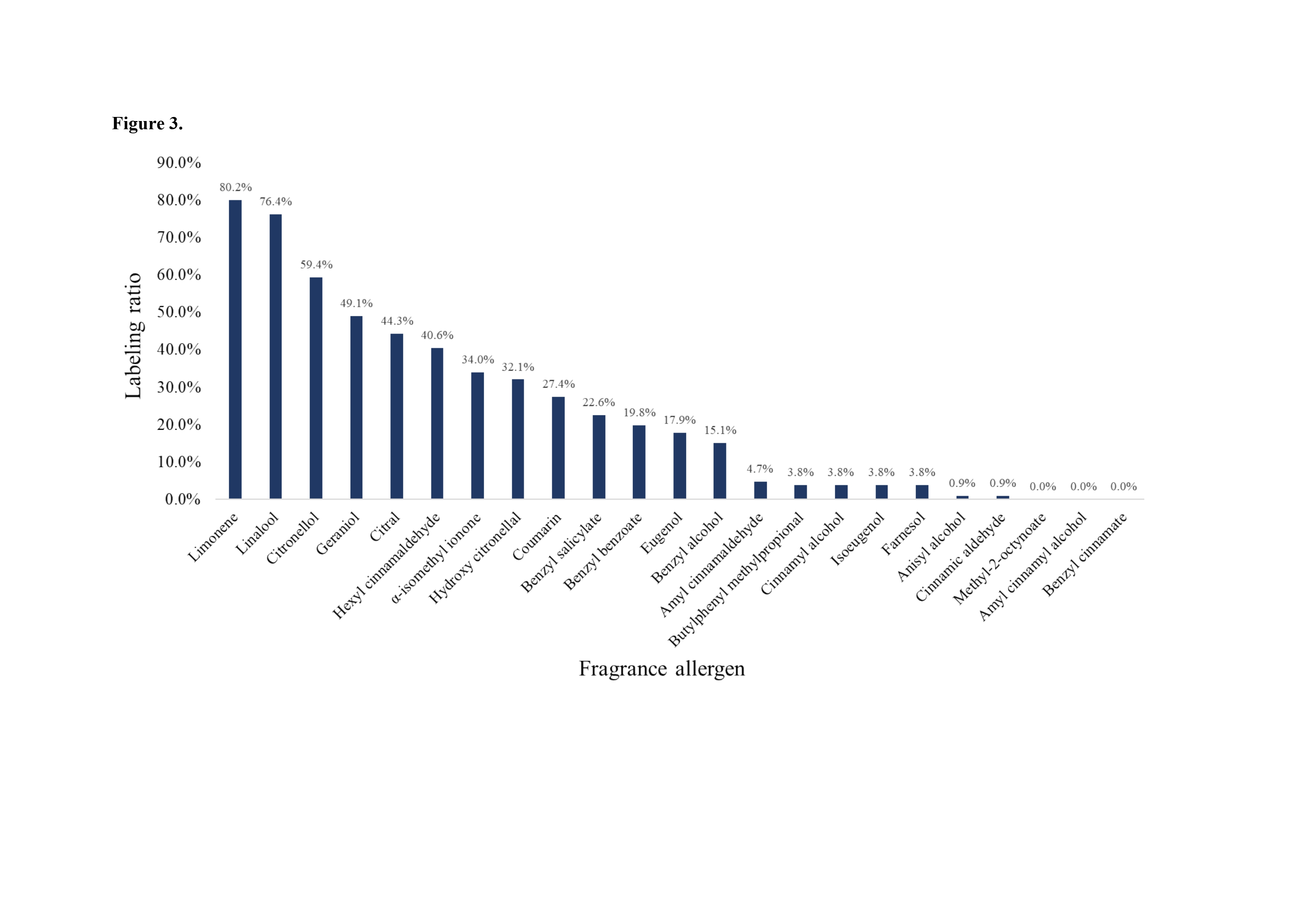
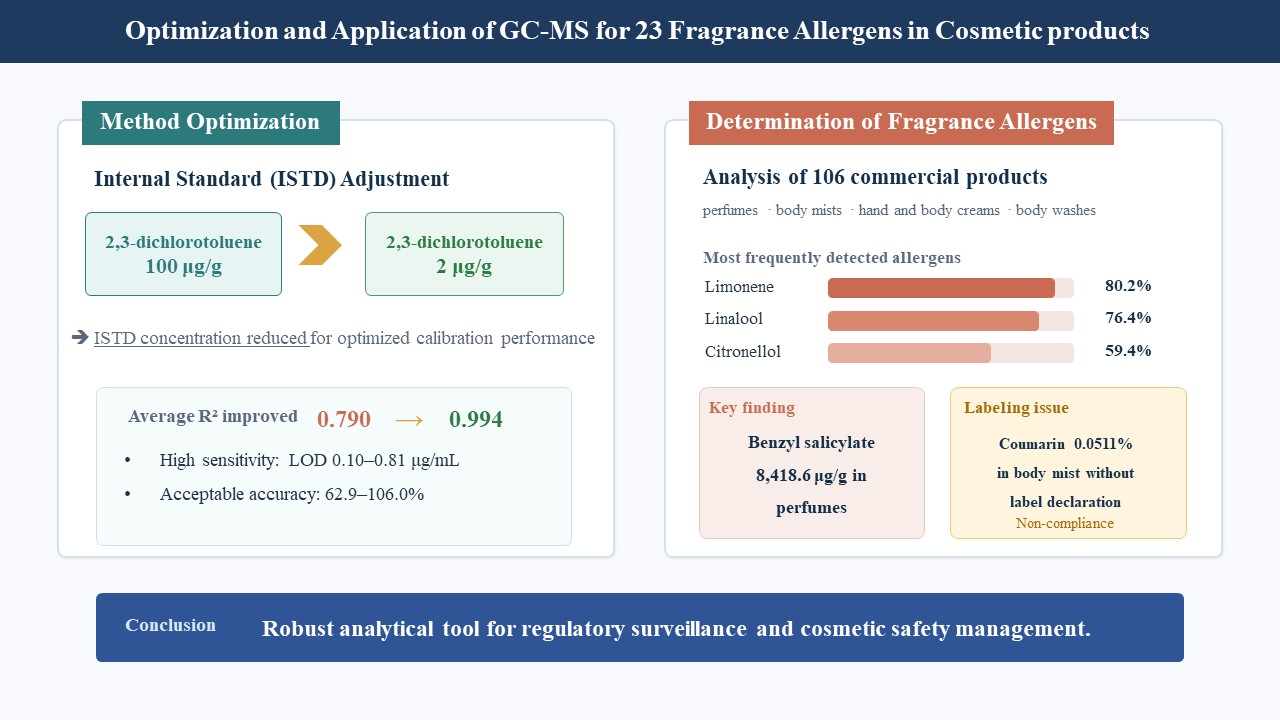
Fragrance allergens in cosmetics are major triggers for allergic contact dermatitis, highlighting the need for accurate labeling and effective regulatory monitoring. This study aimed to validate and optimize the Ministry of Food and Drug Safety guideline GC-MS analytical method for the quantitative determination of 23 fragrance allergens and to assess labeling compliance in 106 commercial cosmetic products, including perfumes, body mists, creams, and body washes. Method optimization revealed that the concentration of the internal standard (ISTD) significantly affected calibration linearity. Adjusting the concentration of 2,3-dichlorotoluene from 100 μg/g to 2 μg/g, corresponding to the analyte calibration range (0.5–20 μg/mL), improved the average coefficient of determination (R²) from 0.790 to 0.994. The optimized method showed excellent linearity (R² ≥ 0.987), high sensitivity (LOD: 0.05–0.81 μg/mL), and generally acceptable accuracy (84.7–109.6%). Based on the label declaration and GC-MS analysis, limonene, linalool, and citronellol were the most prevalent fragrance allergens, each identified in over 50% of the tested products. Benzyl salicylate showed the highest mean concentration in perfumes (8,418.6 μg/g). Notably, one body mist product contained coumarin at 510.9 μg/g (0.0511%) without label declaration, indicating non-compliance with labeling requirements. In conclusion, the optimized GC-MS method provides a robust and reliable analytical tool for regulatory surveillance and cosmetic quality control. These findings provide important empirical evidence to support cosmetic safety management and the prevention of fragrance allergen-related health risks.






학술지 홈페이지 이용 환경은 크롬 브라우저 사용을 권장합니다.