
- P-ISSN 1225-0163
- E-ISSN 2288-8985



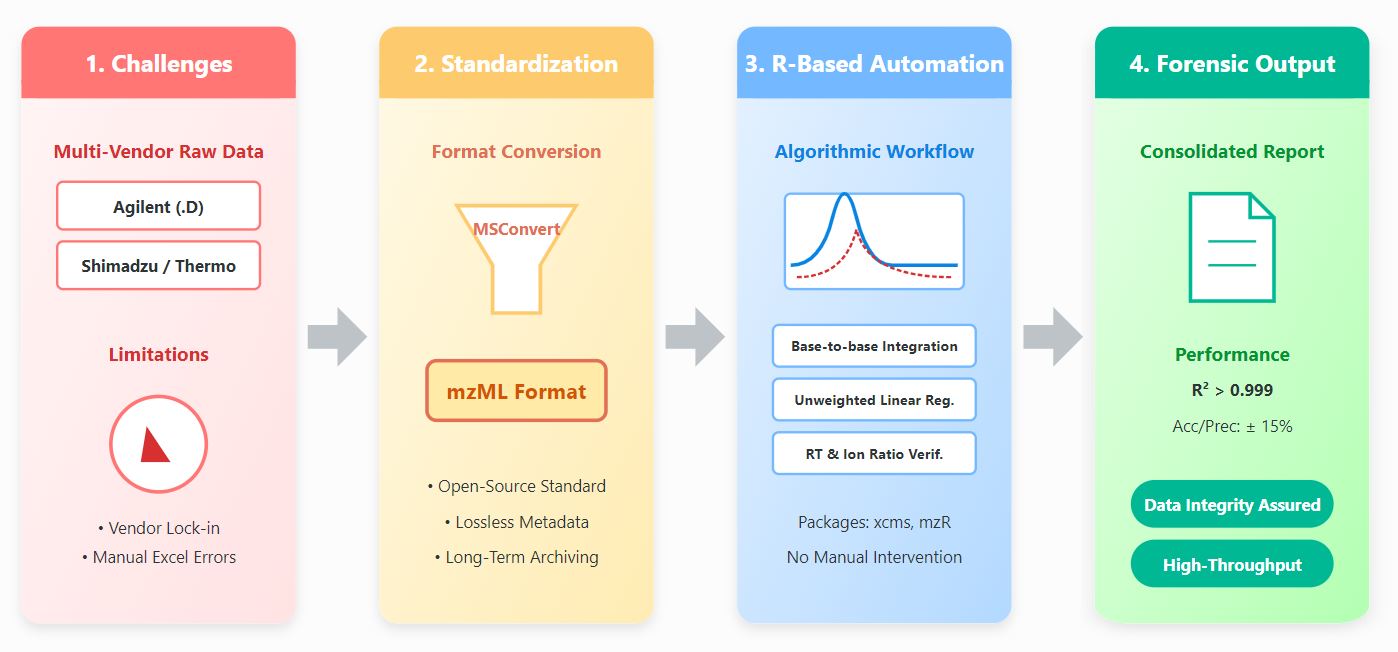
In forensic toxicology, the reliable quantitative confirmation of illicit drugs in hair is critical; however, conventional manual data evaluation using proprietary instrument software introduces operational bottlenecks and risks of human error. This study developed a fully automated, vendor-neutral data processing workflow for the quantitative analysis of methamphetamine, amphetamine, 3,4-methylenedioxymethamphetamine, and 3,4-methylenedioxyamphetamine by gas chromatography–mass spectrometry (GC-MS). To eliminate vendor lock-in, proprietary raw data from multiple platforms were standardized into the open-source mzML format. A customized R script was subsequently employed to perform automated base-to-base peak integration, unweighted linear regression, and concentration back-calculation without manual intervention. The automated evaluation demonstrated robust analytical performance, yielding excellent linearity (R2 > 0.999) over a dynamic range of 0.1–5.0 ng/mg. The automatically calculated accuracies and precisions satisfied forensic bioanalytical acceptance criteria (±15%, and ±20% at the lower limit of quantification). Application to authentic hair samples confirmed that the R script successfully enforced definitive identification parameters, including retention time consistency (±2%) and quantifier-to-qualifier ion ratios (±20%), and generated consolidated quantitative reports. By systematically replacing manual spreadsheet manipulations, this open-source workflow enhances analytical throughput, ensures rigorous data integrity, and facilitates long-term data archiving, establishing a scalable foundation for broader multi-vendor forensic applications.






This website recommended the use the Chrome browser for journal website.