

Korea Journal
- P-ISSN0023-3900
- E-ISSN2733-9343
- A&HCI, SCOPUS, KCI
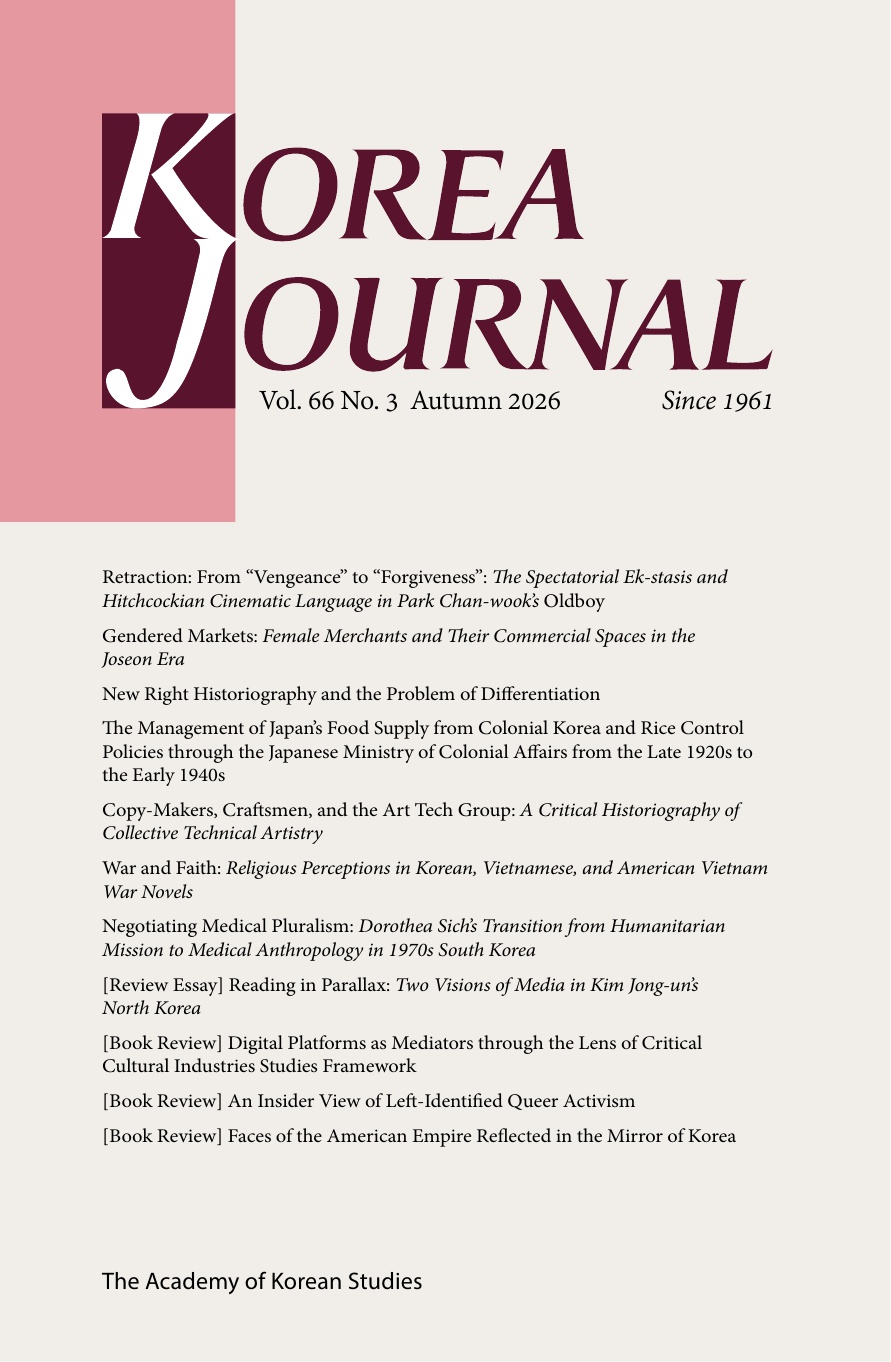
Negotiating Medical Pluralism: Dorothea Sich’s Transition from Humanitarian Mission to Medical Anthropology in 1970s South Korea
Negotiating Medical Pluralism: Dorothea Sich’s Transition from Humanitarian Mission to Medical Anthropology in 1970s South Korea

- peace509@korea.ac.kr
ALTENHOFENMax(Max ALTENHOFEN) (성균관대학교)
- maksu@skku.edu

초록
This article revisits the history of rural community health projects in 1970s South Korea through the biography of Dorothea Sich (1933–2017), a German physician whose career trajectory led her from medical mission work to preventive medicine and ultimately to medical anthropology. The study examines Sich’s engagement with community-based health initiatives in rural Korea and situates her work within the broader context of international health and development. By tracing Sich’s shifting roles—from missionary physician to public health expert and anthropologist—this article highlights how cultural encounters, medical pluralism, and development agendas intersected in Korea’s rural health programs. Through this biographical lens, the study not only sheds new light on the transnational dimensions of Korea’s community health history but also demonstrates how individual actors contributed to shaping both local health practices and the emerging field of medical anthropology.
- keywords
- Dorothea Sich, rural health, community health project, primary health care, medical pluralism, medical anthropology, international
Abstract
This article revisits the history of rural community health projects in 1970s South Korea through the biography of Dorothea Sich (1933–2017), a German physician whose career trajectory led her from medical mission work to preventive medicine and ultimately to medical anthropology. The study examines Sich’s engagement with community-based health initiatives in rural Korea and situates her work within the broader context of international health and development. By tracing Sich’s shifting roles—from missionary physician to public health expert and anthropologist—this article highlights how cultural encounters, medical pluralism, and development agendas intersected in Korea’s rural health programs. Through this biographical lens, the study not only sheds new light on the transnational dimensions of Korea’s community health history but also demonstrates how individual actors contributed to shaping both local health practices and the emerging field of medical anthropology.
- keywords
- Dorothea Sich, rural health, community health project, primary health care, medical pluralism, medical anthropology, international
- 투고일Received
- 2025-08-31
- 수정일Revised
- 2026-01-18
- 게재확정일Accepted
- 2026-01-18
- 출판일Published
- 2026-09-30
- 다운로드 수
- 조회수
- 0KCI 피인용수
- 0WOS 피인용수