

- P-ISSN 1225-0163
- E-ISSN 2288-8985



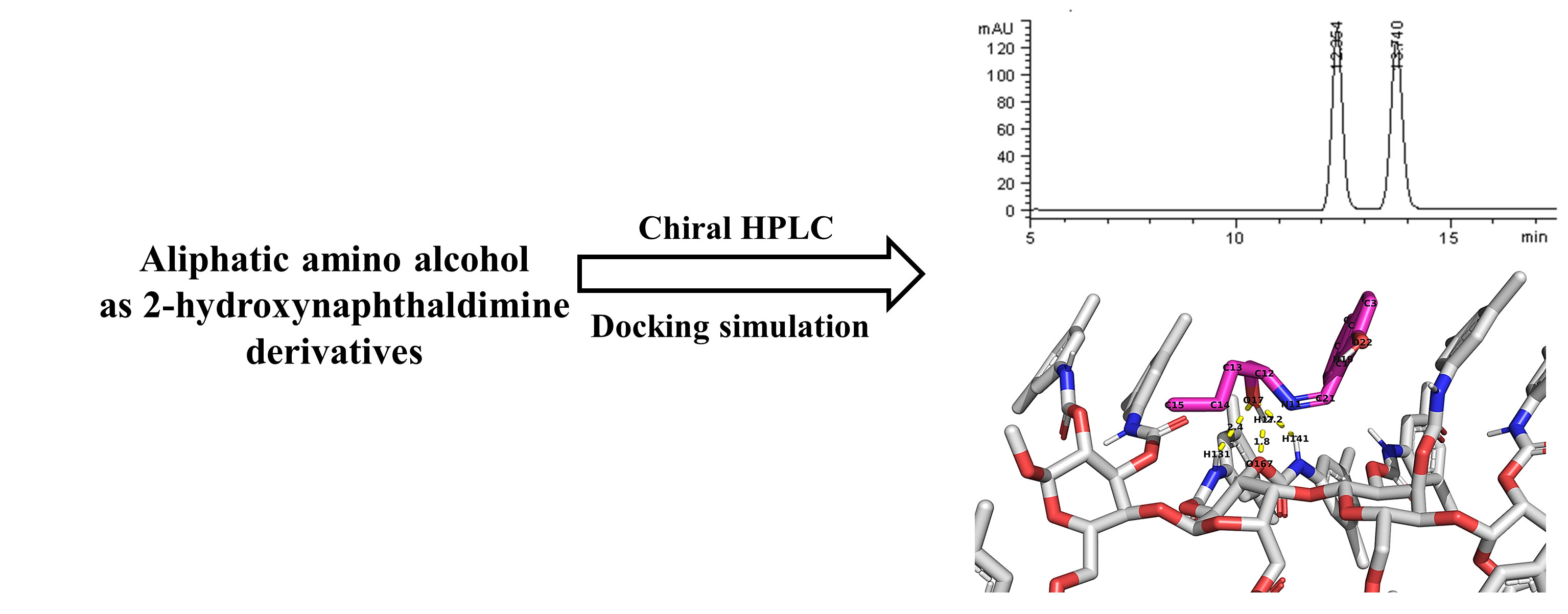
This study describes the liquid chromatographic enantiomer separation of three typical chiral amines (α-methylbenzylamine, 2-amino-4-methyl-1-pentanol, and 1-methylheptylamine) as 2-hydroxynaphthaldimine derivatives using six amylose trisphenylcarbamates derived chiral stationary phases (CSPs). It was observed that the structural nature of three chiral amines and the structures of amylose chiral selectors can affect their chiral recognition ability. Among the three analytes as 2-hydroxynaphthaldimine derivatives, in general, the greatest enantioselectivities of aromatic amine analyte (α-methylbenzylamine) were achieved on amylose trisphenylcarbamate derived CSPs and were followed by amino alcohol analyte (2-amino-4-methyl-1-pentanol), and aliphatic amine analyte (1-methylheptylamine). Also, the enantiodiscrimination abilities obtained on the two CSPs, Chiralpak ID and Chiralpak IF, were selectively higher than the other four amylose trisphenylcarbamate derived CSPs for the studied analytes. The underlying chiral recognition mechanism between 2-amino-4-methyl-1-pentanol as 2-hydroxynaphthaldimine derivatives and amylose tris(3,5-dimethylphenylcarbamate) chiral selector of Chiralpak AD-H and Lux Amylose-1 was elucidated by molecular docking study, and it was observed that the intermolecular hydrogen bonding interactions by hydroxyl moiety on the amino alcohol analyte as 2-hydroxynaphthaldimine derivatives were the main interactive forces driving the chiral separation. The obtained binding energies between 2-amino-4-methyl-1-pentanol analyte as 2-hydroxynaphthaldimine derivative and amylose tris(3,5-dimethylphenylcarbamate) chiral selector were in agreement with the experimentally determined enantioseparation and elution order by chiral HPLC.






학술지 홈페이지 이용 환경은 크롬 브라우저 사용을 권장합니다.