
- P-ISSN 1225-0163
- E-ISSN 2288-8985



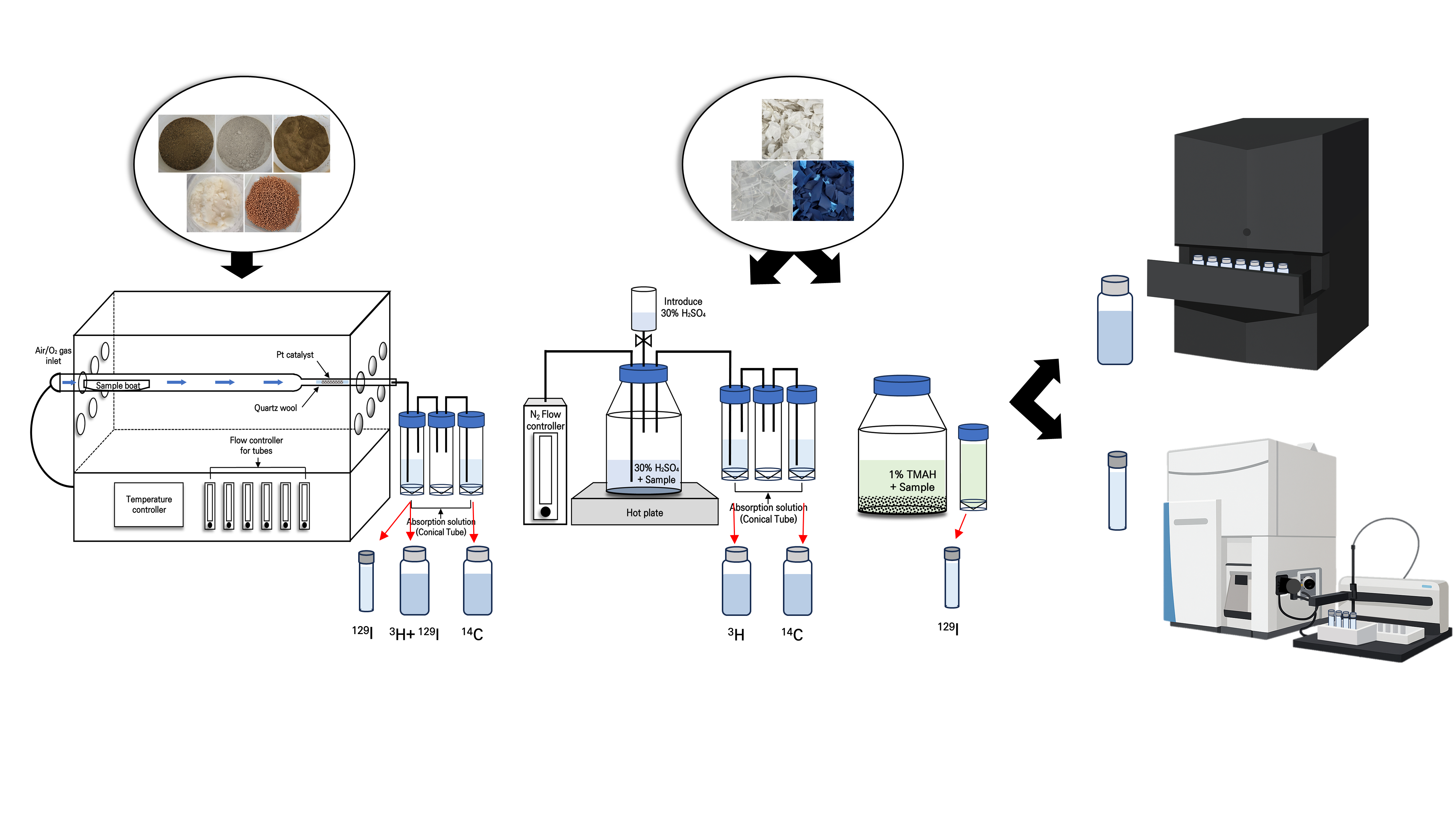
Quantitative analysis of radioactive nuclides is essential for the disposal of radioactive waste generated during the operation and decommissioning of nuclear facilities. Among these, tritium (³H), carbon-14 (¹⁴C), and iodine-129 (¹²⁹I) are representative target volatile nuclides requiring strict management due to their significance in radioactive waste handling. This study established optimal conditions for simultaneous separation and quantification of ³H, ¹⁴C, and ¹²⁹I in various waste matrices using high-temperature thermal decomposition and wet digestion methods. The pretreatment conditions were optimized by comparing the recovery rates of ³H, ¹⁴C, and ¹²⁹I under varying temperature and flow rate conditions during high-temperature decomposition. Additionally, selective application of liquid scintillation counting (LSC) and inductively coupled plasma mass spectrometry (ICP-MS) was proposed for precise measurement of the target nuclides. The established pretreatment methods (high-temperature decomposition and wet digestion) and measurement techniques (LSC and ICP-MS) were applied to various waste samples, including soil, concrete, sludge, resin, metal, plastic, rubber, and paper, to evaluate the effectiveness of the methods.






This website recommended the use the Chrome browser for journal website.