
- P-ISSN 1225-0163
- E-ISSN 2288-8985



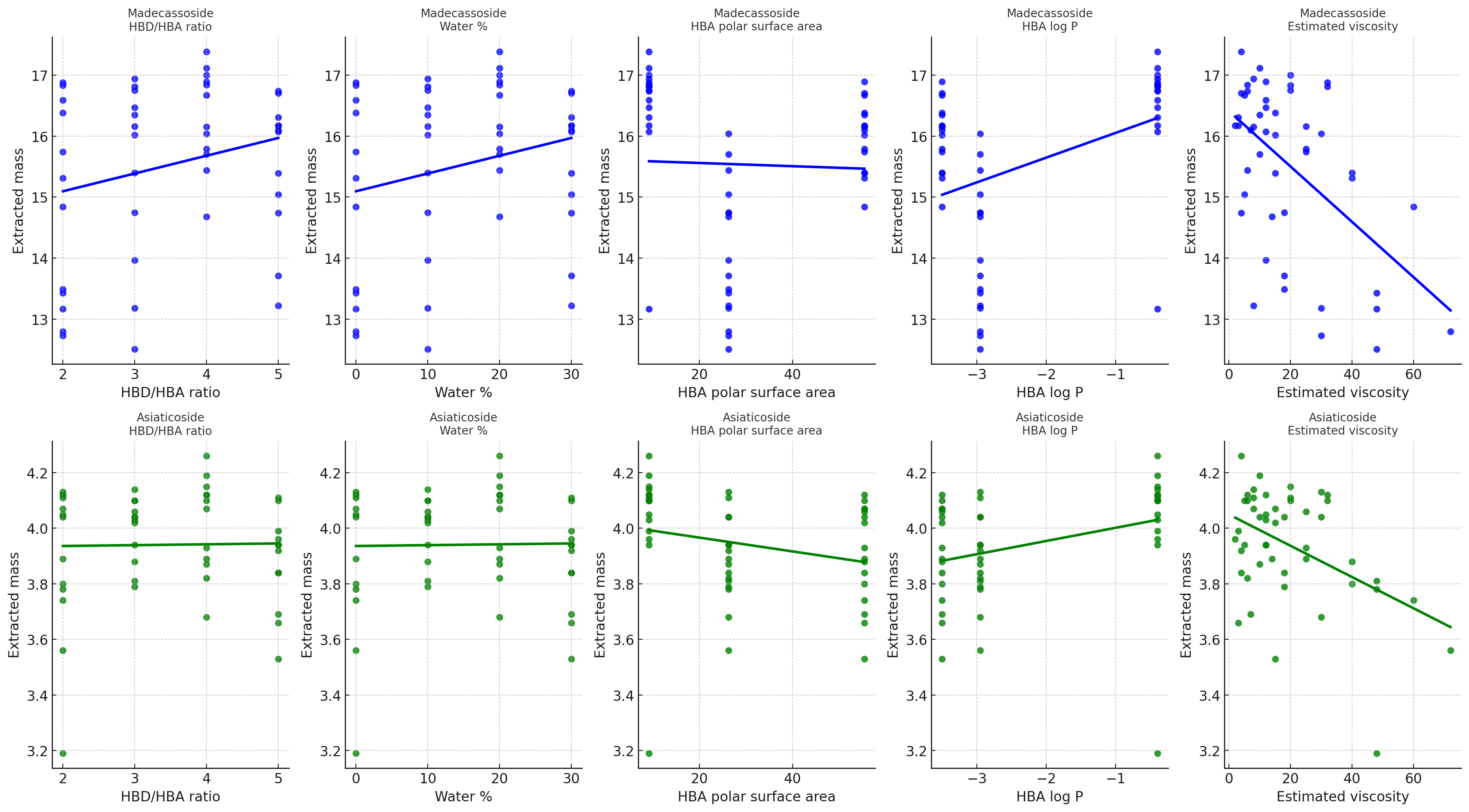
This study investigated the effects of hydrogen-bond acceptor (HBA) structure, hydrogen-bond donor (HBD)/HBA ratio, and water content on the extraction efficiency of asiaticoside and madecassoside from Centella asiatica using deep eutectic solvents (DESs). Three quaternary ammonium HBAs—choline chloride (ChCl), acetylcholine chloride (AChCl), and chlorocholine chloride (CCC)—were combined with ethylene glycol (EG) as HBD. Under 20 % water, asiaticoside showed little variation among DESs, while the more polar madecassoside exhibited distinct trends depending on HBA structure. CCC-DES achieved the highest extraction yield (17.38 ng/mg) due to weakened hydrogen bonding and lower viscosity, whereas AChCl-DES, with an ester group (−O−COCH3), showed reduced efficiency from increased viscosity and restricted diffusion. Increasing HBD/HBA ratio and moderate water addition enhanced extraction by reducing viscosity; however, excessive water (>30 %) disrupted the DES network. EG acted as an internal factor maintaining structural integrity, while water functioned as an external factor, promoting diffusivity. These results highlight that HBA structure and DES composition cooperatively determine physicochemical behavior and extraction efficiency, providing insights for designing eco-friendly solvents for natural product extraction.






This website recommended the use the Chrome browser for journal website.