- ENGLISH
- P-ISSN1226-6396
- E-ISSN2234-4942
- KCI

24권 spc1호
초록
Abstract
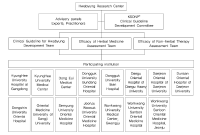
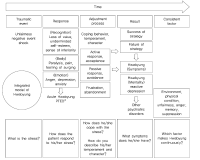
Objectives : Hwabyung Research Center of The Korean Society Of Oriental Neuropsychiatry has attempted to develop 'Clinical Guidelines for the Treatment of Hwabyung' based on the clinical study on the theory of oriental medicine and phenomenological approach. The purpose of this guideline is to establish the basic clinical principles and improve the clinical convenience. Methods : Hwabyung Research Center constructed a committee of experts and advisory group. We extracted the core questions, collected the existing data and evaluated them. Simultaneously, we conducted studies on the major topics. Results : We selected and made suitable tools for the assessment and evaluation. We discovered evidences from clinical studies and developed the standard clinical principles. Conclusions : 'Clinical Guidelines for the Treatment of Hwabyung' is expected to be useful at the primary medical clinics of oriental medicine.
초록
Abstract
Objectives : The Hwabyung Research Center of The Korean Society Of Oriental Neuropsychiatry attempted to produce clinical guidelines for doctors of Korean medicine for the treatment of Hwabyung. Methods : A standard guideline development process was followed. Relevant literature was identified by a review of bibliographies. The operational criteria were used to rate the quality of scientific evidence, and the line of treatment recommendations included a consensus clinical opinion. This section of "the status of Hwabyung in Korea" is 2 out of 5 articles drafted and reviewed by clinicians. Results : Hwabyung is changed depending on the time and have a risk of relapse. Like the previous studies, Female and lower socio-economic and educational level people suffers Hwabyung frequently. But recently number of Male Hwabyung patients increases. Recovery of Hwabyung is involved in depression, anxiety, stress. Hwabyung is related to Major depressive disorder, generalized anxiety disorder, somatoform disorder and diseases of the digestive system. Conclusions : This study was observed for the progression of Hwabyung. Hwabyung is a long-term disease associated with depression, anxiety and stress. Hwabyung is accompanied by physical and psychological symptoms and degrades the quality of life.
초록
Abstract
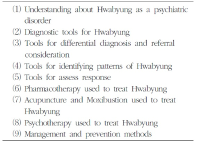
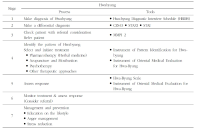
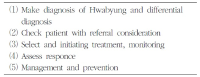
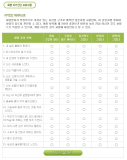
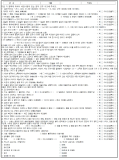
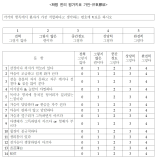
Objectives : The purpose of this guideline is to show the evidence-based guidelines of diagnosis and evaluation of Hwabyung by the synthesis and organization of existing research contents. Methods : We investigated the existing research on the concept of Hwabyung. Further, we investigated the diagnostic tools, self-diagnostic method, symptoms assessment tools, oriental medical diagnostic methods, treatment evaluation tools and other testing methods of Hwabyung. Results : There was a Hwabyung diagnostic interview schedule (HIBDS) in the standardized measure for the diagnosis of Hwabyung. In the symptoms assessment tools of Hwabyung, there was a self-report measurement tool of Hwabyung and measurement tool of Hwabyung to be evaluated by the interviewer. In the oriental medical diagnostic method, there was an instrument of pattern identification for Hwabyung. In the treatment assessment tool, there was an instrument of oriental medical evaluation for Hwabyung. In addition, MMPI, SCL-90R, Zung's self-rating anxiety scale (SAS), Zung's self-rating depression scale (SDS), State-Trait Anger Expression Inventory (STAXI) and etc. can be used for the diagnosis and assessment of Hwabyung. Conclusions : We expect 'Clinical Guidelines for the Treatment of Hwabyung' to be useful for the diagnosis and assessment of Hwabyung.
초록
Abstract
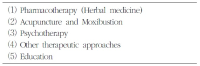
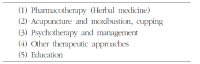
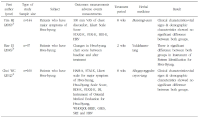
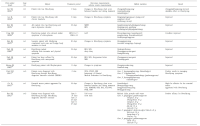
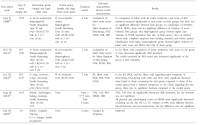
Objectives : The Hwabyung Research Center of The Korean Society Of Oriental Neuropsychiatry has attempted to develop the 'Clinical Guidelines for Hwabyung'. Methods : The Hwabyung Research Center constructed a committee of experts and advisory group. Relevant literature was collected and evaluated in order to find out effective Pharmacotherapy (Herbal medicine), acupuncture and moxibustion, and cupping of Hwabyung. Results : We found some evidences that proved the effectiveness of Pharmacotherapy (Herbal medicine), acupuncture and moxibustion, and cupping in the treatment of Hwabyung. 1) We recommend Pharmacotherapy (Herbal medicine), acupuncture and moxibustion, cupping, psychotherapy and management, other therapeutic approaches and education for Hwabyung. 2) Pharmacotherapy (Herbal medicine) should be determined according to the pattern identification of Korean medicine. Further, the prescription should be cost-effective, safe and have no side effects. Also, the interaction between Herbal and Western drugs should be considered carefully. 3) There are general acupuncture, scalp acupuncture, Pharmacopuncture, Sa-am acupuncture as well as acupuncture treatments for Hwabyung. 4) Moxibustion and cupping are useful, relieving various somatic symptoms of Hwabyung. Conclusions : Pharmacotherapy (Herbal medicine), Acupuncture and Moxibustion, Cupping for Hwabyung were studied. We hope that the 'Clinical Guidelines for the Treatment of Hwabyung' are helpful for oriental medical doctors and patients.
초록
Abstract
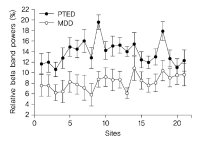
Objectives : The Hwabyung Research Center of The Korean Society Of Oriental Neuropsychiatry has attempted to develop the 'Clinical Guidelines for Hwabyung'. Methods : The Hwabyung Research Center constructed a committee of experts and advisory group. Relevant literature was collected and evaluated in order to discover effective oriental psychotherapy as well as the management of Hwabyung. Results : We found some evidences that proved the effectiveness of oriental psychotherapy in the treatment of Hwabyung. The principles of management were also reviewed. Conclusions : Psychotherapy and management for Hwabyung were studies. We hope that the 'Clinical Guidelines for the Treatment of Hwabyung' is helpful for both oriental medical doctors and patients.
초록
Abstract
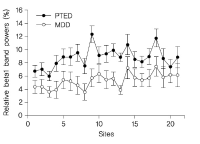
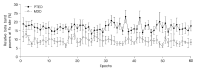
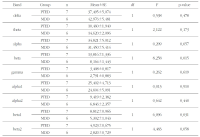
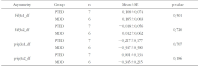
Objectives : We will discuss the differences on EEG results of Post-traumatic embitterment disorder (PTED) and Major depressive disorder (MDD). Methods : We measured EEG on 21 sites (Fp1, Fpz, Fp2, F7, F3, Fz, F4, F8, T3, C3, Cz, C4, T4, T5, P3, Pz, P4, T6, O1, Oz, O2) of PTED and MDD. Then, we compared the results. Results : There is a significant result of a beta band between PTED and MDD. Conclusions : We became aware of the differences on EEG results of PTED and MDD. This can be used as the basis of diagnosis.
초록
Abstract
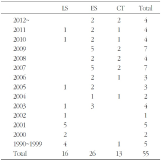
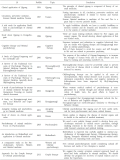
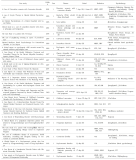
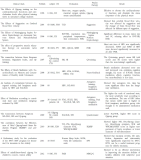
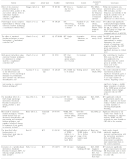
Objectives : We attempt to find out the present situation of a study regarding psychotherapy in Korean medicine through research journals in the JON (The Journal of Oriental Neuropsychiatry). Methods : We searched and read every JON from 1990 to 2012 and selected articles relating to Psychotherapy. We then analyzed the data and divided them into 3 categories: literature study, case studies and clinical trials. Results : 1) We found 16 literature articles, in which 6 compared Korean psychotherapy with that of the Western, 4 reinterpreted it focusing on traditional cases in Korean psychotherapy, 3 articles were on Qigong, 1 article was on Buddhism and another on Tao, and 1 article was with regards to dreams. 2) There were a total of 26 case reports about Korean psychotherapy. Among them, JiUnGoRoen had the most at 12; somatoform disorder was the most target disease in 9. 3) There were a total of 13 clinical trials on Korean psychotherapy. There were 4 trials on meditation, 6 on Qigong, each 1 of each for EFT, suggestion and autogenic relaxation. Conclusions : In spite of many resources in Korean psychotherapy, it was limited because it was not able to systematize clinically. Hence, we need to hand down and systematize Korean psychotherapy further.
초록
Abstract
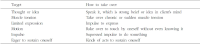
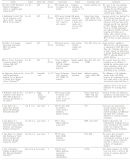
Objectives : The purpose of this study is to investigate the researches about regarding Emotional Freedom Technique (EFT) and to understand the trends of Meridian-based Psychotherapy. Methods : Every article relevant to EFT was obtained from 'Pubmed' and Korean journal databases. Keywords used for searching included 'EFT' and 'Emotional freedom technique'. Results : 1) 5 reviews, 11 randomized controlled trials, 3 controlled trials, 1 single group comparative study and 4 case studies were searched. 2) Anxiety disorders were most frequently studied with EFT. Other studies included insomnia, depression and pain symptoms. EFT interventions were attempted in many different protocols and assessed with various tools. 3) Review articles indicated that meridian-based psychotherapies, such as EFT, are based on the meridian theory of oriental medicine. They evaluate EFT positively for its effectiveness on psychiatric diseases. Conclusions : EFT is increasingly studied and used in clinical practice of various fields. Objective evaluation tools and standardized intervention protocols are needed for the development of a new guideline for EFT.
초록
Abstract
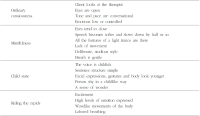
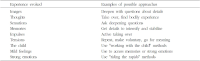
Objectives : Hakomi therapy is a body-centered psychotherapy established by Ron Kurtz in the 80s. Here we introduce the clinical possibilities of application in Korean medicine through Hakomi therapy. Methods : At first, we present the definition, basic principles, terms and outline of Hakomi therapy in reference to "Body-centered psychotherapy The Hakomi Method," published by Ron Kurtz. Then we study the clinical application of Hakomi therapy on Korean medicine. Results : There are many similarities between Hakomi and Korean medicine, such as Mind-Body holism, organicity through homeostasis of living things, non-violent attitude of therapist like Tao, and emphasis on breathing by corresponding with Nature. Also, there are similarities in methods, such as Ohjisangseung, Iijungbyunqi, and Qigong. Hence, Hakomi therapy can be useful in Korean psychotherapy. Conclusions : If we can graft Hakomi therapy onto Korean psychotherapy, it will be efficacious for Korean psychotherapy to be systematized.