


- P-ISSN1229-0661
- E-ISSN1229-0661
- KCI
논문 상세
- 2026 (32권)
- 2025 (31권)
- 2024 (30권)
- 2023 (29권)
- 2022 (28권)
- 2021 (27권)
- 2020 (26권)
- 2019 (25권)
- 2018 (24권)
- 2017 (23권)
- 2016 (22권)
- 2015 (21권)
- 2014 (20권)
- 2013 (19권)
- 2012 (18권)
- 2011 (17권)
- 2010 (16권)
- 2009 (15권)
- 2008 (14권)
- 2007 (13권)
- 2006 (12권)
- 2005 (11권)
- 2004 (10권)
- 2003 (9권)
- 2002 (8권)
- 2001 (7권)
- 2000 (6권)
- 1999 (5권)
- 1998 (4권)
- 1997 (3권)
- 1995 (2권)
- 1994 (1권)
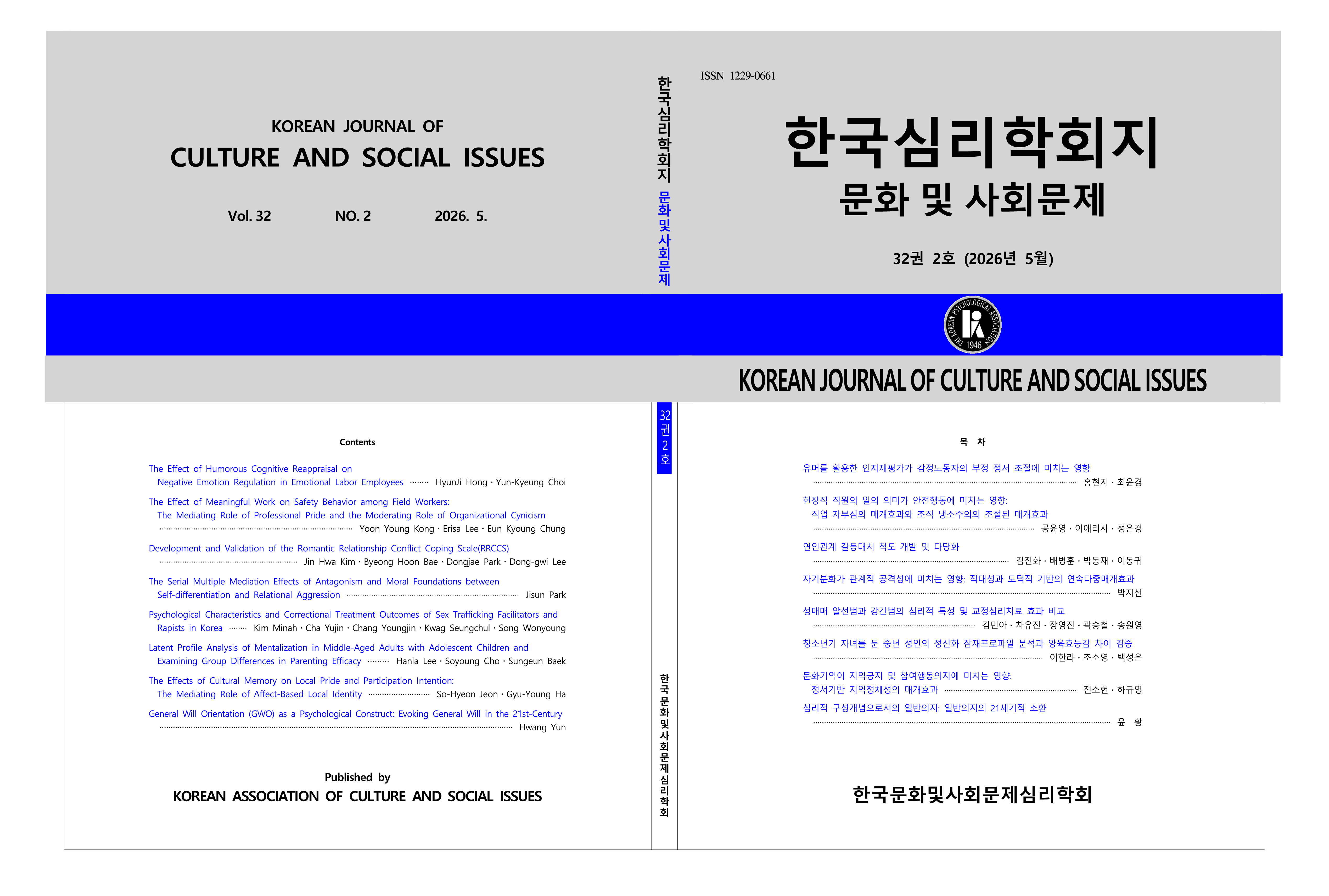
성매매 알선범과 강간범의 심리적 특성 및 교정심리치료 효과 비교
Psychological Characteristics and Correctional Treatment Outcomes of Sex Trafficking Facilitators and Rapists in Korea
차유진 (건양대학교)
장영진 (건양대학교)
곽승철 (한국청소년정책연구원)
송원영 (건양대학교)

초록
한국의 성매매 알선범과 강간범의 심리적 특성을 비교하고, 교정시설 심리치료의 효과성과 집단 간 치료 반응 차이와 재범 현황을 검토하였다. 연구 대상은 2015-2020년 전국 53개 교정시설 출소자 중 재범 자료가 확보된 16,378명을 대상으로 성매매 알선범 493명과 강간범 6,416명을 선별하였다. 인구통계 및 범죄 관련 특성, 정적 재범위험성, 인지․정서적 변인을 분석했으며, t-검정, 𝜒2검정, 다변량 분석, 반복측정 MANOVA를 실시하였다. 재범위험성은 알선범의 위험 수준이 강간범보다 높게 나타났다. 심리적 특성에서 알선범은 강간범에 비해 자아존중감, 분노표출, 충동성이 높았다. 반면 강간통념, 아동 성추행 신념, 고독감, 분노억제, 분노통제는 낮은 수준으로 나타났다. 치료 효과는 두 집단 모두 치료적 변화가 관찰되었으나, 알선범에서 감소폭이 작아 치료 반응이 상대적으로 제한적이었다. 실제 재범률도 알선범에서 성범죄 재범 비율이 높게 나타났다. 이는 동일한 성범죄자 범주에 포함되더라도 범죄를 유지시키는 기제와 치료 필요성이 서로 다를 수 있음을 시사한다. 강간범의 경우 정서적 결핍과 인지 왜곡이 주요 위험요인으로 작동하는 반면, 알선범은 경제적 이득과 조직적 통제 중심의 도구적 범행 구조가 더 중요할 가능성이 시사되었다. 따라서 성범죄자 치료를 단일 프로그램으로 적용하기보다는 RNR원칙에 따라 범죄 유형별 위험요인과 반응 특성을 반영한 차별화된 평가틀과 맞춤형 교정심리치료 프로그램 개발이 필요하다.
- keywords
- 성매매 알선범, 강간범, 심리적 특성, 교정심리치료, 재범
Abstract
This study compared the psychological characteristics of sex trafficking facilitators and rapists in Korea, and examined differences in treatment responses to correctional psychological programs and recidivism outcomes. The sample included 493 facilitators and 6,416 rapists selected from 16,378 individuals released from 53 correctional institutions between 2015 and 2020. Demographics and offense-related characteristics, static recidivism risk, and cognitive-emotional variables were analyzed using t-tests, 眒2 tests, multivariate analyses, and repeated-measures MANOVA. Facilitators showed higher recidivism risk levels than rapists. Psychologically, facilitators scored higher on self-esteem, anger expression, and impulsivity, while scoring lower on rape myth acceptance, child molestation beliefs, loneliness, anger suppression, and anger control. Although therapeutic change was observed in both groups following treatment, facilitators demonstrated smaller improvements across several variables, indicating relatively limited treatment responsiveness. Follow-up data also revealed higher rates of sexual reoffending among facilitators. These findings suggest that even within the same sexual offender category, the mechanisms sustaining criminal behavior and the nature of treatment needs may differ substantially. While emotional deficits and cognitive distortions appear to function as primary risk factors among rapists, facilitators’ offending may be more closely associated with economic motives and an instrumental offending structure centered on organized control. Accordingly, differentiated assessment frameworks and tailored correctional psychological treatment programs are needed based on offense-type-specific risk factors and responsivity characteristics in accordance with the Risk-Need-Responsivity (RNR) principle.
- keywords
- sex trafficking facilitators, rapists, correctional psychological treatment, psychological characteristics, recidivism
- 투고일Received
- 2026-03-14
- 수정일Revised
- 2026-04-20
- 게재확정일Accepted
- 2026-05-07
- 출판일Published
- 2026-05-31
- 다운로드 수
- 조회수
- 0KCI 피인용수
- 0WOS 피인용수