

- P-ISSN 1225-0163
- E-ISSN 2288-8985



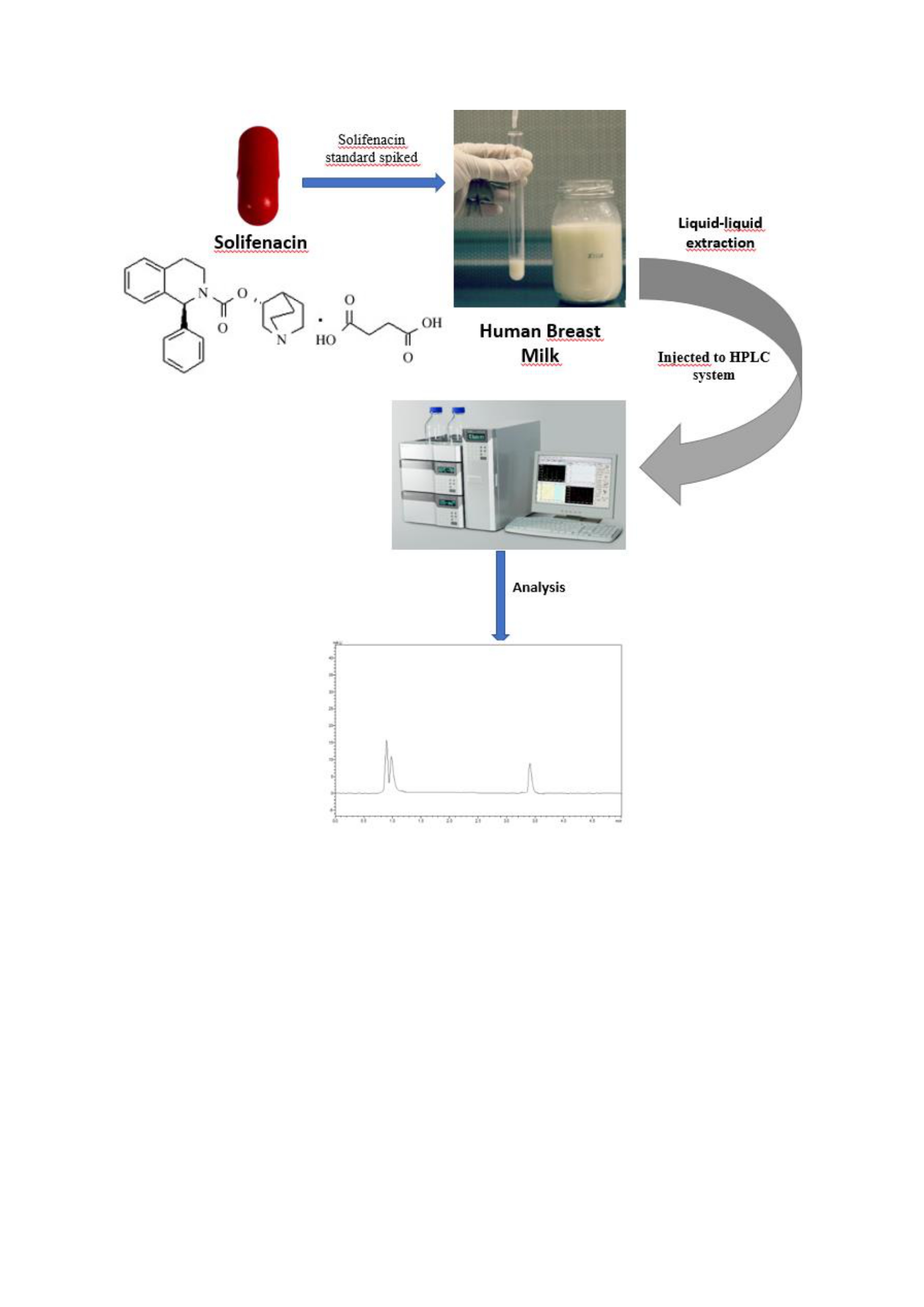
A novel, simple, and reliable HPLC-UV method was developed and validated for the determination of canagliflozin in human breast milk. Sample preparation was performed using a QuEChERS based extraction procedure to overcome the complexity of the breast milk matrix. Chromatographic separation was achieved on a C18 column using isocratic elution with acetonitrile and water containing 0.1 % trifluoroacetic acid (70:30, v/v) at a flow rate of 1.2 mL/min, with UV detection at 290 nm. Canagliflozin was eluted at approximately 2.5 min within a total run time of 10 min. The method was fully validated in accordance with international bioanalytical guidelines. Linearity was demonstrated over the concentration range of 1−25 ng/mL with a correlation coefficient of r2 = 0.9994. The limits of detection and quantification were 0.3 and 1.0 ng/mL, respectively. Mean relative and absolute recoveries were 99.53 % and 99.82 %, confirming the high efficiency of the QuEChERS extraction procedure. Intraday and interday precision values were below 1.27 % and 2.20 %, respectively. Robustness studies indicated that minor variations in chromatographic conditions did not significantly affect method performance. Stability studies confirmed that canagliflozin remained stable under various storage and analytical conditions. In addition, measurement uncertainty was evaluated using a bottom up approach, and the expanded uncertainty was calculated as 2.04 % at a 95 % confidence level. The proposed method offers a cost-effective and accessible alternative to mass spectrometric techniques and represents the first validated HPLC-UV method for the determination of canagliflozin in human breast milk using QuEChERS extraction.






This website recommended the use the Chrome browser for journal website.