

- P-ISSN 1225-0163
- E-ISSN 2288-8985



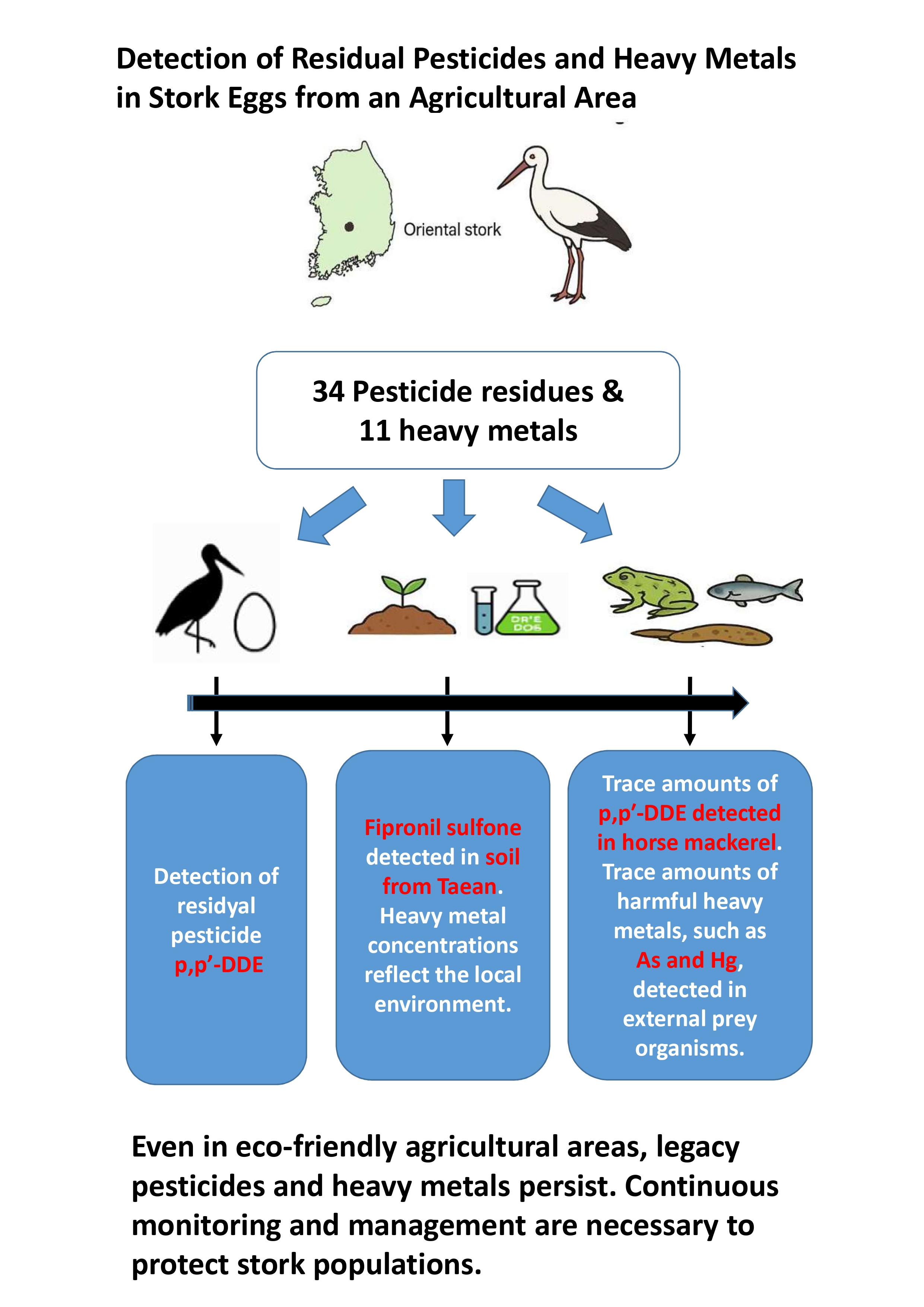
The Oriental stork village in Yesan, Chungcheongnam-do is a representative ecological conservation area where eco-friendly agriculture and the restoration of the Oriental stork (Ciconia boyciana) are being implemented simultaneously. However, residual contamination by banned agricultural pesticides such as DDT and heavy metals historically used in farmland may pose potential threats to reproductive success and ecosystem stability of the stork population. QuEChERS-based extraction method was modified to enhance extraction efficiency for high-lipid and high-protein samples such as bird eggs, and its performance was validated in terms of recovery, precision, linearity, and detection limits. Heavy metals were analyzed using ICP-MS, ICP-OES, and a mercury analyzer following streamlined analytical procedures adapted from established standard protocols. Unfertilized and naturally abandoned stork eggs collected during the breeding season, as well as surrounding soil, river water, and prey organisms (frogs, loaches, and horse mackerels), were analyzed for 34 pesticides and 11 heavy metals. The persistent DDT metabolite p,p′-DDE was detected in stork eggs and at trace levels in some prey organisms, indicating potential dietary exposure through the food web. Fipronil sulfone was also detected in soil and biological samples, suggesting environmental persistence of modern insecticides. Among heavy metals, trace concentrations of As, Pb, and Hg were observed in several samples. These findings indicate that legacy pesticides and heavy metals continue to persist even in eco-friendly agricultural areas. Continuous environmental monitoring and management efforts are needed to ensure successful conservation of the Oriental stork population. This study provides baseline data for environmental safety assessment using avian egg–based biomonitoring.







This website recommended the use the Chrome browser for journal website.