
- P-ISSN 1225-0163
- E-ISSN 2288-8985



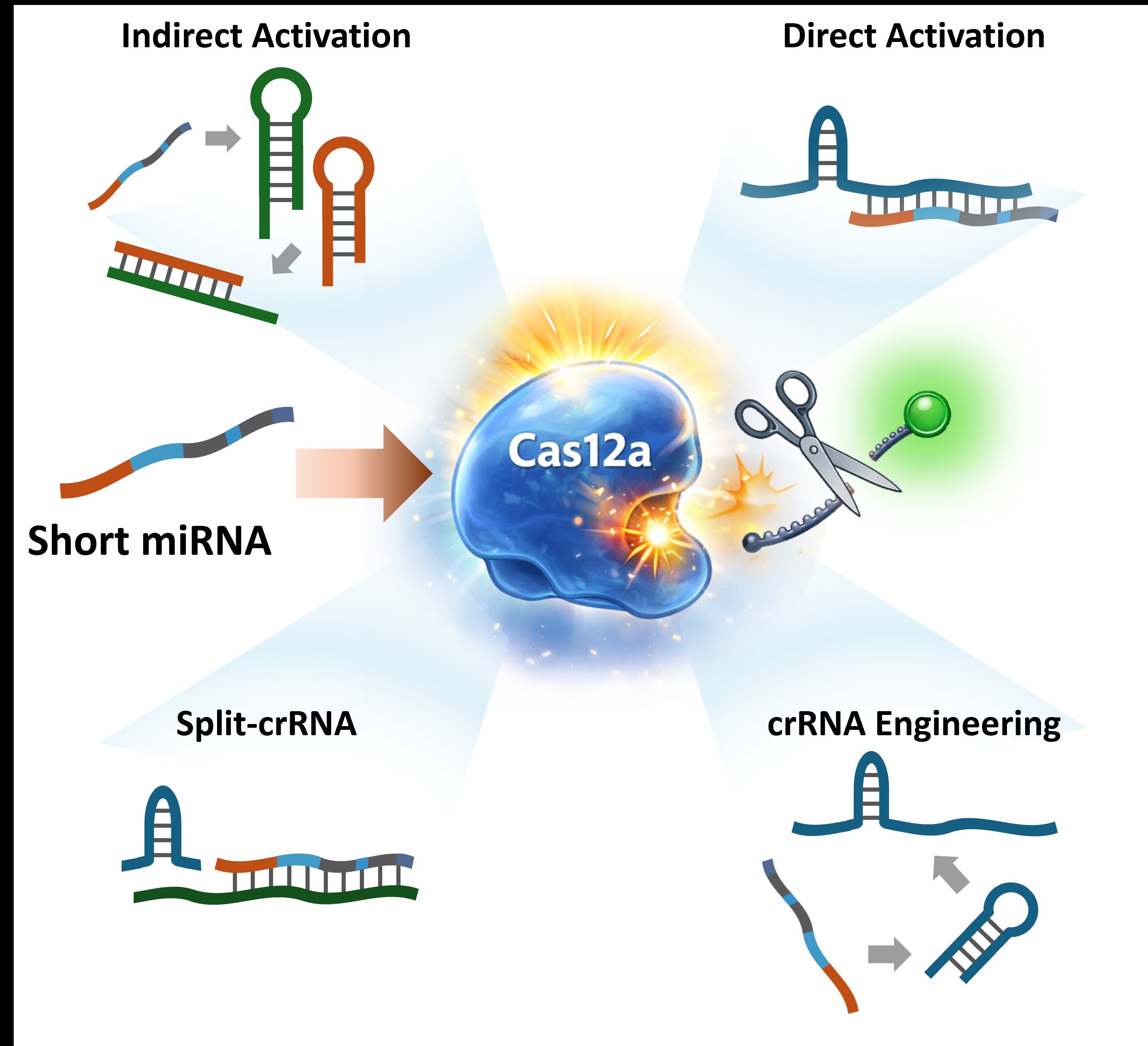
The CRISPR/Cas12a system has emerged as a powerful platform for nucleic acid diagnostics owing to its programmable target recognition and collateral cleavage–mediated signal amplification. In recent years, extensive molecular engineering efforts have expanded the applicability of Cas12a-based sensing systems to the detection of microRNAs (miRNAs), short non-coding RNAs that regulate gene expression at the posttranscriptional level and serve as important biomarkers for a wide range of diseases. In this review, we summarize recent advances in Cas12a-based miRNA sensing strategies, with a particular emphasis on two major design paradigms: activator-centered engineering, which translates miRNA recognition into Cas12a-activating molecular inputs, and crRNA-centered engineering, which modulates the structure and function of the Cas12a–crRNA complex to enable miRNA-responsive activation. We discuss representative implementations and underlying molecular design principles to illustrate how these approaches expand the design space of CRISPR-based diagnostics. Collectively, these developments highlight the growing potential of Cas12a-based platforms as versatile tools for next-generation miRNA diagnostics.







This website recommended the use the Chrome browser for journal website.