
- E-ISSN 3091-7638




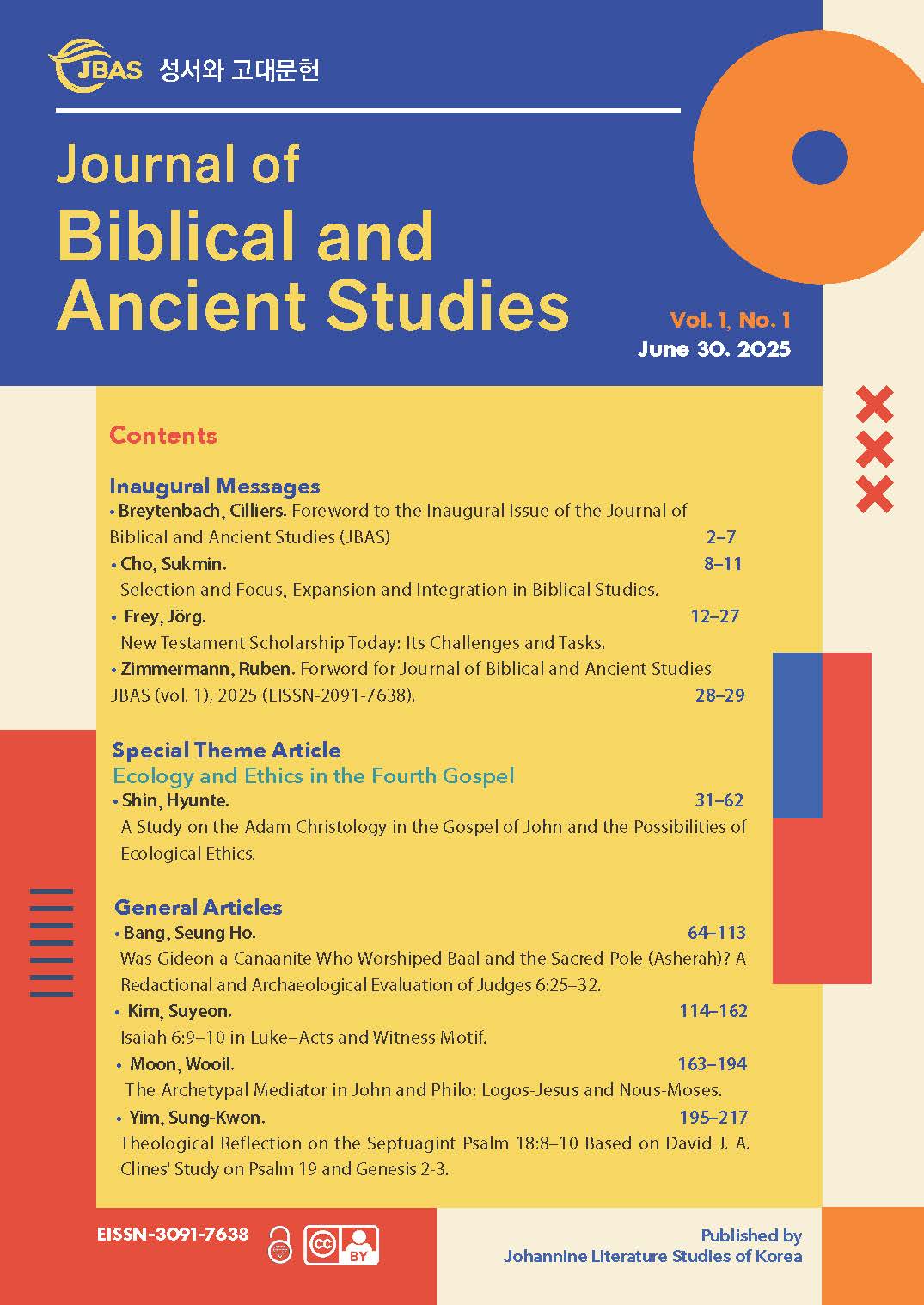
This study explores the potential for an “Adam Christology” in the Gospel of John and its implications for an ecotheological ethic. The prologue (John 1) employs creation words (ἐν ἀρχῇ, λόγος, ζωή, φῶς) that closely mirror Genesis 1, situating Jesus within the origin and purpose of creation. Narrative elements in John 19–20—such as the “garden” (18:1; 19:41; 20:15), “Behold the man” (19:5), and the “gardener” (20:15)—exhibit structural parallels to Genesis 2–3, highlighting Jesus’ death and resurrection as a turning point of a “new creation.” Through analysis of the Greek text and narrative structure, this article argues that John’s Adam Christology portrays Jesus as the one who, through obedience and life-giving ministry, overcomes Adam’s failure and inaugurates a new humanity. This Adam Christology also bears ecotheological implications: interpreting Jesus as the “new Adam” extends his death and resurrection to the restoration of the whole of creation. John’s cosmic Christology transcends an anthropocentric salvation, envisioning reconciliation between humanity and the whole of creation. John’s Gospel thus proclaims both the beginning of creation in Christ and its eschatological consummation—a new creation and the renewal of the created order—opening up a horizon for an ecotheological reading of Adam Christology and offering a theological basis for ecological ethics in an age of climate crisis.



This website recommended the use the Chrome browser for journal website.