
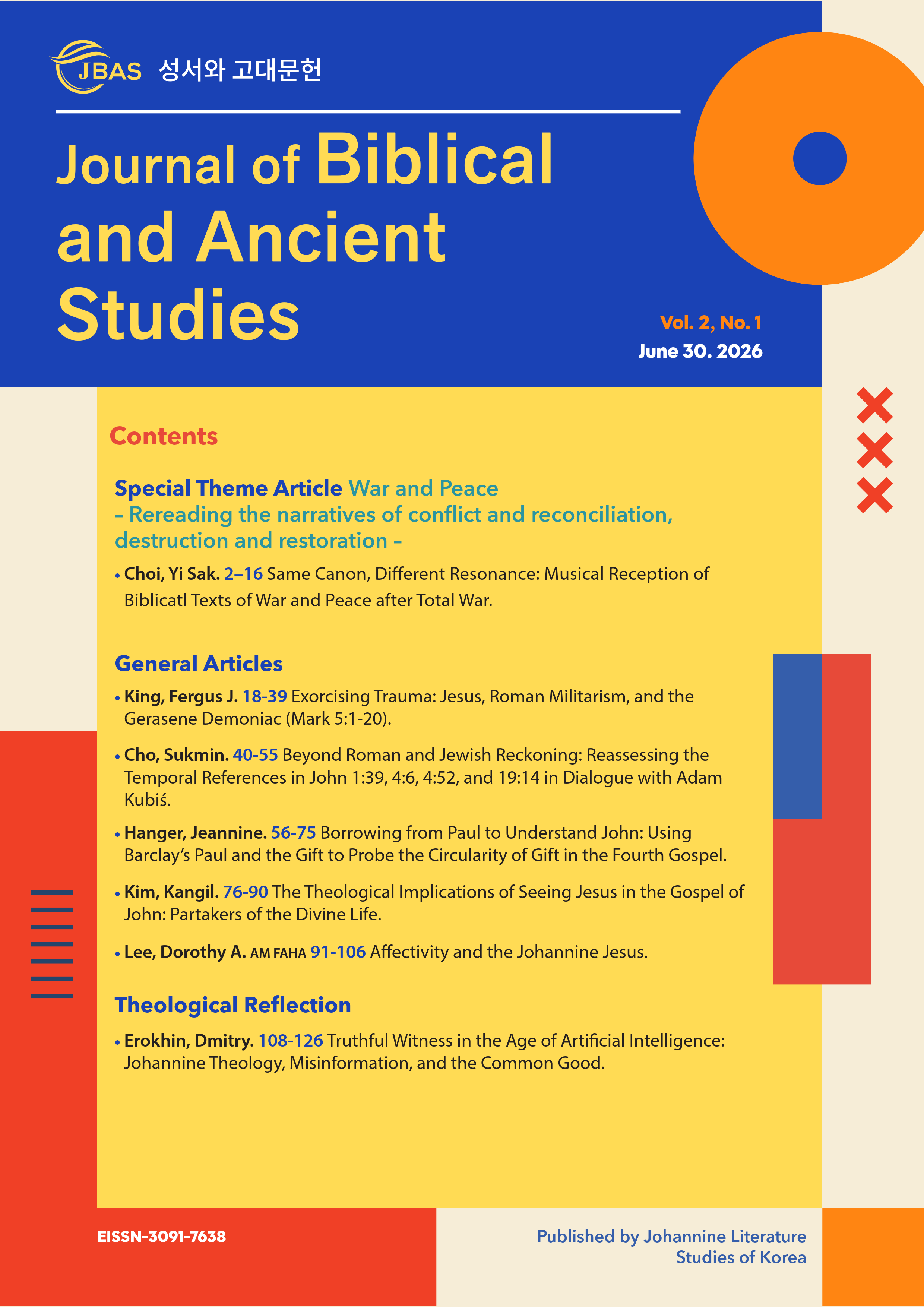
- E-ISSN 3091-7638



The Johannine Jesus can seem a majestic yet rather cold character, mostly unaffected by human emotions. But this perspective fails to do justice to the Fourth Gospel and its narrative presentation of Jesus’ character. Affectivity is much more present in the Gospel narrative than is sometimes conceded, running beneath Jesus’ sense of his own vocation and his mission, and centred above all in his unique relationship to the Father. Building on the work of affect theory, both in terms of the ancient world in general and the sphere of Old Testament narrative, it is possible to demonstrate the affectivity of Jesus, not just in obvious places such as the raising of Lazarus in John 11, but also elsewhere in the Gospel. The greatest and deepest of these emotions is that of love which is the driving force behind Jesus’ ministry and the determining factor in his passion, death and resurrection, disclosing the divine glory. Behind that love and glory is the Father’s love for the world. Jesus in this Gospel expresses passionate emotion, including love, anger, distress, grief and disappointment. These are not extrinsic to his identity but express both the divinity and humanity of his presentation in the Fourth Gospel.



This website recommended the use the Chrome browser for journal website.