

- P-ISSN2287-9099
- E-ISSN2287-4577
- SCOPUS, KCI
 ISSN : 2287-9099
How Can Librarians in Developing Countries Apply Evidence-Based Information Practices to Enhance Library Services in the Digital Era? A Scoping Review


Martha Lyaka (Department of Interdisciplinary Research and Postgraduate Studies, University of South Africa (UNISA), Pretoria, Republic of South Africa)
Patrick Ngulube (Department of Interdisciplinary Research and Postgraduate Studies, University of South Africa (UNISA), Pretoria, Republic of South Africa)

Abstract
This scoping review maps existing literature on how librarians in developing countries apply evidence-based information practice (EBIP), identifying key themes and evidence gaps for future research. The review followed Arksey and O’Malley’s five-stage framework and applied the Preferred Reporting Items for Systematic Reviews and Meta-Analyses 2020 checklist alongside the Critical Appraisal Skills Programme for appraising study quality. From 6,693 records retrieved, ten studies met the inclusion criteria. The mapped studies suggest that librarians apply EBIP in diverse professional activities such as collection development, advocacy, reference services, information literacy instruction, decision-making, evaluation, monitoring performance, and enhancing service quality. Evidence-based approaches were considered to improve decision-making and user engagement. Barriers identified include limited research awareness, insufficient training, restricted access to quality evidence, inadequate information and communication technology infrastructure, and digital inequalities. The findings indicate that librarians could benefit from integrating EBIP into library and information science curricula by providing a structured implementation roadmap, while encouraging policymakers to prioritize evidence-based approaches in the library sector. Practical strategies identified include investment in capacity building, fostering partnerships, strengthening user feedback mechanisms, and adopting affordable digital tools. The studies reviewed identified the importance of embedding EBIP into daily library practices in developing countries to ensure relevant, responsive, and impactful information services. Evidence gaps identified for further research include digital skill levels and EBIP adoption, user engagement and influence on EBIP practices, EBIP framework and workflow for developing countries, and institutional barriers to implementation of EBIP.
- keywords
- research data implementation, evidence-based information practices, use of scientific evidence, innovation in library and information science, library science, data analytics in libraries
1. INTRODUCTION
As scientific knowledge grows and evidence-based practice (EBP) becomes more established, adopting evidence-based information practices (EBIP) in library and information science (LIS) in the digital era is essential for effective services. This approach ensures that library strategies align with user needs, maximize cost-effectiveness, and enhance overall satisfaction. In the long run, especially in developing countries, where libraries often operate under limited budgets and resource constraints, EBIP can help librarians make well-informed, data-driven decisions that ensure resources are used efficiently. Services are aligned with real user needs.
Moreover, scholars emphasize that technological advancements in the digital era significantly enhance library resource utilization, strengthen managerial skills, and improve user efficiency, ultimately elevating services (Faizan & Munshi, 2025; Khan et al., 2024; Xie, 2008; Zhai & Wang, 2016). By combining EBP with technological innovation, libraries can optimize their services to meet the evolving demands of the digital age (Khan et al., 2024; Kharat et al., 2024; Porat, 2016; Rysavy et al., 2017; Zhai & Wang, 2016). In the digital era, EBIP encourages librarians to navigate vast amounts of information, rapid technological change, and increasing demands for digital literacy. It empowers librarians to evaluate emerging digital technologies, adopt the most effective practices, and make evidence-based innovations. By grounding digital services and programs in solid evidence, libraries can remain adaptable, relevant, and impactful, ensuring they continue to meet the evolving needs of their users in an increasingly complex information environment.
Despite the importance of EBIP adoption by librarians, there is limited consolidated evidence on how librarians in developing countries are using EBIP in practice. Existing studies tend to focus on developed countries. This scoping review is in the context of developing countries. The researchers did not find any scoping review that had been done on this topic in developing countries. Scholars report that integrating EBIP and LIS activities in developing countries can ensure that library services remain relevant, cost-effective, and user-centred in the rapidly evolving digital information landscape (Lê et al., 2024), aiming to replace intuition and tradition with concrete evidence that shows what best serves library users (Slebodnik et al., 2022). Though EBIP is useful in librarianship practices, inadequate access to researched evidence (Lacy, 2017), lack of sufficient knowledge and skills in research may hinder its implementation (Burke et al., 2020; Cooper, 2016; Eldredge, 2012; Joseph, 2018).
2. BACKGROUND
2.1. Evidence-Based Information Practices Conceptual Framework
EBIP is a method that uses empirical evidence and expert knowledge to inform decision-making, enhance practices, and increase the value of library services (Esmaeilzad et al., 2023; Kiyimba et al., 2019; Sackett et al., 1996; Wilson & Grant, 2013). Using both quantitative and qualitative feedback evidence from library users, librarians can adjust services and resource offered to improve client service support (Rysavy et al., 2017).
EBIP is grounded in four components: credible evidence, professional expertise, user needs, and a systematic process summarized as the “6As”: ask, acquire, appraise, aggregate, apply, and assess (Koufogiannakis, 2013; University of North Carolina Health Science Library, 2024). In this study, evidence refers to scientifically validated or well-documented and verified information that informs decision-making and addresses librarians’ daily workload (Parmar, 2018). For librarians in developing countries, such evidence extends beyond research publications to include data generated within library processes, such as user downloads of e-resources, borrowing and lending patterns, login frequencies to digital systems, and usage analytics of online databases. When critically appraised and packaged, this data becomes an essential form of actionable evidence for improving service delivery. EBIP enables librarians to systematically integrate research findings and user-generated data into their daily workload (Luo, 2018; Oyedokun, 2025; Thorpe & Howlett, 2020). The EBIP process follows the six steps as explained below:
-
Ask: Identify evidence needs for librarians’ workloads, such as collection development, licensing of electronic resources, digital access, and reference services.
-
Acquire: Gather relevant research and library-generated usage data from credible sources.
-
Appraise: Critically evaluate scholarly evidence and analytics (e.g., borrowing trends, login statistics) for reliability and applicability.
-
Aggregate: Combine appraised evidence and usage data, packaging it into formats that meet users’ evolving needs.
-
Apply: Implement the insights in daily practice, such as tailoring acquisitions to usage patterns, improving cataloguing systems, or enhancing user support.
-
Assess: Monitor outcomes by tracking whether changes influenced user engagement, access, or satisfaction.
2.2. The Digital Age, and How Evidence-Based Information Practices Can Be Applied by Librarians in Developing Countries
The digital age is when digital facilities and technologies are widespread and influence human life. The Internet and other information technologies affect every sphere of life. In this age, digital communication, information access, data creation, automation, artificial intelligence, global connectivity, big data, data analytics, and online business are all in play (Adedokun & Zulu, 2022; Diseiye et al., 2024; Ocran & Afful-Arthur, 2022; Yoon et al., 2022). Sources of evidence in libraries have also vastly increased; big data is generated from online library platforms, social media engagements, online circulation systems, online vendor systems, and metadata sites. Librarians harness the evidence to improve user services, make informed decisions, optimize resource distribution and management, predict trends, and enhance research and collaboration (Adeleke, 2019; Ahmad et al., 2019; Ajani et al., 2024).
This means that digital age discoveries have also affected how librarians provide library services in the digital society (Yoon et al., 2022); big data analytics (BDA) enhances EBIP by enabling data-driven decision-making in collection development, space management, resource tracking, and routine library operations like cataloguing and archiving (Azam & Ahmad, 2024). This supports cost-effective, user-centered services, strategic planning, and infrastructure development by leveraging real-time insights. By integrating BDA into EBIP, libraries can optimize resource utilization, improve service efficiency, and provide high-quality, evidence-driven solutions that meet evolving user needs in the digital era. Therefore, librarians need updated knowledge and skills in data analytics, EBP, and data extraction programs. Library technology has also gone digital, and the availability of information at the fingertips of everyone in the world has increased, which requires librarians to be relevant and to have new skills and justification using evidence.
Research to generate information has also improved access to researched information due to digital facilities. Digital age, open access, and open science movements reduce the digital divide in less financially stable societies to access quality researched information (Arakpogun et al., 2023; Okuonghae & Achugbue, 2022; Ukwoma & Onyebinama, 2021; Zhang et al., 2022). In this regard, librarians in developing countries are increasingly accessing this information and applying EBIP through acquiring, appraising, aggregating, applying, and assessing in their daily support to researchers, especially through digital resources. They tailor evidence services by identifying researchers’ preferred sources, evaluating the credibility of publishers and authors, organizing content in accessible formats such as bibliographic systems and LibGuides (Mwanzu et al., 2022), and continuously improving services based on user feedback.
Not all is positive. The digital age has easily made unverified information available (Chen et al., 2024; Dong et al., 2025; Skarpa & Garoufallou, 2022). Anyone can generate any content from whatever part of the world and share it on the Internet, which can find itself in the hands of anyone connected. This, therefore, has caused information overload, unverified information, and infodemic (Dong et al., 2025; Ogbonna CLN & Kiwelu, 2023). Therefore, librarians are seen as a solution to help users overcome infodemics, information overload, and unverified information through EBIP.
3. AIM, OBJECTIVES, AND RESEARCH QUESTIONS
3.1. Aim
This scoping review mapped literature on how librarians in developing countries apply EBIP to enhance library services in the digital era. It focused on understanding how EBIP can support librarians in managing their workload to improve service quality and make evidence-informed decisions while identifying evidence gaps for future research.
3.2. Objectives
1. To identify how EBIP is applied in library services, decision-making, and user engagement.
2. To explore reported challenges and strategies of implementing EBIP in daily library practice.
3. To identify implications for integrating EBIP into professional practice and LIS education.
3.3. Research Questions
1. What EBIP practices among librarians in developing countries are documented in existing literature?
2. What challenges and strategies of implementing EBIP in daily library practices are reported for developing countries?
3. What gaps remain in the evidence regarding EBIP activities, competencies, and contextual challenges in developing countries?
4. METHODOLOGY
This study is a scoping review that aims to map existing literature, identify key themes, and highlight gaps. It does not assess the quality, impact, or effectiveness of EBIP. It followed the five-stage framework outlined by Arksey and O’Malley (2005): defining the research question (stage 1), identifying relevant studies (stage 2), selecting studies (stage 3), charting the data (stage 4), and summarizing and reporting the findings (stage 5).
4.1. Stage 1
The researchers began the review by clearly formulating the review objective and question, as seen in section 2.2. The entire review process was guided by these questions, which aimed to map relevant studies on the application of EBIP by librarians in developing countries while identifying gaps in the available evidence. The gaps were to guide future research.
4.2. Stage 2
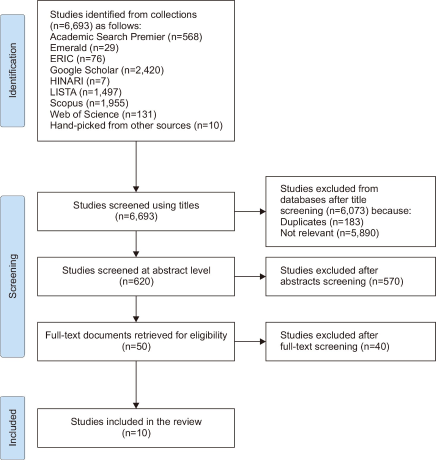
After identifying the scope of the study, inclusion and exclusion criteria, concepts, and the review’s objective, the researchers identified possible sources of literature from which the data would be extracted. The researchers searched Google Scholar, SCOPUS, HINARI, Academic Search Premier, Education Resources Information Center (ERIC), Library, Information Science & Technology Abstracts (LISTA), Emerald, and the Web of Science. Some articles were hand-picked from reference lists, SciSpace, and general Google searches. The searches were done several times in October 2024, as the search terms were refined, and searches were re-run in April 2025 to get the most relevant studies suitable for the review. The search results identified are presented in Fig. 1.
Fig. 1
Preferred reporting items for systematic reviews and meta-analyses. ERIC, Education Resources Information Center; LISTA, Library, Information Science & Technology Abstracts.
Furthermore, the researchers developed a search strategy using the study keywords and phrases with their synonyms. “Evidence-based information practice” was used as the main term. Boolean operators like ‘AND,’ ‘OR,’ and truncation combined the terms and phrases to identify relevant studies. The search terms, phrases, and synonyms used were:
1. Evidence-based information practice (EBIP): Evidence-based information practice, Evidence-based practice in libraries, EBP in libraries, Evidence-based librarianship, Evidence-based library and information science (EBLIS), Evidence-based library service.
2. Workload: Evidence-based and librarian workload, Evidence-based information professional workload, Evidence-based library staff activities, Evidence-based librarian duties, Evidence-based librarian responsibilities.
3. Development countries: Evidence-based information practice in developing countries, Evidence-based information practice in low and middle-income countries (LMICs), Evidence-based information practice in the Global South.
4. Digital era: Evidence-based information practice and digital technologies, Evidence-based information practice and digital era, Evidence-based information practice and digital transformation, Evidence-based information practice and information technology.
4.3. Stage 3
The relevant studies identified in stage two were extracted and imported to the EndNote reference management system version 21 (Clarivate, Philadelphia, PA, USA) for further screening and review. Two independent reviewers conducted the screening process, and any inconsistencies were debated. Only those in agreement with the Critical Appraisal Skills Programme (CASP) for quantitative, qualitative, and mixed methods studies, with the inclusion and exclusion criteria below, were included.
4.3.1. Inclusion
1. Academic peer-reviewed journal articles on EBIP and the digital era.
2. Time frame: January 2014 to April 2025.
3. Primary studies only reporting the study’s purpose, objective, population, methodology, findings, conclusions, and recommendations.
4. Studies in English language only.
5. Studies accessible to the researcher in full text.
6. Published in developing countries.
4.4. Stage 4
A total of 6,693 records were retrieved from multiple databases such as Academic Search Premier (568), Emerald (29), ERIC (76), Google Scholar (2,420), hand-picked (10), HINARI (07), LISTA (1,497), SCOPUS (1,955), and Web of Science (131). After removing duplicates and screening titles, abstracts, and full texts using the inclusion criteria and CASP checklist, only ten studies met the eligibility requirements. The review process revealed a clear evidence gap: the application of EBIP in developing countries within the digital era remains significantly underexplored in LIS literature.
The selected studies were analyzed and organized into major themes: application of EBIP, challenges, and strategies with subthemes such as translation and repackaging, digital divide and information and communication technology (ICT) infrastructure gaps, and ICT investment. Critical data from these studies were synthesized, and gaps were identified to form the conclusions presented in this review.
4.5. Stage 5
Scholars emphasize that studies included in reviews should be critically appraised to reduce information overload and determine their trustworthiness, relevance, and value in specific contexts (Katrak et al., 2004). Full-text articles for this review were selected using the inclusion and exclusion criteria. The CASP checklist was employed to appraise the studies, where essential elements of authorship, publication year, objectives, methodology, key findings, and implications were identified in the studies as prescribed in the CASP checklist (Buccheri & Sharifi, 2017; CASP, 2025). CASP provides tailored checklists for different studies, with three standard sections that evaluate the study’s objectives, local implications, and methodology. The researchers used these sections to appraise the studies included in this review, which covered qualitative, quantitative, and mixed methods research. The findings were reported following the Preferred Reporting Items for Systematic Reviews and Meta-Analyses (PRISMA-ScR) checklist, which guides researchers in consistently documenting their methods and results (Page et al., 2021; Sarkies et al., 2017). Data was extracted from the databases, and duplicates were removed using EndNote referencing system version 21. The researchers screened the studies’ titles, abstracts, and full text to eliminate irrelevant studies. The eligible studies were extracted and analyzed using a synthesis matrix, the CASP checklist guidance, and the inclusion criteria, as seen in Table 1 (Ajani et al., 2024; Al-Moteri, 2023; Azam & Ahmad, 2024; Chigwada & Kasiroori, 2021; Elueze, 2016; Esmaeilzad et al., 2023; Lynch et al., 2020; Masinde et al., 2021; Mustafa & Noorhidawati, 2020; Popoola et al., 2024).
Table 1
A synthesis matrix for studies included in the review
| Author & year | Purpose/objective | Methodology | Major findings | Recommendations/theme |
|---|---|---|---|---|
| Ajani et al. (2024) | Explored how librarians in Nigeria use evidence, such as big data for decision-making in Nigeria in 4th industrial revolution | Online open-ended questionnaire to librarians in Nigeria, qualitative | Awareness of the need to use evidence and digital tools; not always using the data in the library decisions; lack of skills | Develop the capacity of librarians in data analytics |
| Al-Moteri (2023) | Explored how nursing students search and identify evidence-based information | Interviewed 12 nursing students in Taif University, Saud Arabia, qualitative | EBIP enhances users’ search behavior through triggering, recalling, scanning, linking, accessing, retrieving, relating, extracting, evaluating, and referencing. Improve information literacy | Proposed a new model of evidence-based information-seeking behaviors |
| Azam & Ahmad (2024) | Investigated the link between IL and evidence-based nursing | Quantitative survey study; 246 university library professionals, Pakistan | Evidence enhance collection development, space management, usage monitoring, and quality control in tasks like cataloging, indexing, archiving, administration, and preservation | Provide knowledge and skills in data analytics and infrastructure |
| Chigwada & Kasiroori (2021) | Explore the use of big data in libraries in Zimbabwe | Qualitative online questionnaire on 20 librarians in research institutions in Zimbabwe | Big data can be used as evidence for problem solving, improve service quality and decision making in libraries in the digital era. Infrastructure and capacity building is required | Build capacity and improve digital infrastructure |
| Elueze (2016) | Investigated the knowledge translation practices in Nigeria | Mixed methods research, 600 respondents in Nigeria | Policy actors rarely use research to guide decisions due to lack of awareness | Raise awareness of the value of research evidence |
| Esmaeilzad et al. (2023) | Examined the impact of EBIMP training on medical librarians’ critical thinking | Quantitative methods, 60 librarians, Islamic Azad University Iran | The findings revealed a significant improvement in the librarian’s critical thinking post-training. The researchers suggested EBIMP in the LIS curriculum | Embed EBIMP in the LIS curriculum |
| Lynch et al. (2020) | Explore how public libraries use user data for advocacy | Qualitative study, sub-Saharan Africa | Awareness of data usage was reported, integrity of data as a challenge, incomplete data, lack of infrastructure | Africa is building capacity to use data for advocacy through collaboration |
| Masinde et al. (2021) | Explore how librarians can manage evidence | A qualitative study on five developing countries’ academic librarians in University of Nairobi, Kenya | Awareness and some data is managed; capacity build required | Establish a dedicated unit to handle data |
| Mustafa & Noorhidawati (2020) | To identify the determinants of evidence-based librarianship on library acquisition decisions of electronic resources | 250 librarians at the University of Malaysia through a questionnaire (quantitative) |
Top management supports decision-making on the evidence-based acquisition of electronic resources. No significant relationship was found between evidence-based librarianship and the acquisition of electronic resources |
Further action and future research for libraries were suggested |
| Popoola et al. (2024) | Explore librarians’ involvement in EBMP | Survey of 12 African countries, Nigeria (quantitative) | Library practices: Resource use and management, evidence dissemination, skills, Internet connectivity, and funding are the challenges | Improve training and Internet connectivity |
Fig. 1 shows the overall screening process reported using the PRISMA-ScR checklist for scoping reviews.
5. RESULTS AND DISCUSSION
Many existing studies focus on related topics but not directly relevant areas. Those that were eligible according to the inclusion criteria and evaluation for risk of bias consisted of ten studies. This topic is an emerging, niche, or under-researched topic in the context of developing countries. Four studies were quantitative, five were qualitative, and one was mixed methods. These results show that EBIP researchers preferred qualitative methodology to quantitative and mixed methods. In developing countries, three studies were from Nigeria, one was from Iran, one from Pakistan, one from Saudi Arabia, one from Zimbabwe, and one was from Malaysia, and two were general from Sub-Saharan Africa and developing countries. Most (nine) were related to health science librarians and academic or research libraries. One study looked at a public library. More studies are needed in EBIP in developing countries in the digital age.
5.1. How Librarians Apply Evidence-Based Information Practice to Manage and Enhance Their Responsibilities and Professional Development
According to the studies reviewed and the results presented in Table 2 (Ahmad et al., 2019; Ajani et al., 2024; Aslam, 2018; Azam & Ahmad, 2024; Chigwada & Kasiroori, 2021; Elueze, 2016; Lynch et al., 2021; Masinde et al., 2021; Mustafa & Noorhidawati, 2020; Obasola et al., 2022; Oyadonghan et al., 2016; Popoola et al., 2024), EBIP is crucial in enhancing the professional library workload in the digital era. Librarians have implemented EBIP to enhance patron services, collection development, library management, and administration, and to improve information-seeking behavior. The literature reported that EBIP has contributed to improving information literacy, informed decision-making, quality of library services, information translation and repackaging, critical thinking, evidence reversal, user engagement, and overall quality.
Table 2
How librarians apply EBIP in their daily workload and professional development
| No. | Application of EBIP | Source of evidence |
|---|---|---|
| 01 | Translation and repackaging | Ahmad et al., 2019; Ajani et al., 2024; Aslam, 2018; Elueze, 2016; Oyadonghan et al., 2016 |
| 02 | Improving library service quality | Ajani et al., 2024; Obasola et al., 2022; Popoola et al., 2024 |
| 03 | LIS evaluation, monitoring, performance, and decision-making | Azam & Ahmad, 2024; Mustafa & Noorhidawati, 2020 |
| 04 | Enhancement of information literacy training, teaching, and imparting skills | Azam & Ahmad, 2024 |
| 05 | Problem-solving | Ajani et al., 2024; Chigwada & Kasiroori, 2021 |
| 06 | Inculcating critical thinking abilities for librarians | Ajani et al., 2024; Chigwada & Kasiroori, 2021 |
| 07 | Evidence for re-use and reversal | Ajani et al., 2024; Lynch et al., 2021; Masinde et al., 2021 |
| 08 | Advocacy | Ajani et al., 2024; Lynch et al., 2021; Masinde et al., 2021 |
However, challenges and gaps that hinder librarians from benefiting more when applying EBIP were highlighted, such as a lack of access to quality evidence, a lack of adequate analytical skills, and a clear framework for implementing EBIP. The findings are further discussed below according to these themes.
5.1.1. Translation and Repackaging of Evidence in the Digital Era
Studies show that librarians in developing countries recognize the importance of information translation and repackaging for enhancing library services and collection development (Ahmad et al., 2019; Ajani et al., 2024; Aslam, 2018). EBIP involves identifying user needs, sourcing credible evidence, and presenting it in accessible formats such as LibGuides (Mwanzu et al., 2022), while data analytics from circulation, e-resource usage, and user surveys inform acquisition and weeding decisions. For instance, high usage of medical e-books can guide prioritized acquisitions, while low circulation may justify weeding to strengthen collection relevance.
Despite librarians’ strong organizational and dissemination skills (Oyadonghan et al., 2016), EBIP implementation was constrained by limited ICT skills, inadequate training, insufficient funding, and digital inequities such as poor Internet connectivity and uneven database access (Borbely & Némethi-Takács, 2023; Buarki et al., 2022; Etomaru et al., 2022). A significant gap identified the absence of evaluative studies assessing EBIP’s impact on library services and user outcomes in developing countries (Ahmad et al., 2019; Ajani et al., 2024).
These findings imply that partial EBIP adoption was shaped by systemic barriers, highlighting the need for targeted training, improved infrastructure, dedicated funding for knowledge translation, and research assessing EBIP effectiveness.
5.1.2. Improving Library Service Quality
The literature shows that EBIP is increasingly recognized as essential for enhancing library services, decision-making, and professional growth (Ajani et al., 2024; Obasola et al., 2022; Popoola et al., 2024). However, implementation levels differ considerably. Thorpe and Howlett (2020) outline five stages of EBIP adoption—ad hoc, justification, emergence, experiments, and transformation—indicating that librarians’ engagement depends on their understanding of EBP. While some institutions use EBIP systematically to improve service quality and support user needs, others apply it only sporadically, reflecting gaps in awareness, skills, and institutional support.
Training is consistently identified as central to effective implementation. Virtual EBIP training strengthens librarians’ critical thinking and evaluation skills (Esmaeilzad et al., 2023), structured search models improve user outcomes (Al-Moteri, 2023), and inadequate expertise limits integration into practice (Luo, 2018). Although user feedback and data-informed approaches demonstrate EBIP’s practical value, its adoption remains uneven due to limited curriculum integration and inconsistent professional development. Overall, the findings indicate that EBIP enhances service quality when supported by adequate training and organizational commitment, yet broader adoption requires more structured strategies across the library sector.
5.1.3. Library and Information Science Evaluation, Monitoring, Performance and Decision-Making
The reviewed literature, as summarised in Table 1 (Ajani et al., 2024; Al-Moteri, 2023; Azam & Ahmad, 2024; Chigwada & Kasiroori, 2021; Elueze, 2016; Esmaeilzad et al., 2023; Lynch et al., 2020; Masinde et al., 2021; Mustafa & Noorhidawati, 2020; Popoola et al., 2024), shows that EBIP extends beyond traditional library functions and plays a critical role in strengthening multiple dimensions of LIS practice in the digital era. EBIP supports evaluating performance, improving cost-effectiveness, and enhancing user-centered services, while contributing to strategic planning and resource optimization in daily library operations, including collection development, space management, usage monitoring, and quality control. It also informs technical and administrative tasks such as cataloguing, indexing, archiving, administration, and preservation (Azam & Ahmad, 2024). These findings align with those of Ochôa and Pinto (2020), who demonstrate how EBIP can be applied to assess LIS performance in relation to sustainable development goals. Their four-step framework—pre-planning, planning, implementing, and advocating with evidence—illustrates how libraries can integrate EBIP into multidisciplinary contexts to enhance sustainability, guide decision-making, and address community-specific information gaps, such as improving electronic resource subscriptions based on statistical demand.
While Ochôa and Pinto (2020) underscore the broad applicability of EBIP, Thorpe and Howlett (2020) highlight a contrasting challenge: EBIP adoption often relies more on individual motivation than on institutional policy. Despite its proven value in improving service quality, many libraries lack structured organizational support to embed EBIP into routine practice. This gap is particularly significant in the digital era, where rapid technological change increases the need for systematic, evidence-based approaches but institutions continue to face skill, policy, and resource limitations. The findings further show that EBIP enables librarians to use data analytics more effectively to inform administrative and management decisions, including technical services such as cataloguing. For example, analyzing online public access catalog search data and user feedback can reveal issues like outdated subject headings and inconsistent metadata, prompting updates to controlled vocabularies, investment in staff training, and the incorporation of user tagging features. Although such changes are challenging, they improve resource discoverability, reduce cataloguing errors, and enhance the overall usability of the catalogue.
Authors such as Lloyd et al. (2024), Rysavy and Michalak (2019), and Sewell and Cowell (2020) emphasize the growing importance of digital tools such as LibInsight, Google Sheets, Excel, and Springshare’s LibApps in supporting EBIP through data analytics across circulation, information services, and broader library operations. However, some studies reveal mixed outcomes. For instance, Mustafa and Noorhidawati (2020) report management support for using usage statistics in electronic resource acquisition but find no significant relationship between evidence-based librarianship and actual acquisition decisions. Similarly, Popoola et al. (2024) shows that African health librarians apply EBIP in resource allocation and information dissemination but struggle with inadequate funding and skills.
These findings suggest that while EBIP holds significant potential to enhance service quality, innovation, and sustainability in the digital era, realising its full impact requires institutional commitment to training, mentorship, and structured frameworks that promote widespread adoption.
5.1.4. Enhancement of Information Literacy Training, Teaching and Imparting Skills
As seen in Table 2 (Ahmad et al., 2019; Ajani et al., 2024; Aslam, 2018; Azam & Ahmad, 2024; Chigwada & Kasiroori, 2021; Elueze, 2016; Lynch et al., 2021; Masinde et al., 2021; Mustafa & Noorhidawati, 2020; Obasola et al., 2022; Oyadonghan et al., 2016; Popoola et al., 2024), part 4, Azam and Ahmad (2024) show that data analytics can identify user needs and guide improvements in services such as information literacy training. Their findings align with Azami et al. (2020), who emphasise that EBIP enhances information literacy, supports decision-making, and reduces errors. In healthcare, integrating EBIP into training enables practitioners to use information more effectively, improving clinical decisions. Health librarians are increasingly equipped to teach EBP (Maggio et al., 2015; Sabey & Biddle, 2021), while De Brún (2015) highlights that information literacy tools are essential for applying evidence-based information and should be embedded in curricula.
These studies demonstrate EBIP’s importance in LIS and its relevance across sectors. In developing countries, limited access to evidence-based information underscores the need for awareness, training, and frameworks to strengthen decision-making and service delivery in areas such as agriculture, health sciences, and nutrition.
5.1.5. Problem-Solving
The findings in Table 2 (Ahmad et al., 2019; Ajani et al., 2024; Aslam, 2018; Azam & Ahmad, 2024; Chigwada & Kasiroori, 2021; Elueze, 2016; Lynch et al., 2021; Masinde et al., 2021; Mustafa & Noorhidawati, 2020; Obasola et al., 2022; Oyadonghan et al., 2016; Popoola et al., 2024), part 5, show that libraries use various digital tools and content types—from library management systems and social media to multimedia, research data, and user-generated content—to address challenges such as low user turnout, search difficulties, and circulation issues (Ajani et al., 2024; Chigwada & Kasiroori, 2021). Having reliable evidence readily available enables librarians to resolve user problems quickly and effectively. Ajani et al. (2024) and Chigwada and Kasiroori (2021) align with Luo (2018) and Diekema et al. (2019), demonstrating that evidence is essential for identifying user needs and improving service quality. These studies collectively emphasize that librarians require credible, timely information to support decisions related to resource selection, service delivery, and user management. In the digital era, integrating digital tools and online resources strengthens EBP, enhancing access to relevant information and improving problem-solving across library operations. Leveraging these platforms can transform service efficiency and user experience.
5.1.6. Inculcate Critical Thinking Abilities for Librarians
Table 2 (Ahmad et al., 2019; Ajani et al., 2024; Aslam, 2018; Azam & Ahmad, 2024; Chigwada & Kasiroori, 2021; Elueze, 2016; Lynch et al., 2021; Masinde et al., 2021; Mustafa & Noorhidawati, 2020; Obasola et al., 2022; Oyadonghan et al., 2016; Popoola et al., 2024), part 6 shows that Esmaeilzad et al. (2023) found a positive correlation between exposure to EBIP and enhanced critical thinking among health librarians, highlighting the importance of sustainable skills training. The study recommends integrating EBIP into library school curricula to strengthen critical thinking in future professionals. In the digital era, where information is vast and continually evolving, EBIP equips librarians to navigate complex information environments and make informed decisions that improve service delivery. Incorporating EBIP into education aligns with growing demands for digital literacy and evidence-based decision-making, ensuring librarians are prepared for a data-driven world.
5.1.7. Evidence Re-Use and Reversal
Lynch et al. (2021) and Masinde et al. (2021), as shown in Table 2 (Ahmad et al., 2019; Ajani et al., 2024; Aslam, 2018; Azam & Ahmad, 2024; Chigwada & Kasiroori, 2021; Elueze, 2016; Lynch et al., 2021; Masinde et al., 2021; Mustafa & Noorhidawati, 2020; Obasola et al., 2022; Oyadonghan et al., 2016; Popoola et al., 2024), part 7, reports that some librarians resist adopting EBP, relying on anecdotal knowledge or outdated methods, a pattern also noted by Ruchon and Grad (2018), who highlight limited awareness of evidence reuse. In the digital age, where unverified information spreads easily (Dong et al., 2025), EBIP provides a structured process to addressing society needs backed up with evidence. It enables librarians to verify information, correct errors, and improve practice. This approach allows LIS professionals to re-evaluate long-standing services, such as replacing poorly attended in-person orientations with evidence-supported online tutorials, ultimately enhancing user engagement and service effectiveness. By promoting a culture of EBIP and combating evidence misuse, librarians can remain relevant and responsive to evolving information needs.
5.1.8. Advocacy
Librarians in developing countries use evidence of user feedback and research data management in the digital era to advocate as agents of development in the research community, as reported by Ajani et al. (2024), Lynch et al. (2021), and Masinde et al. (2021). Librarians are utilizing their ability to organize, disseminate, and curate data collaboratively in developing countries. However, these studies report that much more effort is needed regarding management support and dedicated time and effort in this area. This implies that when EBIP is harnessed well, user feedback and research data evidence can help librarians advocate for services and budget support.
5.2. Challenges and Strategies Associated with Implementing Evidence-Based Information Practice in Librarians’ Daily Practice
Lynch et al. (2021) and Masinde et al. (2021), as reflected in Table 3 (Ajani et al., 2024; Azam & Ahmad, 2024; Chigwada & Kasiroori, 2021; Elueze, 2016; Lund et al., 2023; Lynch et al., 2021; Masinde et al., 2021; Obasola et al., 2022; Popoola et al., 2024), part 7, show that some librarians still rely on anecdotal knowledge and outdated methods instead of adopting EBP. Ruchon and Grad (2018) similarly highlight limited awareness of evidence reuse. In the digital age, where unverified information circulates widely (Dong et al., 2025), adopting evidence-based practices enables librarians to verify information, reassess services, and replace ineffective approaches. For example, libraries may shift from poorly attended in-person orientations to interactive online tutorials that better engage users. By fostering a culture of EBIP and addressing evidence misuse and resistance, librarians can strengthen professional practice and remain responsive to evolving information needs.
Table 3
Challenges and strategies for implementing EBIP in developing countries
| No. | Challenge | Strategies | Source of evidence |
|---|---|---|---|
| 1. | Digital divide and ICT Infrastructure gaps | Investing in ICT infrastructure and tools, including reliable Internet, and adopting affordable digital tools for data collection and analytics | Ajani et al., 2024; Obasola et al., 2022 |
| 2. | Inadequate knowledge, skills, and training | Capacity building and training by developing EBIP professional development programs. Integrating EBIP into LIS curricula | Ajani et al., 2024; Azam & Ahmad, 2024; Lund et al., 2023 |
| 3. | Weak research culture | Providing research time, research focus and research incentives | Lund et al., 2023; Masinde et al., 2021 |
| 4. | Funding and resource constraints | Funding and resource mobilization: Secure sustainable budgets for EBIP training, subscriptions and data tools. Engaging government, donors and development partners to support EBIP. Exploring cost-effective open-source data analytics repositories and systems | Ajani et al., 2024; Azam & Ahmad, 2024; Popoola et al., 2024 |
| 5. | Awareness, motivation, and attitude barriers | Creating awareness and advocacy: Sensitize library leaders and policy makers on the benefits of EBIP and libraries as the EBIP hubs. Promote peer mentorship and professional networking | Ajani et al., 2024; Elueze, 2016; Lund et al., 2023; Masinde et al., 2021 |
| 6. | Organizational and environmental barriers | Encouraging library leaders to provide time and incentives, and develop policies that support EBIP | Azam & Ahmad, 2024 |
| 7. | Unreliable evidence and weak research culture | Developing policies, plans, and budgets that encourage or motivate the culture of research, peer reviews, and feedback mechanisms | Ajani et al., 2024; Chigwada & Kasiroori, 2021; Lynch et al., 2021; Elueze, 2016; Lund et al., 2023 |
5.2.1. Digital Divide and Inadequate Information and Communication Technology Infrastructure
This remains among the most pressing barriers in developing countries, unlike in more digitally connected regions. EBIP depends on gathering user evidence through surveys, digital analytics, access to quality evidence, and feedback tools. Collecting meaningful user data becomes difficult in areas with low digital penetration and poor Internet connections. As a result, libraries lack reliable evidence to guide service improvements or policy and decisions. Efforts to bridge the digital divide are noted with initiatives like Research4Life, open access, and donor-supported programs. These initiatives have improved access to high-quality evidence in many low-resource settings. They provide valuable tools that support librarians and researchers in applying EBIP. However, these efforts are hampered by persistent disparities in Internet connectivity, ICT infrastructure, and digital access (Ajani et al., 2024). Obasola et al. (2022) observe that these gaps disproportionately affect rural and underfunded areas, limiting librarians’ capacity in those settings to use evidence-based tools effectively.
5.2.2. Inability to Access Comprehensive Evidence and Data
This results in incomplete or biased data, undermining the accuracy of EBIP-driven decisions. Therefore, sustainable strategies such as government investment in ICT, institutional consortia for resource sharing, and adopting open-access initiatives may be critical for addressing infrastructural inequalities.
5.2.3. Lacks Sufficient Knowledge and Training in Digital Literacy for Evidence-Based Information Practice
Many librarians in developing countries lack sufficient knowledge and skills in digital literacy, data analytics, and online research methods, which are competencies essential for evaluating information critically and applying EBIP (Lund et al., 2023). This limits their ability to make evidence-informed decisions or critically assess digital services and tools. The digital divide concerns access to technology and the ability to use it effectively. Without sufficient skills, Ameen (2013) emphasizes that even when digital resources are available, librarians may be unable to interpret or apply evidence meaningfully. Embedding EBIP into LIS curricula (Azam & Ahmad, 2024), alongside continuous professional development and mentorship programs, can help close this skills gap and empower practitioners to use data effectively in decision-making.
Furthermore, these findings indicate that librarians’ lack of digital skills and technological capacity in some areas hinders their ability to collect, analyze, and apply evidence effectively. While support programs are helping to close the gap, sustained investment in infrastructure, training, and digital literacy may be essential support EBIP implementation for libraries in developing countries to deliver inclusive, data-informed, and user-centered services.
5.2.4. Funding and Resource Constraints
Funding and resource constraints further hinder EBIP implementation. EBIP relies heavily on access to digital resources such as databases, online journals, analytics tools, and Internet connectivity to gather and analyze evidence. Limited budgets restrict access to training, subscription-based databases, and software needed for analytics (Ajani et al., 2024; Popoola et al., 2024). Moreover, overreliance on donor-driven initiatives often creates sustainability issues once external funding ends (Obasola et al., 2022). To counter this, libraries may explore innovative and sustainable financing models, including cost-sharing arrangements, public-private partnerships, and strategic prioritization of low-cost, high-impact interventions such as training in open-source data analysis tools.
5.2.5. Unreliable Evidence and Weak Research Culture
Unreliable evidence and weak research culture also remain a concern. In many contexts, weak research output, poor-quality studies, and insufficiently contextualized evidence limit the strength of EBIP (Chigwada & Kasiroori, 2021; Lynch et al., 2021). Language and cultural barriers further restrict evidence accessibility, while limited user feedback mechanisms result in incomplete insights into community needs (Ajani et al., 2024). Since EBIP depends heavily on reliable user evidence gathered through surveys, analytics, and feedback tools, these gaps undermine its practical impact. Strengthening local research capacity, encouraging systematic reviews, peer reviews, and evidence synthesis, and developing culturally responsive knowledge resources can improve the evidence base and make EBIP more relevant to diverse contexts. LIS should develop policies, plans, and budgets that encourage or motivate the research culture, as well as peer reviews and feedback mechanisms.
5.2.6. Organizational Environment and Cultural Factors
Organizational environment and cultural factors within libraries also play a decisive role. Limited staff numbers, time constraints, and weak institutional support discourage evidence use in daily practice (Azam & Ahmad, 2024).
5.2.7. Low Awareness of Evidence-Based Information Practice’s Value
Low awareness of EBIP’s value leads to resistance to changing traditional practices, and weak professional cultures around evidence diminish motivation (Masinde et al., 2021; Lund et al., 2023). Addressing these barriers may require strong leadership, supportive policies embedding EBIP into workflows, and the recognition of evidence-informed initiatives through incentives and professional recognition.
5.3. Evidence Gaps Identified
This scoping review not only explores how librarians in developing countries apply EBIP to enhance library services in the digital era but also identified evidence gaps. Despite the importance of EBIP for informed decision-making and effective service delivery, the available evidence remains limited and fragmented. The following gaps were identified that require further research to strengthen EBIP implementation by librarians in developing-country libraries.
5.3.1. Scarcity of Empirical Research on Evidence-Based Information Practice in Developing-Country Contexts
Only ten studies met the inclusion criteria out of 6,693 records, highlighting a significant lack of empirical work examining how EBIP is practiced within developing countries, especially in Africa. Much of the global EBIP literature originates from developed regions, leaving developing contexts underrepresented. This implies that more research on this topic is needed.
5.3.2. Absence of Impact Evaluations of Evidence-Based Information Practice Practices
While existing studies describe EBIP activities, none assess the impact of EBIP on service quality, user satisfaction, decision-making efficiency, or cost-effectiveness, limiting understanding of EBIP’s practical value.
5.3.3. Overconcentration on Academic and Health Libraries
Most studies focus on academic and health science libraries, with very little research conducted in public libraries, school libraries, community libraries, or rural information settings. This skews the literature and neglects sectors where EBIP may be most needed.
5.3.4. Limited Exploration of Digital, Analytical, and Evidence-Based Information Practice Competencies
Although EBIP in the digital era relies heavily on ICT, digital literacy, and data analytics skills, few studies have examined the specific digital competencies librarians require to generate, interpret, and use evidence. The relationship between digital skill levels and EBIP adoption remains unclear. Evidence on how EBIP is embedded in LIS curricula in terms of training models, pedagogical approaches, and professional development strategies is insufficient.
5.3.5. Inadequate Examination of Organizational Barriers
Existing studies only briefly mention issues such as poor Internet connectivity, limited funding, and inadequate access to scholarly databases. They lack a detailed, systematic analysis of how these institutional challenges affect EBIP implementation.
5.3.6. Lack of Context-Appropriate Evidence-Based Information Practice Frameworks for Developing Countries
No study has evaluated EBIP frameworks tailored to the constraints and realities of developing countries. Evidence is lacking on how EBIP processes can be adapted to resource-limited, infrastructure-poor, or multilingual environments.
5.3.7. Unclear Evidence on Digital Evidence Workflows
There is limited understanding of how librarians collect, manage, analyze, and translate digital usage data such as circulation statistics, e-resource logs, and analytics.
5.3.8. Minimal Evidence on Library User Influence on Evidence-Based Information Practice Practices
User-generated evidence is central to EBIP, yet few studies explore how users contribute feedback, how librarians incorporate this feedback into decisions, or how user engagement influences EBIP practices.
6. LIMITATIONS OF THE STUDY
This study has limitations such as not including grey literature and using only English-language studies. Few studies were found suitable for this scoping review from developing countries because few studies were carried out on EBIP, especially in Africa. The researchers encourage more research to be carried out in this area in developing countries, especially in Africa.
7. PRACTICAL IMPLICATIONS
Based on the literature mapped in this scoping review, the following implications and recommendations are presented to guide professional practice, LIS education, and future research in developing-country contexts.
For librarians in developing countries to fully harness the potential of EBIP in their daily workload, deliberate action is required from key stakeholders in the library and information sector. Librarians and information professionals in developing countries may enhance their knowledge and skills in EBIP through continuous training and professional development. LIS schools in this region may embed EBIP into their curricula to prepare future librarians for evidence-based decision-making in an increasingly digital and data-driven environment. Library administrators and policymakers, through this awareness, may take it as a critical role to champion the adoption of EBIP within institutions and at the national level. At the same time, governments and development partners, through this review, may be encouraged to support these efforts through policy alignment and resource allocation.
Librarians could benefit from a structured implementation roadmap for EBIP integration in LIS in developing countries. Practical approaches may include organizing capacity-building initiatives, fostering partnerships between libraries and academic or research institutions, and promoting a culture of data-informed service planning. Libraries may benefit from actively collecting and using user feedback, conducting local studies to contextualize EBIP, and adopting affordable digital tools for data analytics to facilitate evidence gathering and analysis. These steps could improve decision-making and foster innovation and resource optimization.
Librarians may further investigate the identified eight evidence gaps as possible research areas. The findings indicate a need to incorporate EBIP-focused digital and analytical competencies into LIS curricula and professional development programs. This could be done in phases as suggested below:
Short term (1-2 years): Awareness & Pilots
-
Train librarians through workshops, webinars, and continuous professional development programs.
-
Pilot EBIP in LIS courses and small-scale library projects.
-
Develop institutional EBIP policies and secure leadership buy-in.
-
Use affordable digital tools for data collection and service improvement.
Medium term (2-3 years): Institutionalization & Partnerships
-
Fully embed EBIP in LIS curricula (undergraduate & postgraduate) and create specialized courses.
-
Establish training hubs, mentorship, and peer networks.
-
Align EBIP with national library strategies, standards, and accreditation.
-
Build partnerships with universities, Non-Governmental Organization, and secure donor/government support.
Long term (4-5 years): Mainstreaming & Sustainability
-
Make EBIP a core component in all LIS curricula and foster research.
-
Integrate EBIP into national policies and advocacy frameworks.
-
Institutionalize continuous EBIP training and evaluation systems.
-
Secure sustainable funding and scale up EBIP-driven digital innovations.
-
Position libraries as evidence-based hubs for community learning and policy impact.
8. CONCLUSION
This review suggests that EBIP has strong potential to strengthen library decision-making and service quality in developing countries, yet its application remains limited and uneven. The scarcity of empirical studies, especially from Africa, combined with the absence of impact evaluations, overconcentration on academic and health libraries, and limited exploration of digital and analytical competencies, underscores the need for more contextually grounded research. The current literature also lacks systematic analysis of organizational barriers, EBIP frameworks tailored to resource-constrained environments, clear evidence of digital evidence workflows, and an understanding of users’ contributions to EBIP processes. To unlock EBIP’s potential, libraries, educators, and policymakers must prioritize capacity-building, invest in digital and analytical skills, and strengthen institutional support systems.
Future research could empirically assess the impact of EBIP on service outcomes, explore its application in public, school, community, and rural libraries, develop context-appropriate frameworks, and examine how emerging technologies and user feedback can enhance evidence-informed practice. By addressing these gaps, EBIP can more effectively transform libraries into inclusive, innovative, and user-centered knowledge hubs.
CONFLICTS OF INTEREST
This paper is part of the Jackline Estomihi Mayende Kiwelu’s Ph. D. research. Patrick Ngulube is the supervisor and Martha Lyaka is a colleague. There is no potential conflict of interest relevant to this article reported.
REFERENCES
(2019) Resolving staff-patron conflicts with digitization: One library's experience Library Hi Tech News, 36, 17-20 https://doi.org/10.1108/lhtn-09-2018-0060.
, , (2019) Librarian's perspective for the implementation of big data analytics in libraries on the bases of lean-startup model Digital Library Perspectives, 36, 21-37 https://doi.org/10.1108/dlp-04-2019-0016.
, , , , (2024) Big data and the management of libraries in the era of the Fourth Industrial Revolution: Implications for policymakers Digital Library Perspectives, 40, 311-329 https://doi.org/10.1108/dlp-10-2023-0083.
(2023) Evidence-based information-seeking behaviors of nursing students: Concurrent think aloud technique Heliyon, 9, e15549 https://doi.org/10.1016/j.heliyon.2023.e15549. Article Id (pmcid)
(2013) The barriers to producing high quality library and information science research in developing countries: The case of Pakistan Journal of Scholarly Publishing, 44, 256-273 https://doi.org/10.3138/jsp.44.3.004.
, , , , (2023) Bridging the digital divide in Africa via universal service funds: An institutional theory perspective Information Technology & People, 36, 126-154 https://doi.org/10.1108/itp-01-2023-0042.
, (2005) Scoping studies: Towards a methodological framework International Journal of Social Research Methodology, 8, 19-32 https://doi.org/10.1080/1364557032000119616.
(2018) Current trends and issues affecting academic libraries and leadership skills Library Management, 39, 78-92 https://doi.org/10.1108/LM-10-2016-0076.
, (2024) Adoption of big data analytics for sustainability of library services in academic libraries of Pakistan Library Hi Tech, 42, 1457-1476 https://doi.org/10.1108/lht-12-2022-0584.
, , (2020) Evaluating the relationship between information literacy and evidence-based nursing and their impact on knowledge and attitude of nurses working in hospitals affiliated to Kerman University of Medical Sciences on medication errors Journal of Family Medicine and Primary Care, 9, 4097-4106 https://doi.org/10.4103/jfmpc.jfmpc_5_20. Article Id (pmcid)
, (2023) Digital competence landscape in public libraries: Examining the role of age and gender in the development of digital skills Performance Measurement and Metrics, 24, 155-175 https://doi.org/10.1108/PMM-03-2022-0012.
, , (2022) Sustainable relevancy in the changing library job market in Kuwait Global Knowledge, Memory and Communication, 71, 800-836 https://doi.org/10.1108/gkmc-03-2021-0037.
Buccheri, R. K., & Sharifi, C. (2017). Critical appraisal tools and reporting guidelines for evidence-based practice. Worldviews on Evidence‐Based Nursing, 14(6), 463-472. https://doi.org/10.1111/wvn.12258
, , , (2020) Barriers and facilitators to use of a clinical evidence technology in the management of skin problems in primary care: Insights from mixed methods Journal of the Medical Library Association, 108, 428-439 https://doi.org/10.5195/jmla.2020.787. Article Id (pmcid)
, , , , (2024) A study on the influence of digital literacy on elderly user's intention to identify social media false information The Electronic Library, 42, 701-721 https://doi.org/10.1108/EL-10-2023-0257.
, , (2021) Big data applications for improving library services IGI Global Scientific Publishing Awareness of big data usage and applications among librarians in Zimbabwe, pp. 22-34, https://doi.org/10.4018/978-1-7998-3049-8.ch002
(2016) Evidence ladder and the Journal of the Medical Library Association Journal of the Medical Library Association, 104, 262 https://doi.org/10.3163/1536-5050.104.4.002. Article Id (pmcid)
Critical Appraisal Skills Programme (CASP) (2025) Critical appraisal skills programme: Experts in the delivery of critical appraisal and evidence based training for research and healthcare professionals https://casp-uk.net/
, , , (2019) Using information practices of nurses to reform information literacy instruction in baccalaureate nursing programs Evidence Based Library and Information Practice, 14, 72-102 https://doi.org/10.18438/eblip29588.
, , , (2024) Emerging technologies: Leveraging digital literacy for self-sufficiency among library professionals Metaverse Basic and Applied Research, 3, 59 https://doi.org/10.56294/mr202459.
, , (2025) Understanding the impact of government social media on citizens' unverified information avoidance behavior during health crises: The health belief model Online Information Review, 49, 269-289 https://doi.org/10.1108/oir-02-2024-0074.
(2012) The evolution of evidence based library and information practice, Part I: Defining EBLIP Evidence Based Library and Information Practice, 7, 139-145 https://doi.org/10.18438/b8gc99.
, , , (2023) Effect of evidence-based information management and practice training on librarians' critical thinking: A randomized educational trial Journal of Librarianship & Information Science, 55, 1044-1054 https://doi.org/ .
, , (2022) Fostering knowledge translation in Africa's flagship universities: A case of Makerere University Higher Education Research & Development, 41, 1060-1074 https://doi.org/10.1080/07294360.2021.1887093.
, (2025) Enhancing academic access: Evaluating integrated ICT-based library services at IIT from users' perspectives Performance Measurement and Metrics, 26, 49-70 https://doi.org/10.1108/pmm-07-2024-0032.
(2018) Being evidence based in library and information practice Journal of the Medical Library Association, 106, 133-134 https://doi.org/10.5195/jmla.2018.348. Article Id (pmcid)
, , , , (2004) A systematic review of the content of critical appraisal tools BMC Medical Research Methodology, 4, 22 https://doi.org/10.1186/1471-2288-4-22. Article Id (pmcid)
, , , (2024) Exploring digital voices to evaluate user perception, satisfaction and service quality in libraries Performance Measurement and Metrics, 25, 162-180 https://doi.org/10.1108/pmm-04-2024-0021.
, , (2024) Information consolidation and repackaging for augmented reality library service: A special reference to the Layar app Information Discovery and Delivery, 52, 39-52 https://doi.org/10.1108/idd-03-2022-0022.
(2017) Book review: Being evidence based in library and information practice Reference & User Services Quarterly, 56, 209 https://doi.org/10.5860/rusq.56n3.209b.
, , (2024) Benchmarking librarian support of systematic reviews in the sciences, humanities, and social sciences College & Research Libraries, 85, 606-620 https://doi.org/10.5860/crl.85.4.606.
, , (2024) Usage reporting and analysis: Current options and future opportunities NASIG Proceedings, 38, 125-140 https://doi.org/10.3998/nasig.6738.
, , , , , , , , , , , , , , , , , , , et al., (2023) Barriers to scholarly publishing among library and information science researchers: International perspectives Information Development, 39, 376-389 https://doi.org/10.1177/02666669211052522. Article Id (pmcid)
(2018) Experiencing evidence-based library and information practice (EBLIP): Academic librarians' perspective College & Research Libraries, 79, 554-567 https://doi.org/10.5860/crl.79.4.554.
, , , , , , (2021) Data challenges for public libraries: African perspectives and the social context of knowledge Information Development, 37, 292-306 https://doi.org/10.1177/0266666920907118.
, , (2015) Librarians in evidence-based medicine curricula: A qualitative study of librarian roles, training, and desires for future development Medical Reference Services Quarterly, 34, 428-440 https://doi.org/10.1080/02763869.2015.1082375. Article Id (pmcid)
, , , (2021) Research librarians' experiences of research data management activities at an academic library in a developing country Data and Information Management, 5, 412-424 https://doi.org/https://doi.org/10.2478/dim-2021-0002.
, (2020) Adoption and implementation of evidence-based library acquisition of electronic resources Malaysian Journal of Library and Information Science, 25, 1-29 https://doi.org/10.22452/mjlis.vol25no1.1.
, , , , (2022) Adoption of LibGuides as a reference service in academic libraries: Insights from Aga Khan University, Uganda Journal of Academic Librarianship, 48, 102560 https://doi.org/j.acalib.2022.102560.
, , , , , (2022) Perceptions, experiences, and attitudes of health care professionals regarding the role of librarians in fostering evidence-based health practice: A systematic review protocol JBI Evidence Synthesis, 20, 181-188 https://doi.org/10.11124/JBIES-20-00497.
, (2020) Gathering evidence for sustainable development goals: An alignment perspective Evidence Based Library and Information Practice, 15, 164-169 https://doi.org/10.18438/eblip29638.
, (2022) The role of digital scholarship in academic libraries, the case of the University of Cape Coast: Opportunities and challenges Library Hi Tech, 40, 1642-1657 https://doi.org/10.1108/LHT-09-2020-0238.
, (2022) Digital librarianship practice and open access technology use for sustainable development in Nigeria Digital Library Perspectives, 38, 318-331 https://doi.org/10.1108/DLP-01-2021-0007.
(2025) Navigating the dynamics of present-day academic libraries: An in-depth analysis of strategies, challenges, and emerging trends IFLA Journal, 51, 470-489 https://doi.org/10.1177/03400352241291907.
, , , , , , , , , , , , , , , , , , , et al., (2021) The PRISMA 2020 statement: An updated guideline for reporting systematic reviews BMJ, 372, n71 https://doi.org/10.1136/bmj.n71. Article Id (pmcid)
, , (2024) Integrating medical librarians in evidence-based medical practice in Africa: A survey of current practices and challenges Medical Reference Services Quarterly, 43, 203-216 https://doi.org/10.1080/02763869.2024.2370756. Article Id (pmcid)
(2016) User feedback as a management tool in academic libraries: A review Performance Measurement and Metrics, 17, 214-223 https://doi.org/10.1108/PMM-08-2016-0035.
, (2018) Evidence reversal: Towards awareness of the phenomenon in library and information science Education for Information, 34, 301-304 https://doi.org/10.3233/EFI-180223.
, (2019) Leveraging library technology: Non-library uses of library technology Journal of Library Administration, 59, 59-73 https://doi.org/10.1080/01930826.2018.1549409.
, , (2017) 8 Years of institutional assessment feedback: Students' satisfaction with library services Reference Services Review, 45, 544-561 https://doi.org/10.1108/RSR-03-2017-0005.
, (2021) Building capacity among health care librarians to teach evidence-based practice-an evaluation Journal of the Medical Library Association, 109, 432-440 https://doi.org/10.5195/jmla.2021.1126. Article Id (pmcid)
, , , , (1996) Evidence based medicine: What it is and what it isn't BMJ, 312, 71-72 https://doi.org/10.1136/bmj.312.7023.71. Article Id (pmcid)
, , , , , (2017) The effectiveness of research implementation strategies for promoting evidence-informed policy and management decisions in healthcare: A systematic review Implementation Science, 12, 132 https://doi.org/10.1186/s13012-017-0662-0. Article Id (pmcid)
, (2020) Access services statistics: Showing our story through LibInsight Library Hi Tech News, 37, 17-20 https://doi.org/10.1108/LHTN-02-2020-0013.
, (2022) The role of libraries in the fake news era: A survey of information scientists and library science students in Greece Online Information Review, 46, 1205-1224 https://doi.org/10.1108/OIR-06-2021-0321.
, , (2022) Evidence synthesis: Coming soon to a library near you? Portal: Libraries and the Academy, 22, 273-280 https://doi.org/10.1353/pla.2022.0016.
, (2020) Applied and conceptual approaches to evidence-based practice in research and academic libraries. LI BER Quarterly: The Journal of the Association of European Research Libraries, 30, 1-17 https://doi.org/10.18352/lq.10320.
, (2021) Challenges and opportunities of facilitating access and use of open access resources to users by librarians in federal and state universities in Nigeria Library Management, 42, 481-497 https://doi.org/10.1108/LM-03-2020-0039.
University of North Carolina (UNC) Health Science Library (2024) Nursing research council: 6 A's: UNC's evidence-based practice model https://guides.lib.unc.edu/NursingResearchCouncil/6As
, (2013) Evidence based library and information practice: What's in it for you? Health Information & Libraries Journal, 30, 89-91 https://doi.org/10.1111/hir.12031.
(2008) Users' evaluation of digital libraries (DLs): Their uses, their criteria, and their assessment Information Processing & Management, 44, 1346-1373 https://doi.org/10.1016/j.ipm.2007.10.003.
, , (2022) Perceptions on adopting artificial intelligence and related technologies in libraries: Public and academic librarians in North America Library Hi Tech, 40, 1893-1915 https://doi.org/10.1108/LHT-07-2021-0229.
, (2016) Improving relations between users and libraries: A survey of Chinese academic libraries The Electronic Library, 34, 597-616 https://doi.org/10.1108/EL-03-2015-0041.
, , , (2022) Should open access lead to closed research? The trends towards paying to perform research Scientometrics, 127, 7653-7679 https://doi.org/10.1007/s11192-022-04407-5.
- Received
- 2025-07-28
- Revised
- 2025-12-12
- Accepted
- 2026-01-16
- Published
- 2026-03-30
- Downloaded
- Viewed
- 0KCI Citations
- 0WOS Citations