

- P-ISSN2287-9099
- E-ISSN2287-4577
- SCOPUS, KCI

Research Data Management Practices: A Comparative Study of Research Scholars from Engineering, Science, and Arts, Humanities, and Social Sciences


Modepalli Doraswamy (Department of Library and Information Science, Dravidian University, Kuppam, India)

Abstract
The need for better research data management (RDM) practices and culture within academic and research institutions is rising, and their significance in countering academic misconduct and maintaining integrity is increasingly recognized across sectors. Yet it needs to be seen how doctoral students practicing their research craft manage their data. What do RDM practices look like among early-stage researchers? The authors sought to understand how researchers use, provide access to, share, store, and back up research data, as well as their awareness of data management plans (DMPs). The authors studied a sample of researchers of engineering, science, and arts, humanities, and social sciences (AHSS) departments from select Indian Institutes of Technology to examine their data management practices. The authors designed and employed a structured questionnaire for data collection. A quantitative survey approach was adopted. It was found that science and engineering departments had slightly better data management practices and placed greater emphasis on data sharing than AHSS. Concerns about privacy, confidentiality, and fear of data misuse were the main reasons researchers cited for their unwillingness to share data. Researchers were found to be storing their data in easily “findable” and “accessible” methods; however, their FAIR compliance was otherwise lacking. Awareness of DMP was found to be low across disciplines. Strictly enforcing RDM implementation within academic institutions will help shape better data practices among researchers, which would ideally lead to an improved, more productive research environment. This study contributes to understanding the disciplinary differences in data practices among early-stage researchers and to identifying where gaps in awareness and practice exist.
- keywords
- research data management, data sharing, FAIR principles, data loss, data recovery, data backup
1. INTRODUCTION
Research data can be understood as the foundational stone of the research ecosystem. It all begins with the most unassuming of elements: the research dataset. On its own, it may seem to hold no power. However, it is undoubtedly the researcher’s most crucial resource (Borgman, 2012). By harnessing the potential of research datasets, they can drive the growth of knowledge capital onward and upward. The mechanism involved in such an assemblage is referred to as research data management (RDM). It is the process, workflow, and system for maintaining, storing, preserving, and overall managing data within an academic research environment. As a definition, RDM “concerns the organization of data, from its entry to the research cycle through to the dissemination and archiving of valuable results. It aims to ensure reliable verification of results and permits new and innovative research built on existing information” (Whyte & Tedds, 2011).
The volume of research is growing rapidly, especially in Asia. In particular, the Asian countries South Korea, China, Japan, and India are shown to be leading in research output growth (Nature Index, 2025; National Science Board, 2023). As research output grows, RDM is important for several reasons, including ensuring data integrity, facilitating efficient storage, analysis, and sharing. As a structure, RDM helps keep unethical practices in check to an extent, and can be considered “fundamental to research integrity” (Herr, 2019; National Academies of Sciences, Engineering, and Medicine, 2017). When researchers make their datasets available upon publication, it can help curb malpractices such as plagiarism. Recently, several publishers have begun giving RDM and the practice of research data sharing more importance for manuscript submissions. The integrity of a research paper can be verified through the presence of its datasets and vice versa (Yeo-Teh & Tang, 2024). If the dataset is available through repositories and similar sources, the relevant authorship will be attributed, helping prevent the possibility of malpractice or plagiarism. Scientific integrity can be ensured to an extent if researchers are provided with appropriate training in RDM (Nguyen & Tuamsuk, 2025).
Literature on RDM is on the rise, and it is gaining momentum across academia, as its relevance continues to be recognized. Data management is one of the most frequently researched topics in information science, as found in a comprehensive study by Junlabuddee and Tuamsuk (2021). From creation, storage, maintenance, and preservation to the dissemination of research-generated data, academia requires a delicate yet firm institutional policy statement to ensure everyone adheres to the same data practices, thereby achieving uniformity. Effective management of research data will help researchers organize their data, find relevant data to support their research, and avoid duplication. Libraries could be well-suited for this, as they work with the academic aspects of their parent institutions and can thus better understand researchers’ needs. They can play an important role in implementing RDM by organizing, archiving, and preserving research data for future use (Tripathi et al., 2017a).
When discussing research datasets and RDM, we need to acknowledge the factors that encourage or discourage researchers from sharing their datasets. Researchers were found to share their research data to contribute to scientific progress and increase research visibility in significant numbers (Elsayed & Saleh, 2018). One motivator was that those who share data receive more citations than those who do not (Dorch, 2012). It is worth noting that willingness to share can increase in an open-research environment where scientists are assured that they will benefit from such sharing (Borycz et al., 2023). However, privacy concerns, confidentiality, and data misuse have been cited as the main reasons for not sharing data. Raising awareness of the many benefits of RDM will help motivate researchers to share data.
RDM can help protect sensitive/confidential data of research participants (Dube, 2025). It can help increase transparency in research and prevent data loss and misuse by ensuring proper storage and backup of research data. Among the merits of making raw data available is that it directly leads to opportunities for others to “replicate or correct earlier findings and, ostensibly, influence the pace and efficiency of future research endeavours” (Vasilevsky et al., 2017). Vasilevsky et al. (2017) also observed that although the significance and merits of research data sharing have been emphasized by many within academia, most publishers have not made it mandatory in article publishing. Nevertheless, most researchers are interested in using others’ research data in their work. However, many do not regularly share their own data, citing issues such as insufficient time, lack of funding, and lack of a platform (Tenopir et al., 2011). This is a matter of concern, as it inadvertently stymies research growth. Sharing research data is one of the practices that can help curb and “detect research misconduct” (Nguyen & Tuamsuk, 2025). RDM is a vital means of addressing retractions, as it requires the submission of research data alongside the article for publication (Elango et al., 2019). It is further confirmed that data mismanagement is among the top reasons for paper retraction (Campos-Varela & Ruano-Raviña, 2019). Thus, RDM is a comprehensive research practice that helps unify and streamline research and curbs academic malpractice. It is worth noting that global efforts to adhere to FAIR principles would also help in this regard (Yeo-Teh & Tang, 2024).
RDM is an intricate framework encompassing a wide range of data-based principles and expectations, helping propel research forward while ensuring the data at its core remains safe and within a sustainable ecosystem. FAIR can be described as the set of guiding principles formulated to ensure this. It sets out directives to help researchers create better datasets, thereby enabling improved research opportunities (Wilkinson et al., 2016). These principles stipulated that data should ideally be “Findable, Accessible, Interoperable, and Reusable” (FAIR) to be useful in a healthy research-driven ecosystem. The acceptance of FAIR as a “collaborative community approach” is the way forward to making RDM “effective in everyday research” (Rehnert & Takors, 2023). The potential for scientific advancement from making all research datasets available is incalculably large. If all research data were submitted to data repositories that adhered to the FAIR guidelines, researchers would find it easier to access required data, and consequently their work would become more convenient. There are many RDM platforms available that are FAIR-compliant, including both free and commercial options (Appendix 1). Along with these, institutional repository software, such as DSpace and EPrints, and digital library software, such as Greenstone, are also used to manage research data (Amorim et al., 2017). From the four most popular research data repositories, Dataverse, Dryad, Zenodo, and Figshare, it was found that although all four were well-suited in terms of their services, features, and FAIR compliance, Figshare was deemed best, and Dryad ranked last (Bhardwaj et al., 2025).
Many academic institutions, publishers, and funding bodies have made it an essential requirement for projects to have and abide by a data management plan (DMP). When properly implemented, it will map every step in the research lifecycle. It can be updated at any point in time during the project (Lau et al., 2021). Now, in developed countries, submitting a DMP is a requirement when proposing projects for funding; however, this is not the case in countries like India. Nevertheless, it is slowly taking place, as some Indian institutes have begun asking researchers to submit a DMP alongside their research proposals.
The present study concerns RDM among early-stage researchers, namely doctoral students. The authors attempted to assess their data practices and awareness of the RDM concept. Understanding underlying RDM practices and raising awareness of RDM among early-stage researchers will contribute to an improved research culture, wherever these researchers go and work.
2. OBJECTIVES OF THE STUDY
The present study sought to understand the RDM practices of the doctoral students and to examine whether discipline-wise differences existed. The authors have attempted to achieve this by framing the objectives which drove the research design and purpose of the present study.
The authors have endeavored to realize this goal by assessing how respondents interact with their own and others’ data. This included examining the nature of access they provided or did not provide to their research datasets, and the reasons, if any, for not sharing. The present study also distinguished the various methods respondents used to back up and store their datasets and identified whether they had experienced data loss. The authors further sought to understand the extent of FAIR adherence among researchers in their research dataset management. Another area examined was in connection with the extent of awareness displayed by the researchers in the context of DMPs.
3. METHODOLOGY
Currently, there are 23 Indian Institutes of Technology (IITs). These Indian institutes are known for the high standard of technical education they provide to students who scored top marks in the relevant entrance examinations. Many IITs were included in various international higher education rankings by different agencies, such as the QS World University Rankings. Based on their year of establishment or upgradation to an IIT, the institutes are classified into three generations (Joint Seat Allocation Authority, 2025). The earliest IITs are classified as first-generation, followed by second-generation IITs, and the most recently established IITs are referred to as third-generation (Sharma, 2021).
The data for the present study were collected from six IITs based on the Indian National Institute Ranking Framework (NIRF). The top and bottom-ranked IITs from each generation were selected. The data were collected from research scholars at each of the selected IITs. The data were collected between April and August 2025 via a structured online questionnaire. A total population size of 7,886 registered research scholars was present in all six IITs during the data collection period. Based on the Krejcie–Morgan and Cochran’s finite-population formulas, we determined a sample size of 367 for the present study.
For data collection, the authors designed a structured questionnaire with closed-ended questions (Appendix 3) and included multiple-choice response items and a Likert scale. It was disseminated through Google Forms (Google LLC., Mountain View, CA, USA) to the sample under study. In the questionnaire, nine items were presented to assess the RDM practices and awareness of the survey respondents. The survey consisted of the following elements: data usage, significance attributed to data usage, nature of access provided to own data, reason(s) for not sharing data, if any, research data loss experiences, if any, backup and storage methods adopted, compatibility of data practices with FAIR guidelines, and DMP awareness.
The authors were able to collect data from 396 research scholars, which exceeds the required sample size. Responses were collected only from those who consented to participate in the study. Out of them, 228 were from engineering departments, 76 from science departments, and 92 from arts, humanities, and social sciences (AHSS). This is representative of the researcher population in the engineering-oriented IIT ecosystem. The data were analyzed using descriptive statistics in Microsoft Excel (Microsoft, Redmond, WA, USA) and SPSS (IBM Co., Armonk, NY, USA), and tested using appropriate tests to examine the RDM-related practices of the sample under study.
3.1. Limitations
The present work’s sample has a significantly larger proportion of engineering researchers than of science and AHSS researchers. This is representative of the nature of the institutes under study. As IITs are engineering institutions, they consequently have a strong engineering student/researcher population, compared to the smaller numbers in science and AHSS departments. As AHSS and pure sciences are not among the primary objectives of engineering institutions, this is a given. The same can be seen reflected in the present study.
As the data collection instrument employed here is a structured questionnaire, the responses from the researchers are the basis for data analysis and interpretation regarding how research data practices are in the science, engineering, and AHSS departments of the selected IITs.
The study is limited to a small number of IITs. The authors have chosen two IITs from each generation, totaling six. The criteria were to select the top-ranking and lower-ranking IITs from each generation, based on performance in the NIRF 2024 data. As such, the study refers to only six IITs out of the 23 existing IITs.
3.2. Informed Consent/Ethical Statement
All study participants provided consent prior to participation, and all their confidentiality and anonymity were strictly maintained in accordance with general ethical guidelines followed. The participants were assured that the data would be used only for research purposes and that the personal identifier (email) would be removed prior to analysis. No other personal information, such as names and personal addresses, was collected for the study.
4. RESULTS AND DISCUSSION
4.1. Use of Others’ Research Data
When the research scholars surveyed were asked whether they used others’ research data, the researchers from engineering and science were split almost evenly in their responses. Fig. 1 shows that slightly more than half of the science department researchers (52.6%) and nearly half of the engineering department researchers (45.6%) reported using others’ research data. However, only 35.9% of AHSS researchers reported using research data from others. The calculated test results (Appendix 2) show that χ2 (4, n=396)=7.894, with a p-value of 0.092, for respondents’ use of others’ research data. The level of significance is higher than the critical value of 0.05. As such, there is no association across departments regarding researchers’ use of data from others.
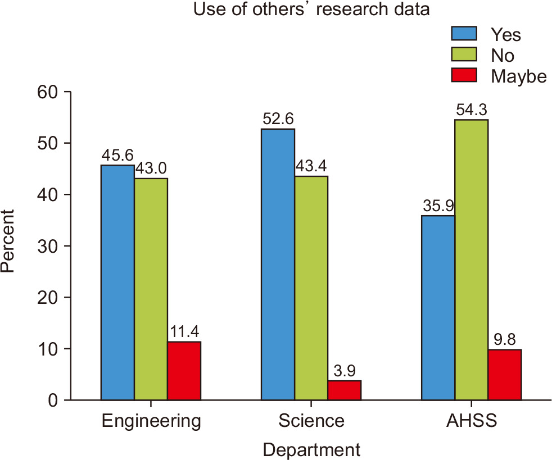
Fig. 1 addresses the present study’s research objective regarding respondents’ use of research data. It reveals differences in data usage practices across disciplines. While more researchers from science and engineering departments reported using others’ research data sets, this practice was much less common among the AHSS respondents. This pattern has been repeatedly observed in previous studies (Ruediger & MacDougall, 2023). This raises the question of why there is less interest in such usage, which warrants further research.
4.2. Importance of Others’ Research Data in Own Work
The researchers who had responded that they used research data from others’ studies (Fig. 1) were further asked whether they felt this was important for their research. Likert scale options were provided for responses, which ranged from “not important,” “slightly important,” “somewhat important,” to “very important” and “extremely important.” A substantial majority (81.4%) of science department scholars opined that it was of significant importance (55.8% responded very important, and 25.6% responded extremely important) (Fig. 2). The majority of engineering department respondents (59%) also held the same opinion (35.4% responded very important, and 23.6% responded extremely important). Over half of the AHSS scholars (53.8%) responded that it was significant (20.5% very important and 33.3% extremely important) (Fig. 2). For the variable of perceived importance of others’ research data, the Kruskal–Wallis H test was employed as the response in Likert scale items was ordinal. The test was conducted to assess if there were differences in the degree of importance the respondents gave to the use of others’ research data across departments. The calculated values for the test (Appendix 2) yielded χ2 (2)=1.423 and a p-value of 0.491. As this exceeds the critical value of 0.05 and is therefore statistically not significant, it can be concluded that there is no association across departments in the importance that researchers assign to others’ research data in their own work.
Fig. 2
Importance of others’ research data in own work. AHSS, arts, humanities, and social sciences.
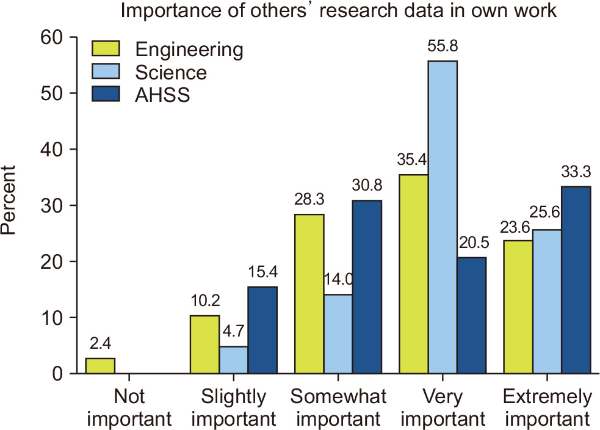
Significantly more researchers from the sciences than from engineering and AHSS understood the value of using others’ research data sets in their own work. This is to be expected, as research in the sciences operates more collaboratively and involves greater connectivity. Because data use is significantly lower in AHSS disciplines, they may deem its value less important than their Science, Technology, Engineering, and Medicine (STEM) peers (Khan et al., 2023).
4.3. Is Access to Own Research Data Provided
Respondents were asked whether they provided access to their research data in any form (Fig. 3). Options listed for response were “openly accessible,” “only some part is openly accessible,” “all research data is accessible with some restriction,” “only some part of research data is accessible with some restriction,” and “have not provided access to my research data.” Those who made all their research data openly accessible were slightly higher in number among science researchers (36.8%) than among engineering (26.3%) and AHSS (12%). Respondents who made only some parts of their research data openly accessible were slightly more common in science (36.8%) and engineering (33.8%) than in AHSS (18.5%). Researchers who had made all their research data accessible, albeit with some form of restriction (e.g., password), were minimal in number across AHSS (6.5%), science (2.6%), and engineering (7%). Disappointingly, more than half of the AHSS respondents (56.5%) reported not providing access to their research data. The number of scholars from science (18.4%) and engineering (28.5%) who responded likewise was significantly lower compared to that of AHSS. The calculated value for the variable of access provided to one’s own research data was χ2 (8, n=396)=40.881, p-value<0.001 (Appendix 2). This is lower than the critical value of 0.05. As such, we can deem it statistically significant. Subsequently, it implies that there is an association across departments with relation to access provided to data.
Fig. 3
Access to own research data provided. IP, internet protocol; AHSS, arts, humanities, and social sciences.
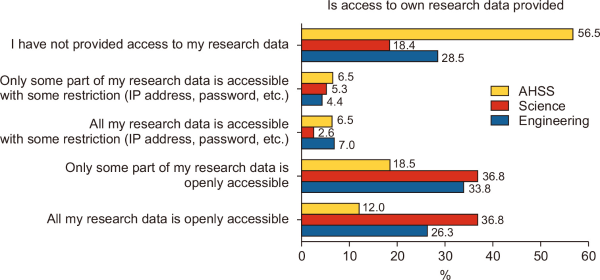
The authors met the study’s objective of determining the nature of access to research data. Among AHSS scholars, the use of research data from others, as well as the sharing of their own research data, was observed to be comparatively lower. This finding is similar to that observed in previous studies (Montague-Hellen & Montague-Hellen, 2023), who noted that an indicator of this being a prevalent tendency was that data availability statements have not been as normalized in AHSS research as in STEM. The present study’s findings that AHSS researchers lag behind STEM in using others’ research data are consistent with the finding that they lag behind in sharing their own data. AHSS researchers seem limited in the use and sharing of research data. It would be ideal for research developers and policymakers to focus on how to undo this tendency and motivate AHSS researchers towards more actively sharing their data as well as making use of datasets.
4.4. Reason(s) for Not Sharing Data
Research scholars in the surveyed sample were asked about their reasons for not sharing research data, if any (Fig. 4). They were invited to select one or more reasons from the multiple options listed, if they found them suitable. The options provided were “time consuming,” “misuse of own data,” “costs of storing and sharing research data,” “not aware of how to share data,” “lack of data sharing infrastructure,” “data confidentiality,” “concerns about data quality,” “data privacy concerns,” and an open-ended option to add any other reason the respondent may have to not share data. The major reasons chosen by a significant number of respondents was data confidentiality (43.5% of AHSS, 29.8% of engineering, and 19.7% of science scholars), data privacy concerns (40.2% of AHSS, 21.9% of engineering, and 13.2% of science scholars), and to avoid misuse of their research data (34.8% of AHSS, 29.8% of engineering, and 14.5% of science scholars). Thus, across respondents from the AHSS, engineering, and science departments, three major reasons for not sharing the data were data confidentiality, data privacy concerns, and the fear of misuse of their research data. Appendix 2 indicates that the variables “to avoid misuse of your research data” (χ2=9.37, p=0.009), “not aware how to share my research data with others” (χ2=9.39, p=0.009), “data confidentiality” (χ2=11.34, p=0.003), and “data privacy concerns” (χ2=18.39, p<0.001) are lower than the critical value of 0.05 (for all the variables listed here, the degree of freedom [df] was 2 and the total sample [n] was 396). Therefore, these variables are statistically significant. This implies that there is an association in these reasons why researchers hesitate to share data across departments.
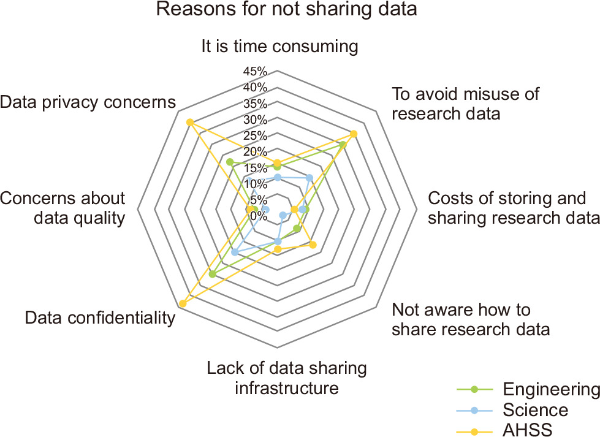
However, for the variables “it is time consuming” (χ2=0.85, p=0.654), “costs of storing and sharing research data” (χ2=1.26, p=0.532), “lack of data sharing infrastructure” (χ2=0.45, p=0.797), and “concerns about data quality” (χ2=1.55, p=0.461) (Appendix 2), their p-value was higher than the critical value of 0.05. As such, these variables are not statistically significant. This indicates that there is no association across departments with regard to these variables.
The findings clearly reveal that significantly more AHSS researchers were hesitant to share their research data than their STEM counterparts. This finding aligns with earlier studies in the topic. Ruediger and MacDougall (2023)’s work confirms this reticence among researchers in the humanities. Díaz et al. (2021)’s study supports similar sentiments shared by researchers in the social sciences. Borycz et al. (2023)’s study also supports this thesis. Tripathi et al. (2017b) noted that a reason researchers hesitate to share data is its confidential nature, and that sharing it could be seen as a breach of trust regarding participants’ personal details. Similar to what was found in the present study, data confidentiality and fear of misuse of data were found to be the main reasons for not sharing data in a previous study in the topic (Saeed & Naushad Ali, 2019). Researchers found that one reason for this hesitation and uncertainty in sharing data was fear of not knowing who would use their data or for what purpose. It goes without saying that institutional policies should address such fears and provide some form of guarantee against such hypotheticals. Such worries can be mitigated when researchers work together increasingly towards a common goal (Arend et al., 2014).
4.5. Research Data Loss
When asked whether they had ever lost research data, the majority of research scholars responded they had never lost research data (engineering: 68.4%, science: 64.5%, and AHSS: 59.8%) (Fig. 5). However, a middling number of respondents had (science: 26.3%, engineering: 21.5%, and AHSS: 19.6%). The calculated χ2 (4, n=396)=8.357, and p=0.079 (Appendix 2) for the variable “have you ever lost research data” is higher than the critical value of 0.05. Therefore, it is not statistically significant. This indicates there is no significant association regarding data loss across the departments.
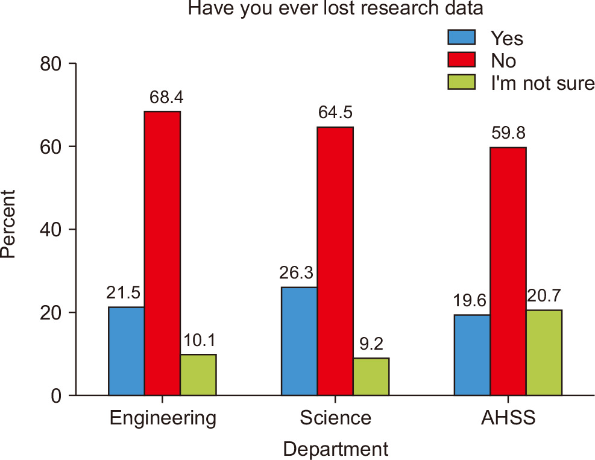
The question of data loss highlights the finding that the majority of researchers, regardless of department, seem diligent in protecting their research data. However, training them in data loss, recovery, backup, storage, and protection can help elevate the rudimentary mechanisms they currently use (Briney et al., 2020). Librarians could do well to examine the numbers and hold orientation and training sessions on the importance of data preservation, storage, backup, and security mechanisms for research scholars.
4.6. Research Data Back-Up
The authors asked the researchers how often they backed up their research data. The options provided were “yes, regularly,” “yes, occasionally,” “yes, rarely,” and “no.” A significant number of them back up either regularly or occasionally (Fig. 6). Nearly half of the engineering respondents (49.1%) backed up their data occasionally, followed by 43.5% of AHSS respondents and 38.2% of the science respondents. The authors found that 42.1% of science, 32.9% of engineering, and 29.3% of AHSS respondents backed up their data regularly. Only 12% of AHSS researchers, 7.9% of science researchers, and 4.8% of engineering researchers stated they do not back up their data. The calculated χ2 (6, n=396)=8.953, and p=0.176 (Appendix 2) for the variable of “research data backup” is higher than the critical value of 0.05. Therefore, it can be concluded that the variable is not statistically significant. This implies that there is no association regarding backup practices of researchers across departments.
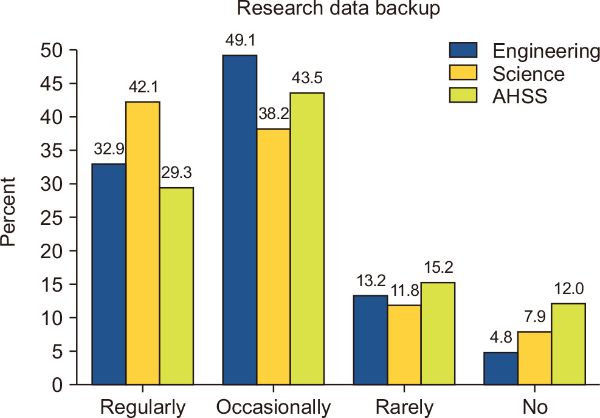
A lower number of AHSS researchers seem to back up their data regularly, compared to their STEM peers. Regular backups are crucial for protecting against unexpected data loss caused by system failures and other unforeseen events. The importance of well-managed data is tantamount to a healthy and organic research ecosystem. This means less time spent searching for and less effort spent understanding the data (Briney et al., 2020). Loss of data due to improper storage or forgetting to back up can be disastrous for one’s research. Scholars need to be educated about the importance of regular data backups and encouraged to implement them. Librarians can design programs and place greater focus on AHSS researchers.
4.7. Research Data Storage Methods
The authors asked survey respondents how they stored their research data (Fig. 7). Multiple-choice options were provided. The options provided were “institute computer,” “shared computer in department/institute,” “cloud,” “institute’s digital repository,” “external hard disk,” “lab/research register,” “institutional data repository,” “external data repository,” “does not store data,” and an option to add an answer. Storing data on one’s own computer is the primary method, followed by researchers across departments, with 81.5% of AHSS, 69.3% of engineering, and 65.8% of science respondents. The second preferred method is different for each department’s scholars (in the institute computer, 50.4% for engineering; in an external hard disk, 44.7% for science; and in cloud storage, 43.5% for AHSS respondents). The test results (Appendix 2) show that the variables “own computer” (χ2=6.288, p=0.043), “on institute computer” (χ2=16.868, p<0.001), and “external hard disk” (χ2=6.119, p=0.047), are statistically significant, as the values are lower than the critical value of 0.05 (the df was 2 for all the variables mentioned under Research Data Storage Methods, and the total sample [n] was 396). Therefore, it can be inferred that there is an association across the departments for these variables. However, for the remaining variables of “shared computer in department/institute” (χ2=5.086, p=0.079), “cloud storage” (χ2=0.643, p=0.725), “institute’s digital repository” (χ2=2.072, p=0.355), “maintaining in lab/research register” (χ2=4.082, p=0.13), and “external data repository” (χ2=3.223, p=0.2), the values are higher than the critical value of 0.05. As such, they are statistically insignificant and imply there is no association across the departments with respect to these variables. A Fisher’s exact test, two-sided, was conducted for the following two variables: “institutional data repository” and “I do not store the research data,” as it had 40% and 50% of the response cells, respectively, having fewer than five counts. The result for the first variable was not statistically significant as p-value was 0.794, and in the case of “I do not store the research data” it was statistically significant, as p-value was 0.017. Thus, there is no relation between the variable “institutional data repository” and departments. In the case of “I do not store the research data” there is an association across departments.
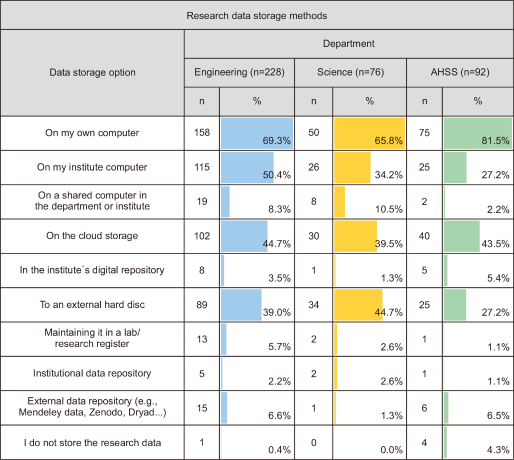
The study’s objective to determine the nature of data storage chosen by the researchers is met here. It was observed that the majority of respondents used their own computer systems for data storage. Only a few respondents were using a repository for RDM, combining the institute’s digital repository, its data repository, and an external data repository. The use of a data repository should be encouraged, considering the benefits it offers compared to current preferred storage methods. Effective and efficient data storage is an important aspect of successfully implemented RDM. Storing data in a secure manner so as to protect it from “loss, corruption, or unauthorized access is necessary”; data storage mechanisms include “cloud services, institutional repositories, or dedicated servers” (Dube, 2025).
4.8. Is Stored Research Data FAIR-Compliant
Respondents were asked whether their stored research data met the FAIR principles. As the concept may be unfamiliar to many, the authors presented the question broken down into the four elements of “findable,” “accessible,” “interoperable,” and “reusable,” as well as adding a “none of the above” option in the spirit of achieving comprehensiveness.
The majority of the respondents affirmed that their stored data was easily accessible (68.4% of engineering, 62% of AHSS, and 56.6% of science respondents). The second component of the FAIR principle, which received significant agreement from respondents, concerned whether their data was easily findable. Nearly half of the research scholars from each of the three departments responded positively to this (51.3% in science, 50.9% in engineering, and 45.7% in AHSS). Ranking third in FAIR principles in terms of the number of researchers who felt their data was aligned with it was whether their stored data was reusable. A middling number of respondents felt that their data was reusable (25% of science, 24.6% of engineering, and 23.9% of AHSS respondents). The fewest researchers responded that their data met the “interoperability” criterion (19.7% in science, 19.7% in engineering, and 13% in AHSS) (Fig. 8). The calculated chi-square test results (Appendix 2) showed that the p-values for “easily findable” (χ2=0.808, p=0.668), “easily accessible” (χ2=3.877, p=0.144), “interoperable” (χ2=2.127, p=0.345), “reusable” (χ2=0.028, p=0.986), and “none of the above” (χ2=5.051, p=0.08) are all higher than the critical value of 0.05 (for all the variables mentioned here, the df was 2 and the total sample [n] was 396). As such, they are deemed statistically insignificant. This implies there is no significant association across the departments for any of the above variables.
Fig. 8
Is stored research data Findable, Accessible, Interoperable, and Reusable (FAIR)? AHSS, arts, humanities, and social sciences.
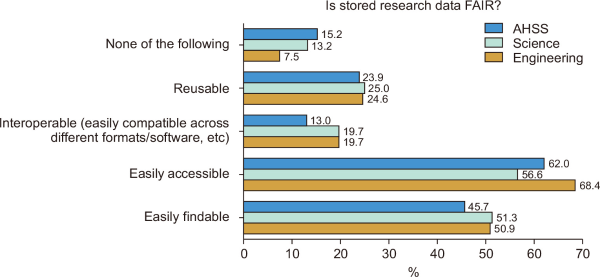
A broader discussion of the FAIR principles is needed, with the involvement of researchers. More awareness and training on implementing FAIR in one’s own work will go a long way toward creating a healthier, more productive research ecosystem within one’s institute. Librarians should take up the helm on this task and design training programs for researchers (Adams et al., 2023; Nitecki & Alter, 2021).
4.9. Data Management Plan Awareness and Use
The authors asked respondents whether they were aware of what a DMP was. Those unaware of DMP were in the clear majority (Fig. 9). This trend was observed across departments (90.2% of AHSS, 87.7% of engineering, and 81.6% of science respondents). The calculated χ2 (4, n=396)=5.36, and p=0.252 (Appendix 2) was derived for DMP awareness. This is higher than the critical value of 0.05. Therefore, it is not statistically significant, indicating that there is no association in DMP awareness across the departments in the sample.
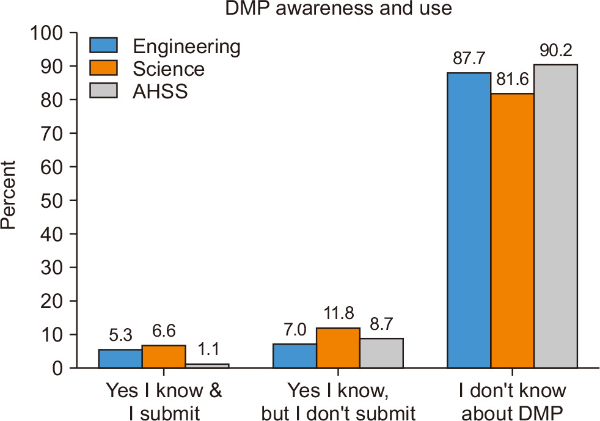
The present study sought to understand how aware researchers were of what DMPs are. Significantly higher rates of unawareness were observed across departments when asked about DMP. Earlier studies on the topic have also observed a similar pattern regarding ignorance about DMP amongst researchers (Ünal et al., 2019). Given the high level of unawareness among researchers across disciplines, libraries can arrange a well-structured awareness and training program on DMPs and DMP tools, along with RDM awareness, especially since many funding agencies now require the submission of a DMP with project proposals.
5. CONCLUSION
As the world continues to advance through research, a look at research practices, particularly research data practices, will help guide efforts in the right direction. The present study investigated data practices of early-stage researchers across the disciplines of engineering, sciences, and AHSS. The findings provided insight into disciplinary differences in how researchers use and manage data. An underlying pattern detected across the analyzed data is that AHSS researchers are lagging behind their STEM counterparts in research data practices. Researchers from the sciences and engineering departments were found to be more inclined to use data from others in their own research than their peers in AHSS departments. Researchers from the sciences understood the significance of using others’ data far better than those from the engineering and AHSS departments. They also lead in having made their data openly accessible.
Overall, researchers from AHSS were found to be less likely to share their own research data or use others’ research data. The most common reasons for hesitation about data sharing were concerns about privacy and confidentiality, and fear of misuse of research data. Multiple studies have confirmed our findings that AHSS researchers are less willing to share their research data than their STEM peers. AHSS scientists usually work on the human aspect, which is more personal-based, and thus compounds the privacy factor. However, whereas STEM scientists’ work relies on instruments or shared resources and is dependent on governmental funding, they have all improved in their “willingness to share” (Borycz et al., 2023). Data sharing practices are still relatively recent in AHSS. The present study observed that researchers seem to be more or less diligent in protecting their data and backing it up. They preferred their own computers for storage, and the second-preferred option varied across departments. Regarding FAIR compliance, most said their stored data is easily findable and accessible, fewer responded with “reusable” and even less for “interoperable” elements. We found that researchers need more awareness about DMP. In general, we can surmise there is a clear difference in the practices followed by those in STEM and those in AHSS disciplines.
Understanding why the gap exists in the first place will significantly help bridge it. Further studies are required to better understand the differences in research culture and data practices between STEM and AHSS. Learning more about the academic and research environments in STEM and AHSS will open more opportunities to introduce RDM appropriately to researchers. In an era when the world seems to be frantically leaning towards shortcuts in seeking answers, doing due diligence and following proper research methods and practices to achieve empirically tested and validated results seems even more crucial. RDM is rightly the natural step towards ensuring that the research we publish is evidence-based and factually accurate. Without data-driven checks in place to guarantee the veracity of our findings, the entire research ecosystem becomes precariously balanced, on the verge of collapse. A knowledge-based society cannot thrive if it is not based on objectively correct research. Institutions should address researchers’ concerns and identify ways to encourage better data management practices. An institute-wide mandate, strictly enforced across institutions, funding agencies, publishers, and others, can help with this, while also raising awareness and improving research practices. Examining in depth the role libraries could play in RDM implementation and in designing training programs within academia will be potent and meaningful for the future roles of librarianship.
REFERENCES
, , (2023) Supporting FAIR data management planning across different disciplines at the university of Sheffield Data Science Journal, 22(17), 1-7 https://doi.org/10.5334/dsj-2023-017.
, , , (2017) A comparison of research data management platforms: Architecture, flexible metadata and interoperability Universal Access in the Information Society, 16(4), 851-862 https://doi.org/10.1007/s10209-016-0475-y.
, , , , , , (2014) e!DAL - a framework to store, share and publish research data BMC Bioinformatics, 15(1), 214 https://doi.org/10.1186/1471-2105-15-214.
, , (2025) Research data management and FAIR compliance through popular research data repositories: An exploratory study Data Technologies and Applications, 59(3), 472-492 https://doi.org/10.1108/dta-12-2022-0477.
(2012) The conundrum of sharing research data Journal of the American Society for Information Science and Technology, 63(6), 1059-1078 https://doi.org/10.1002/asi.22634.
, , , , , , , , , (2023) Perceived benefits of open data are improving but scientists still lack resources, skills, and rewards Humanities and Social Sciences Communications, 10(1), 339 https://doi.org/10.1057/s41599-023-01831-7.
, , (2020) Foundational practices of research data management Research Ideas and Outcomes, 6, e56508 https://doi.org/10.3897/rio.6.e56508.
, (2019) Misconduct as the main cause for retraction. A descriptive study of retracted publications and their authors Gaceta Sanitaria, 33(4), 356-360 https://doi.org/10.1016/j.gaceta.2018.01.009.
, , (2021) Sharing research data: An analysis of the interest of social scientists in the context of a Mexican University Social Sciences, 10(10), 390 https://doi.org/10.3390/socsci10100390.
(2012) On the citation advantage of linking to data, https://hal-hprints.archives-ouvertes.fr/hprints-00714715v1
(2025) Research data management in academic libraries: Institutional repositories as a reservoir for research data Library Management, 46(5), 319-331 https://doi.org/10.1108/lm-06-2024-0070.
, , (2019) Analysis of retractions in Indian science Scientometrics, 119(2), 1081-1094 https://doi.org/10.1007/s11192-019-03079-y.
, (2018) Research data management and sharing among researchers in Arab universities: An exploratory study IFLA Journal, 44(4), 281-299 https://doi.org/10.1177/0340035218785196.
(2019) Responding to research misconduct: A primer for LIS professionals Science & Technology Libraries, 38(3), 272-287 https://doi.org/10.1080/0194262x.2019.1644268.
Joint Seat Allocation Authority (2025) About the institute, https://josaa.admissions.nic.in/applicant/seatmatrix/InstProfile.aspx?enc=gNI/L73ZsCSQkVP6SdcUGDYBTmtv/bFTMyf7HVOwnPs=
, (2021) Analysis of research data in information science using the topic modeling method Journal of Mekong Societies, 17(1), 89-109 https://so03.tci-thaijo.org/index.php/mekongjournal/article/view/251779.
, , (2023) Data sharing and reuse practices: Disciplinary differences and improvements needed Online Information Review, 47(6), 1036-1064 https://doi.org/10.1108/oir-08-2021-0423.
, , (2021) Effectiveness of data auditing as a tool to reinforce good research data management (RDM) practice: A Singapore study BMC Medical Ethics, 22(1), 103 https://doi.org/10.1186/s12910-021-00662-y.
, (2023) Publishers, funders and institutions: Who is supporting UKRI-funded researchers to share data? Insights: The UKSG Journal, 36(4), 1-17 https://doi.org/10.1629/uksg.602.
National Science Board (2023) Publications output: U.S. trends and international comparisons, https://ncses.nsf.gov/pubs/nsb202333
Nature Index (2025) 2025 Research leaders: Leading countries/territories, https://www.nature.com/nature-index/research-leaders/2025/country/all/global
, (2025) Factors influencing researchers’ scientific integrity in scholarly publishing: A path analysis approach Research Ethics, 21(3), 384-407 https://doi.org/10.1177/17470161241257445.
, (2021) Leading FAIR adoption across the institution: A collaboration between an academic library and a technology provider Data Science Journal, 20(6), 1-8 https://doi.org/10.5334/dsj-2021-006.
, (2023) FAIR research data management as community approach in bioengineering Engineering in Life Sciences, 23(1), e2200005 https://doi.org/10.1002/elsc.202200005.
, (2023) Are the humanities ready for data sharing?, https://sr.ithaka.org/wp-content/uploads/2023/03/SR-Issue-Brief-Data-Sharing-in-the-Humanities-03062023.pdf
, (2019) Research data management and data sharing among research scholars of life sciences and social sciences DESIDOC Journal of Library & Information Technology, 39(6), 290-299 https://doi.org/10.14429/djlit.39.06.14997.
(2021) Eight ‘2nd gen’ IITs set up in 2008-09 struggle for students, admissions 33% of target: CAG, https://theprint.in/india/education/eight-2nd-gen-iits-set-up-in-2008-09-struggle-for-students-admissions-33-below-target-cag/790759/
, , , , , , , (2011) Data sharing by scientists: Practices and perceptions PloS One, 6(6), e21101 https://doi.org/10.1371/journal.pone.0021101.
, , , (2017a) A brief assessment of researchers’ perceptions towards research data in India IFLA Journal, 43(1), 22-39 https://doi.org/10.1177/0340035216686984.
, , (2017b) Research data management practices in university libraries: A study DESIDOC Journal of Library & Information Technology, 37(6), 417-424 https://doi.org/10.14429/djlit.37.6.11336.
, , , , (2019) Research data management and data sharing behaviour of university researchers Information Research, 24(1), paper isic1818 http://informationr.net/ir/24-1/isic2018/isic1818.html.
, , , (2017) Reproducible and reusable research: Are journal data sharing policies meeting the mark? PeerJ, 5, e3208 https://doi.org/10.7717/peerj.3208.
, (2011) Making the case for research data management, https://www.dcc.ac.uk/sites/default/files/documents/publications/Making%20the%20case.pdf
, , , , , , , , , , , , , , , , , , , (2016) The FAIR guiding principles for scientific data management and stewardship Scientific Data, 3(1), 160018 https://doi.org/10.1038/sdata.2016.18.
, (2024) Research data mismanagement - from questionable research practice to research misconduct Accountability in Research, 31(6), 706-713 https://doi.org/10.1080/08989621.2022.2157268.
- Received
- 2025-12-27
- Revised
- 2026-03-17
- Accepted
- 2026-03-20
- Published
- 2026-06-30
- Downloaded
- Viewed
- 0KCI Citations
- 0WOS Citations