- P-ISSN2287-9099
- E-ISSN2287-4577
- SCOPUS, KCI

Vol.14 No.2
Abstract
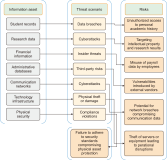
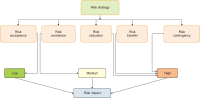
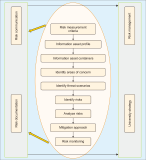
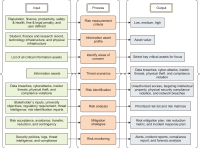
Higher education institutions (HEIs) are becoming a breeding ground for hackers due to their open culture policies and the volume of sensitive data they produce. Unless an appropriate information security risk management (ISRM) framework is in place to support them in thriving in the digital era, African HEIs in general and Ethiopian HEIs in particular are not immune to the expanding cybersecurity threats. This study aims to identify existing gaps, best practices, and future directions regarding ISRM in HEIs in Ethiopia. To achieve its core objective, the study adopted an exploratory research design and leveraged quantitative and qualitative approaches. Online and offline survey questions were distributed by email and in person, respectively, to collect quantitative data. Academic and information and communication technology (ICT) staff personnel from four different HEIs were chosen using the purposive sample technique. The qualitative data were gathered from relevant research and an interview with the ICT directors. The topics covered by the data collection tool were adopted from recent international information security frameworks and standards. Microsoft Excel 2016 (Microsoft, Redmond, WA, USA) was used for data analysis. Even though there are some acceptable secure practices in the studied HEIs, secure online and offline practices are still lacking in the areas of organizational, people, physical, and technology controls. To address the aforementioned concerns, the study proposes an appropriate ISRM Framework for HEIs to mitigate unauthorized access, use, disclosure, alteration, or deletion of valuable information, although the framework was not put into practice or transformed into a prototype or simulation-based demonstration.
Abstract
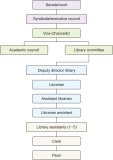
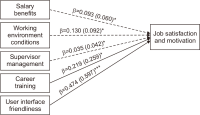
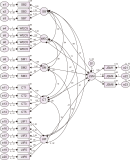
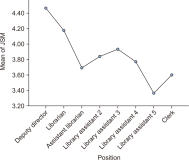
Job satisfaction among librarians and staff is a critical human resource concern that influences organizational effectiveness, yet it remains underexplored in Myanmar’s university libraries. This study aims to assess job satisfaction levels and identify key influencing factors among librarians and staff in Myanmar’s university libraries, with attention to demographic and positional disparities. A cross-sectional quantitative survey was conducted with 111 participants from 49 university libraries. Data were analyzed using IBM SPSS version 25 (IBM Co., Armonk, NY, USA) and IBM SPSS AMOS version 25 (IBM Co.), employing exploratory factor analysis (EFA) and confirmatory factor analysis (CFA). Career training and user interface friendliness were found to significantly enhance job satisfaction, while salary, working environment, and supervisory factors had no significant impact. Notably, library assistants (5) reported lower satisfaction compared to deputy directors and librarians. The findings also indicate that Myanmar librarians prioritize user service over personal job satisfaction. Prioritizing career training and user interface design is essential for improving job satisfaction among Myanmar’s university library staff. Strategic initiatives should focus on enhancing training opportunities and user-centered service delivery to foster a more satisfying and effective workplace.
Abstract
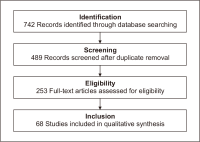
The digital preservation of archival collections faces growing challenges in ensuring long-term authenticity and integrity. This article presents a critical analysis of distributed ledger technology (DLT) and blockchain applications in digital preservation, with a specific focus on archival repositories. Through a systematic literature review following Preferred Reporting Items for Systematic Reviews and Meta-Analyses guidelines and an analysis of existing implementations, this study identifies the opportunities and limitations of these technologies. The main contribution is the first rigorous synthesis, operationalization, and contextual validation of a socio-technical implementation framework for DLT in archives. This framework, grounded in socio-technical systems theory, integrates technical, organizational, economic, regulatory, and social dimensions to guide information professionals. Unlike previous reviews focused on technical aspects, this study offers a holistic approach, filling a significant gap by providing practical guidelines for informed decision-making. The findings suggest that the success of DLT implementations depends less on intrinsic technical characteristics and more on the “joint optimization” of social and technical subsystems, aligned with specific organizational needs, national regulatory frameworks, and long- term sustainability. The article concludes by offering a practical, context-adaptive tool for libraries, archives, and information centers considering the adoption of DLT.
Abstract
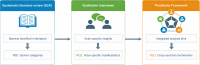
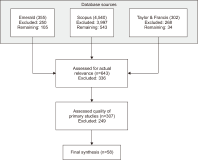
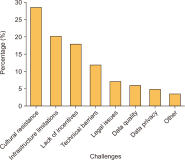
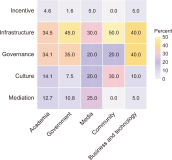
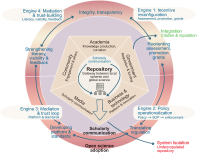
Open science is widely promoted to enhance transparency, accessibility, and trust in scholarly communication, yet its adoption in Indonesia remains uneven and system-dependent. This study aims to identify the dominant barriers to open science adoption and examine how these barriers are configured across Pentahelix actors. Using a sequential mixed-methods design, the research combines a systematic literature review of peer-reviewed studies (2020-2024; n=58) with semi-structured interviews involving 20 stakeholders. The literature most frequently reports cultural resistance (28.4%), infrastructure limitations (19.8%), and lack of incentives (18.5%), suggesting that constraints extend beyond technical readiness. Interview findings indicate that governance and infrastructure constraints constitute the dominant barriers across actors, although their manifestation varies according to institutional roles and authority. The results show that governance and infrastructure shape how incentives and cultural norms translate into practice across the research ecosystem. Overall, barriers appear relational and systemic, emerging from cross-actor misalignment in governance execution, infrastructure sustainability, incentive signaling, and mediation capacity. The findings suggest that accelerating adoption requires coordinated yet differentiated interventions, including aligning incentive structures for open outputs, translating policy commitments into operational mechanisms, strengthening national research data governance, ensuring sustainable infrastructure support, and enhancing mediation capacity through collaboration with media and community intermediaries.
Abstract
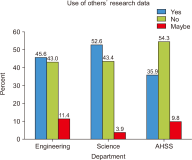
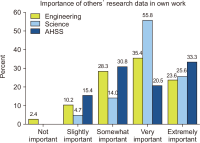
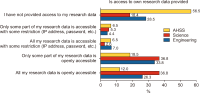
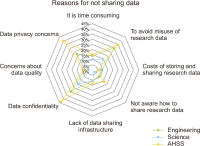
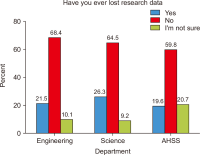
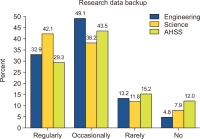
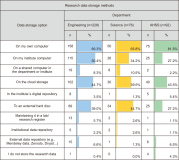
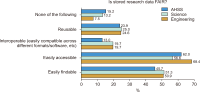
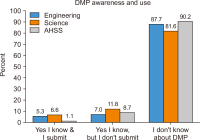
The need for better research data management (RDM) practices and culture within academic and research institutions is rising, and their significance in countering academic misconduct and maintaining integrity is increasingly recognized across sectors. Yet it needs to be seen how doctoral students practicing their research craft manage their data. What do RDM practices look like among early-stage researchers? The authors sought to understand how researchers use, provide access to, share, store, and back up research data, as well as their awareness of data management plans (DMPs). The authors studied a sample of researchers of engineering, science, and arts, humanities, and social sciences (AHSS) departments from select Indian Institutes of Technology to examine their data management practices. The authors designed and employed a structured questionnaire for data collection. A quantitative survey approach was adopted. It was found that science and engineering departments had slightly better data management practices and placed greater emphasis on data sharing than AHSS. Concerns about privacy, confidentiality, and fear of data misuse were the main reasons researchers cited for their unwillingness to share data. Researchers were found to be storing their data in easily “findable” and “accessible” methods; however, their FAIR compliance was otherwise lacking. Awareness of DMP was found to be low across disciplines. Strictly enforcing RDM implementation within academic institutions will help shape better data practices among researchers, which would ideally lead to an improved, more productive research environment. This study contributes to understanding the disciplinary differences in data practices among early-stage researchers and to identifying where gaps in awareness and practice exist.
Abstract
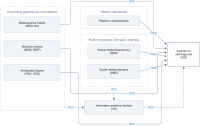
Amidst growing concerns about the quality of video-based social media (VSM) information and rising adult attention-deficit/hyperactivity disorder (ADHD) diagnoses, this study empirically investigates the structural mechanisms of platform-mediated health information behavior. Specifically, the authors examine how pre-existing psychosocial vulnerabilities (including metacognitive beliefs about health anxiety, medical mistrust, and anticipated stigma), platform-mediated channels, and platform affordances relate to the intention to self-diagnose ADHD. Data were collected via an online survey from 216 South Korean young adults in their 20s and 30s without prior formal diagnoses. Multiple regression and bootstrapping-based mediation analyses were conducted to explore these structural relationships. Key findings indicate that social media dependency, exposure frequency, and a user preference for short-form videos are significantly and positively associated with the intention to self-diagnose. Notably, the analyses reveal that information-seeking intention, social media dependency, and exposure frequency significantly mediate the relationship between the users’ pre-existing vulnerabilities and their self-diagnosis intention. Rather than viewing this phenomenon merely as a passive internalization of misinformation, these results reframe VSM-based self-diagnosis as an active, compensatory information behavior utilized to navigate offline social barriers. Consequently, this study highlights the urgent need for algorithm-conscious health information curation by information professionals and targeted e-health literacy interventions to guide vulnerable users toward evidence-based clinical support.