Korean Journal of Digital Humanities
- E-ISSN : 3058-311X
- Publisher : Korean Association for Digital Humanities
- CCL :

_3200-704_투명.png)
5papers in this issue.
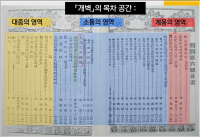
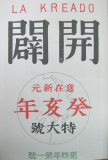
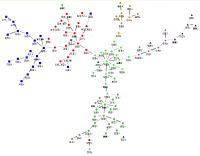
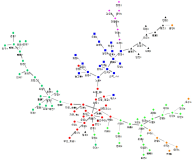
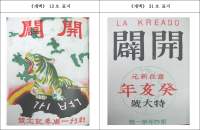
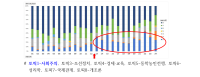
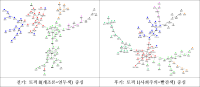
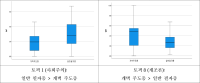
This article retraces three phases of the author's long-term research on Gaebyeok (開闢, 1920–1926): manual analysis (Phase 1, 2005–2013), topic modeling and network analysis (Phase 2, 2014–2024), and the integration of Large Language Models (LLMs) and knowledge graphs (Phase 3, 2025–). Through this retrospective, it examines how research questions and analytical methods have co-evolved in mutual interaction. Two tasks left unresolved by the qualitative analysis of Phase 1 — the quantitative verification of "socialization" (sahoejuuihwa) and the sentence-level investigation of "reception via relay translation" (jungyeokjeok suyong) — were subsequently taken up in Phases 2 and 3, respectively. The paper proposes to frame this trajectory under the tentative concept of "digital philology," understood as a methodological orientation that extends and deepens the traditional philological task of tracing textual genealogies and transmission through digital technologies and AI. Finally, it discusses the potential applicability of this framework to research on the Korean independence movement and, more broadly, to comparative studies of East Asian texts.

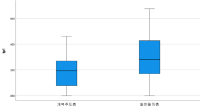


This paper presents a methodology for designing and constructing data that restores the diagnostic algorithms embedded in classical Joseon medical literature, along with its results. Setting Uibangryuchi (醫方類聚), Donguibogam (東醫寶鑑), and Injeji (仁濟志) as a three-axis framework representing accumulation, standardization, and application, and Yeoksimanpil (歷試漫筆) as a clinical verification text in a "Three-Axis-Plus-One" system, the study segments the diagnostic flow of 30 byeongmun (病門, disease categories) into three layers: L1 (phenomenal recognition), L2 (judgment structure), and L3 (therapeutic execution). Each byeongmun is classified into one of four typologies based on its functional role: ecological-circulation (A), judgment-node (B), network-hub (C), and boundary-judgment (D). The dataset comprises approximately 750 rows of RDM_Core data and 485 NETWORK relations, officially registered on the KISTI DataON Platform. L2 (judgment structure) accounts for about 45% of the total, confirming that Joseon medical literature allocates the greatest proportion to articulating diagnostic logic. The mean NETWORK edge count for Type C (22.1) markedly exceeds the other types (11.2–16.2), providing post-hoc validation of the classification. Two structural characteristics were inductively identified: Cause-Arrangement Medicine, which systematically arranges multiple causes rather than reducing them to a single etiology, and Intervention-Timing Medicine, which calibrates the timing, sequence, and intensity of therapeutic intervention by disease stage. These characteristics are methodologically distinct from the nominal entity-centered approaches in existing international traditional medicine digitization projects, opening prospects for knowledge graph expansion and AI integration.
This paper examines how Joe Wright’s 2005 film adaptation of Jane Austen’s Pride and Prejudice transforms the character of Mr. Bennet from a detached, sarcastic father into a gentle, devoted patriarch, arguing that this transformation constitutes a new mechanism of patriarchal myth. While Peter Glick and Susan Fiske successfully identify hostile and benevolent sexism—both of which operate by defining women—this paper identifies a mechanism that falls outside their framework: one that reshapes the male figure to conceal patriarchal power structures. Drawing on Roland Barthes’s concept of myth as naturalized ideology, the paper proposes that Wright’s adaptation romanticizes the male figure rather than targeting women directly, thereby diminishing the mother by contrast and making the father's authority appear not only natural but necessary. To assess the effectiveness of this myth, the paper conducts a comparative analysis of 3,527 Korean film reviews and 639 book reviews from Watchapedia and Aladin, alongside reviews from IMDb. Through collocation analysis of these reviews, this study examines how Anglo-American and Korean audiences respond to and absorb the adapted patriarchal tactic in markedly different ways and argues that understanding how patriarchal myth operates requires culturally specific approaches rather than a universal framework.

This paper presents a workflow for collecting and preprocessing text data from the Shanghai Library Shun Pao database. It describes the development of a text-data collection script, the actual collection procedure, the structure and characteristics of the collected data, and the preprocessing procedure and output structure used to construct an integrated research dataset. The scripts were designed and developed with the assistance of an AI coding agent in a Human-in-the-Loop workflow, in which the researcher provided requirements, error messages, and related inputs, while the AI agent iteratively revised and verified the code. The prompts, code, and sample data associated with this work are made available in the study’s GitHub repository.