

JOURNAL OF INFORMATION SCIENCE THEORY AND PRACTICE
- P-ISSN2287-9099
- E-ISSN2287-4577
- SCOPUS, KCI

Universal Design in Academic Libraries in Ghana to Accommodate Students with Disabilities


Lizette King (Department of Library and Information Science, University of the Western Cape, CapeTown, South Africa)

Abstract
This study investigates how Ghanaian public university libraries conform to universal design principles to accommodate students with disabilities. The study employed a multiple case study design and was underpinned by the Social Model of Disability. A convergent mixed-parallel design was adopted, and online questionnaires were administered to 261 students with disabilities while in-depth interviews were conducted with 28 participants. The data were analysed thematically. Most university libraries were not universally designed to accommodate the needs of students with disabilities, which negatively affected information access, participation, and independence. Findings from students with disabilities revealed that the library design does not accommodate a wide range of individual preferences and abilities, nor does it provide an appropriate size and space for approach, reach, manipulation, and use. There is a need to strengthen policy and enforcement. Mandatory implementation of universal design and accessibility standards must be linked to accreditation or funding as enforcement incentives. The study emphasises the importance of allocating sufficient funds by university management and government for redesigning library facilities and services to facilitate the inclusion and equal participation of students with disabilities. Empirically, the study found lower adherence to universal design principles among Ghanaian academic libraries, revealing systemic barriers to access for differently abled students. The study is original, as it applies theoretical triangulation, integrating the principles of universal design and the Social Model of Disability to expose accessibility barriers in Ghanaian academic libraries, as well as institutional and attitudinal systems that perpetuate disablement.
- keywords
- universal design, students with disabilities, social model of disability, academic libraries, inclusion, Ghana
1. INTRODUCTION
The role of every library is to make available innovative and equitable information materials and services to satisfy the needs of all users, because “all persons have a right to information regardless of disability” (Abodunrin & Olutoyosi, 2020, p. 147). Decisions about inclusivity, accessibility, and usability are made at all levels of the library, from the external design to the internal layout and instructional planning. Accessibility is about how differently abled individuals can independently use facilities, services, communication and products. University libraries must aim to support access to facilities, information materials, and services for everyone (Blummer & Kenton, 2017), to maximize the benefits for users (Acheampong et al., 2020). Many scholars have pointed out the systemic issues and barriers within libraries that hinder people with disabilities (Foxhall et al., 2020; Oud, 2019).
Due to systemic challenges in including students with disabilities, universal design (UD) requires that all environments, communications, and products be accessible and accommodating to every individual, to the greatest extent possible from the outset, regardless of their abilities (NC State University, 1997). In other words, UD provides inclusive environments and learning opportunities that enable everyone to access and participate, regardless of their abilities.
In libraries, UD addresses users’ accessibility needs at the development stage, integrating universal accessibility and creating functional products (Rose et al., 2002; 2006). Therefore, designing library facilities and services with accessibility requirements from the outset is more cost-effective than making future adaptations to the structure (Hitchcock et al., 2002). UD upholds the principles of equity, social justice, and diversity, promoting quality education regardless of individual differences, disabilities, or dispositions. It goes beyond legal accessibility requirements by seeking solutions that accommodate the varying needs, interests, and preferences of diverse users. Using UD principles and the social model as foundational elements, university libraries can provide access to resources for all users by creating an enabling, user-friendly, and barrier-free environment for persons with disabilities through adaptive solutions that enhance accessibility and benefit everyone (Banik & Banik, 2021, p. 69). Consequently, UD fosters a more normalised life, encourages a concerned library community, and supports high academic expectations for diverse users, especially those with disabilities.
1.1. Statement of the Research Problem
In 2020, the student enrolment numbers in tertiary education institutions in Ghana were slightly over 547,000, compared to just over 496,000 students in the previous year (Dierks, 2023). As student enrolment rises at Ghanaian public universities, there is likely to be a rise in the number of differently abled students in institutions of higher learning. Although advocacy for creating pathways for accessibility and success in institutions of higher learning for all individuals has existed for quite some time (Swanzy et al., 2019), studies across Africa, including Ghana, have shown limited attention to the education and provision of resources and facilities for persons with disabilities in higher education institutions (Akoto, 2021; Eneya et al., 2020; Kaunda & Chizwina, 2019; Obim & Akpokurerie, 2022). There are only a “handful of disability-friendly systems and facilities on campuses within the Ghanaian higher education sector” (Osei-Tutu, 2021, p. 23). Little conscious effort has been made to reframe university campuses, structures, and facilities to improve accessibility and accommodation for students with disabilities. Consequently, students with disabilities face difficulties in accessing resources, which hampers their full participation in studies (Tudzi et al., 2018) and their successful completion of university education. This situation also undermines the social justice of people with disabilities and contravenes the Inclusive Education Policy, which mandates higher education institutions to follow UD principles (Government of Ghana, 2015) and foster inclusive university environments that enable all students to participate and succeed in higher education (Mensah et al., 2024).
To eliminate the barriers that thwart the participation and inclusion of differently abled students in tertiary education, there is a need to adopt UD and promote social inclusiveness on university campuses (Ashigbi et al., 2017). If UD principles are applied in developing university libraries, they would be accessible to people with disabilities, foster learning opportunities, ensure equal participation, and help achieve the goal of providing library services that are accessible to all individuals, anywhere, regardless of time. This would support multiple means of engagement, multiple means of representation, and multiple means of action or expression in university libraries. However, the extent to which Ghanaian public university libraries are accessible to students with disabilities remains unknown (Braun & Naami, 2021). This study aims to examine how Ghanaian public academic libraries conform to UD principles to accommodate and increase the participation of differently abled students in tertiary education. The findings may encourage tertiary institutions in Ghana to redesign their libraries to better accommodate differently abled students, thereby motivating more disabled persons to pursue and complete tertiary education in Ghana. The outcomes will also help evaluate the adoption of UD principles among university librarians and the perceived benefits within libraries.
1.2. Research Questions
This study aimed to examine how university libraries accommodate students with disabilities using UD principles at ten public universities in Ghana. The study is intended to answer the following research questions:
(a) What is the extent of UD principles’ incorporation into the design and redesign of facilities, services, and resources to accommodate diverse users?
(b) What benefits are derived from the UD of libraries?
2. LITERATURE REVIEW
2.1. Universal Design
UD has gained increasing recognition in libraries over the past decade. Its roots lie in architecture, commercial products, and information technology (Burgstahler, 2014). The concept originated from architect Ronald Mace, who established the Centre for Universal Design at North Carolina State University (Weeber, 2026). Mace defined UD as “the design of products and environments to be accessible and usable to the greatest extent possible by people of all ages and abilities” (as cited in Burgstahler, 2014, p. 1). Spina (2021) described it as designing environments, buildings, services, interiors, and communication systems to be accessible and usable by everyone to the fullest extent. These definitions clearly show the broad scope of the concept, which applies to many fields and aspects of buildings, products, and interior design. The primary aim is to create designs that are accessible and usable to all individuals as much as possible. UD is also known as “Design for All,” “Accessible Design,” “Universal Access,” “Inclusive Design,” and “Barrier-Free Design” (Nygaard, 2018, p. 3). In developed countries like the USA, the Americans with Disabilities Act of 1990 prompted renovations for accessibility; similarly, Ghana enacted the Persons with Disabilities Act in 2006. These laws require the retrofitting of public buildings, including libraries, with features like ramps, elevators, wider doorways, and automatic doors (Gawronski, 2014). However, these retrofits sometimes posed problems, being viewed as unattractive and costly (Gawronski, 2014; Hayes & Bulat, 2017), and did not fully address the design issues and barriers to access and use. Conversely, to develop accessible environments and usable products for everyone, UD is considered a superior approach because it tackles user needs during the development process (Burgstahler, 2014).
UD aims to serve a wide range of users with a single, inclusive solution, eliminating the need for separate adaptations. For example, people pushing or pulling luggage often faced difficulties accessing certain public spaces, but the introduction of automatic doors, originally designed for wheelchair users to enhance accessibility, proved to be beneficial for everyone. As an approach, UD emphasizes inclusion and designing to accommodate the diverse demands of many users, regardless of their specific needs (Spina, 2021). This indicates that the concept of UD should not be limited to building access but should also extend to information resources and services in libraries. Such an approach could foster conditions that enable all individuals to participate and succeed. Therefore, UD creates environments that do not stigmatize individuals but instead allow everyone to navigate, manipulate, participate fully, and engage with society (Verma, 2021).
Moreover, the concept of UD benefits every individual and promotes improved accessibility and usability for all users (American Psychological Association, 2019). This implies that the design of new environments, communications, and buildings that are accessible aims to accommodate everyone. Berget (2020) examined the influence of UD on public libraries and found that UD served as the basis for equal health information access and possibly minimized the disparities within the health ecosystem for patrons with disabilities. Berget (2020) asserted that the implementation of the UD concept led to the development of resources that are available and accessible to everyone. This suggests that applying UD to libraries removes barriers that exclude patrons with disabilities from accessing a range of health information resources. It also shows how the concept helps libraries prevent health disparities that could cause unequal access to information.
Based on these benefits, libraries have adopted the philosophy of UD to offer equal access and opportunities to every student, regardless of ability. This demonstrates the point that UD minimizes the environmental demands on people with various levels of ability. It further suggests that the facilitation of human experience and performance can be supported by UD.
2.2. Universal Design Principles
A university library is an integral part of the university system and plays a vital function in ensuring access to appropriate and needed information materials, both in print and electronic forms, for teaching, learning, and research. Libraries are expected to design their resources and environment in a way that is accessible and meets the information needs of potential patrons with a diverse range of characteristics, including students with disabilities.
This suggests that the library’s goal of making its services and information materials accessible to differently abled students often benefits others. In the quest for libraries to make these resources accessible, equitable, inclusive, and usable by everyone, the principles of UD can be employed. This assertion is confirmed by Spina (2017a), who stated that in designing new spaces, the provision of appropriate signage and the reconstruction of various programs in a library, the principles can serve as an effective guide. Below are the principles of UD and guidelines for applications:
Principle 1: Equitable use. The design needs to be useful and marketable to individuals with varied abilities and offer similar use for diverse people. In other words, the library spaces and facilities should be appealing to diverse populations and avoid segregating or stigmatizing any users. Most importantly, it should provide privacy, security, and safety for all users. The library must be organized in a way that is useful to multiple users with diverse needs or abilities to access and participate. For instance, the library website should be designed to be accessible and usable by all people, especially individuals who are visually impaired and use screen reader devices (Burgstahler, 2014; Spina, 2021).
Principle 2: Flexibility in use. The library should accommodate a varied range of individual choices and user abilities. It should give options in the techniques of its use while facilitating accuracy and precision. It should also accommodate adaptability to the user’s pace as well as provide access and use for both right- and left-handed individuals. This means that the library resources and services should accommodate user needs and abilities. For instance, a library should permit users to select to read or listen to the contents of a material, and provide alternative formats of a document, either in print or electronic form. As well, a computer table in the library should be easily adjusted to suit different user needs (Burgstahler, 2014; Spina, 2021).
Principle 3: Simple and intuitive. The library layout and information resources should be organized in an understandable and easy-to-use manner, irrespective of the individual’s experience, skill set, or concentration level. The design should be able to work in the expected ways. It should not be unnecessarily complex and needs to be consistent with user expectations as well as provide vital information and effective feedback. Therefore, the physical library spaces and communications as well as systems should be properly laid out and easy to navigate irrespective of the user’s experience. For instance, the control buttons on elevators in the library should indicate numbers and symbols that are simple and easy to understand (Attakora-Amaniampong et al., 2024; Burgstahler, 2014; Spina, 2021).
Principle 4: Perceptible information. The library design should communicate information effectively, irrespective of the space, conditions, or the user’s sensory abilities. The library layout must offer multiple modes of output. The design should be legible as well as use different approaches (pictorial, verbal, tactile). It should be easy to give directions or instructions and be compatible with various techniques and devices. The library should provide a range of aids to assist in the communication of information. For instance, the library should have an emergency alarm system with visual, aural, and kinesthetic characteristics. Also, a video presentation projected during an information literacy programme for library users should include appropriate captions for the hearing impaired (Burgstahler, 2014; Spina, 2021).
Principle 5: Tolerance for error. The library design or layout must be able to reduce risks and any unintended actions. In other words, the library design and installation of equipment should make it difficult for users to make a mistake, but if users do, the error should not result in harm to the individual or product. Materials should be arranged logically with the most used and most accessible first. Any harmful elements should be eliminated while safety features and warnings are indicated. Librarians should be proactive in responding to the demands of patrons and ready to make available additional support. For instance, a library management software platform should provide controls when a student makes an unintended choice. Similarly, an “undo” feature in computer software tolerates mistakes without penalty (Burgstahler, 2014; Spina, 2021).
Principle 6: Low physical effort. The use of library resources and facilities should be achieved with minimal bodily effort. In other words, the design should minimize strain and overexertion. It should be efficient, comfortable, and minimize repetition and any forced use. Library users should not have to request support and assistance, but rather devices should be designated and available. For instance, library doors should open automatically for people without great physical effort. As well, software with on-screen control buttons should be large enough for users with limited fine motor skills to easily select (Burgstahler, 2014; Spina, 2021).
Principle 7: Size and space for approach and use. The design of the library should be done with consideration for the appropriate size and space for its use, irrespective of the mobility or body size of the user. In other words, the library layout and facilities should accommodate variations in individual body sizes and ranges of motion. Its facilities should facilitate appropriate sight levels for reaching and accommodating varied hand grips. There should be enough space for the use of assistive technology and extra assistance. The library should be well laid out for easy access and use without hindrance. For instance, the library should have reading spaces and adjustable tables that are usable by right-handed or left-handed users with varied physical disabilities (Burgstahler, 2014; Spina, 2021).
Ultimately, UD principles are useful and practical to apply to all sections of the library. Again, not only do these principles improve access, equity, inclusivity, and full participation for differently abled people but often help everyone (De Picker, 2020). Similarly, Spina (2017b) posits that these principles as a whole, with continual improvement in user feedback, can help to make environments, programs, communications, and services accessible to everyone. When this is achieved, it further promotes the utilization of information resources and library services to the greatest extent possible.
2.3. Theoretical Framework
The Social Model of Disability (SMD) was employed in this study as the theoretical framework to guide the research, interpretation of the data, and response to the research questions. SMD was introduced in the 1970s by activists for the physically impaired. It gained recognition through the work of Barnes (1991), Oliver (1990), and Finkelstein (1980), who shifted the focus from impairments to environmental barriers. Their ideas were later supported by Baffoe (2013) and Kumbier and Starkey (2016), who described disability as a socially constructed experience characterised by barriers that restrict persons with disabilities’ access to opportunities, privileges, and resources in society. The individual disability is not the cause of exclusion and barriers experienced in academic libraries; rather, it is the absence of braille signage or inaccessible washrooms, among other issues, that obstruct and limit access to facilities and resources. The social model views disability as resulting from “environmental, institutional and attitudinal barriers” that infringe upon the rights and lives of persons with disabilities, thereby hindering their inclusion and progress across many areas, including education (French & Swain, 2013; Nectoux et al., 2023, p. 2). Swain et al. (2006) identified three types of social barriers: institutional or organisational barriers (norms, policies, practices, procedures), environmental barriers (physical obstacles), and attitudinal barriers (attitudes and behaviour towards people with disabilities). Therefore, it is the absence of inclusive library policies, inadequate screen readers and magnifiers, and stigmatisation and marginalisation that prevent the full participation, independence, and inclusion of differently abled students in academic libraries.
SMD has been used extensively in disability studies in the academic sphere but has evoked conceptual debates. Shakespeare and Watson (2001) praised the effectiveness and simplicity of SMD but warned against blaming society for impairments. In contrast, People with Disability Australia (2018) opined that the model is not in denial of the reality of impairment and its effect on the individual, but challenges the inflexible institutional policies and procedures, prejudices, stereotyping, inaccessible websites, and the social environment of university libraries and their staff failure to accommodate disability as an expected circumstance of one’s diversity. Beaudry (2016) focused on exclusion, indicating that it is caused by the social failure of inclusivity and ethical orientation. The SMD seeks to create inclusive environments for persons with disabilities.
Thornton and Downs (2010) applied SMD in their study “Walking the walk: Modeling social model and UD in the disabilities office” and recommended revising policies and procedures for change. Kumbier and Starkey (2016) studied disability justice and libraries, and based on SMD, advocated for an understanding of access that responds to pragmatic needs and guides professional practices and ethics. Eneya and Mostert (2019) examined the applicability of SMD within Wilson’s information behaviour model for effective and efficient service provision to students with disabilities in academic libraries. This therefore calls for the redesign of library policies and procedures along with the library environment, and the dismantling of prejudice and stereotyping against individuals with disabilities. Contrasting with previous studies, SMD advances the understanding that environmental, institutional, and attitudinal barriers are evidence of systemic failures, revealing that disability is the product of the design of libraries and policy failures, not individual impairments.
3. RESEARCH METHODS
This study employed a multiple case design and a mixed methods research methodology. The study embraced a pragmatism which opens the door to mixed methods research, applying multiple methods, different assumptions, and various forms of data collection and analysis (Creswell & Creswell, 2018). For this study, a convergent parallel design was employed, and both qualitative and quantitative data were collected simultaneously at the research sites during the study process. Equal weights were given to the approaches, all sets of data were independently analyzed, and the findings were interpreted together (Creswell & Plano Clark, 2018; Demir & Pismek, 2018).
3.1. Research Instruments
The study used questionnaires, in-depth interviews, and observations to examine the use of UD in academic libraries to accommodate students with disabilities in ten Ghanaian Universities. The questionnaires contained fixed responses as well as open-ended questions. The questionnaires and interview guide were constructed using five (5) major sections based on the objectives of the study. Both tools focused on demographic and background information about the respondents; physical access into and within Ghanaian public university library buildings; information about the facilities, services, and assistive technology offered to differently abled students and the attitude of library staff towards differently abled students; library experiences of participants regarding accessibility, usability, and inclusivity of library resources and services; and redesigning of library spaces and resources to accommodate differently abled students and how university libraries conform to the principles of UD. Furthermore, the seven (7) principles of UD (Bostick & Eigenbrodt, 2017) and the International Federation of Library Associations and Institutions (IFLA) checklist for access to libraries for people with disabilities (Irvall & Nielsen, 2005) were employed as observation rubrics to evaluate existing levels of accessibility to the buildings, services, resources, and programs of the libraries.
3.2. Sampling and Data Collection
For the qualitative data collection, purposive sampling was used. The researchers conducted face-to-face in-depth interviews with 28 participants in their offices and rooms that they considered suitable out of a targeted 30 respondents, which comprised university librarians, heads of the disability unit, and heads of the physical development office from ten (10) Ghanaian public universities. These participants were selected because they head departments, initiate policies, and more importantly they are information-rich (Patton, 2015) and can help in answering the research questions. The overall response rate for the interviews was 93%.
Similarly, the total population purposive sampling technique was also applied in this study because of its ability to select the entire population that has a particular set of features (White, 2019). All of the students with disabilities (hearing, visual, and mobile impairments) were selected from the ten public universities for this study regardless of their year of enrolment, and a mixed-mode approach (Braille version and web-based questionnaires) was administered to all of them through their emails/WhatsApp platform (WhatsApp LLC., Menlo Park, CA, USA). The visually impaired participants were asked to write the number of the question and their answer in full text. The researchers created a follow-up with respondents at various university campuses, and convenience sampling was employed to recruit the students before or after lectures. The questionnaires were self-administered to those who had not responded to either the Braille or web-based questionnaires, especially those with visual disabilities. The completed questionnaires (110) were uploaded to the web-based questionnaire. A total of 261 completed questionnaires were received out of a sample size of 485 and reflect an overall satisfactory response rate of 53.8%.
To address the research questions, both structured and unobtrusive observations were applied. The structured observation involved an observation schedule with a fixed number of points to observe in a pre-determined number of cases. For unobtrusive observation, different aspects of the library building, facilities, and resources were observed, allowing the gathering of data devoid of interference with the subjects under study (Kiruki & Mutula, 2023) and curtailing biases from the researcher (Trochim et al., 2016).
This multiple sampling was employed as a robust approach to enable the researchers to capture the breadth of the phenomenon as well as the depth of lived experience. This multiple strategy leads to richer insights, increases the validity and reliability of the findings, and fosters confidence in the conclusions drawn. The approach allows for richer data and complete results that yield more relevant and applicable findings (Ahmed, 2024).
The researchers further employed triangulation and pilot testing, and sought to guard against biases from researchers to increase the internal and external validity of the research instruments and data.
3.3. Data Analysis
The quantitative data from the web-based questionnaires and data from the library observation were analysed using IBM SPSS Statistics (version 27; IBM Corp., Armonk, NY, USA) to produce descriptive statistics. The qualitative data were transcribed, coded, and thematically analysed using Atlas.Ti (ATLAS.ti GmbH, Berlin, Germany). The qualitative and quantitative findings were merged and interpreted together to answer the research questions.
3.4. Setting
The study was conducted among students with disabilities, development officers, disability officers, and librarians at ten Ghanaian public universities. The study researchers used ten (10) Ghanaian public universities out of a total of twenty-four (24) selected based on their practice of inclusive education, and which have a significant number of students with disabilities (Addai-Wireko et al., 2020), have disability offices, have library facilities, and model best practices for affiliate institutions (Alu & King, 2024). The ten public universities are scattered throughout the country, and this will help to reveal the practice of UD principles among higher institutions to accommodate differently abled students in their libraries.
4. RESULTS AND DISCUSSION
This section provides details of the analysis of the qualitative and quantitative data. Both datasets were organized, analyzed separately, merged, and interpreted against the background of the study’s purpose of examining how Ghanaian academic libraries conform to UD to accommodate differently abled students. It was supported by SMD.
4.1. Quantitative Data Analysis
4.1.1. Profile of Questionnaire Respondents
The age, sex, and program enrolled in were background information gathered from students with disabilities. Responses were received from 162 visually impaired, 69 mobile impaired, and 30 hearing impaired students.
Table 1 below indicates that the majority (252, 96.6%) of the students with disabilities in this study pursued bachelor’s degree courses while five (1.9%) were enrolled in master’s degree programs. Four (1.5%) students were registered for PhD programs. This finding implies that fewer persons with disabilities pursue higher degrees as compared to their abled counterparts. This trend may be an outcome of the inadequate funding available for students with disabilities to undertake higher degree programs. It could also be attributed to the inadequate facilities, resources, services, and assistive technology that are offered to support their education.
Table 1
Demographic information of questionnaire respondents
|
Disability |
Respondent |
Program |
Sex |
Age (yr) |
||||||||
|
Bachelors |
Masters |
PhD |
Male |
Female |
15-19 |
20-24 |
25-29 |
30+ |
||||
|
Visually Impaired |
162 |
158 |
4 |
- |
107 |
55 |
8 |
55 |
70 |
29 |
||
|
Mobile Impaired |
69 |
65 |
1 |
3 |
49 |
20 |
5 |
48 |
10 |
6 |
||
|
Hearing Impaired |
30 |
29 |
- |
1 |
23 |
7 |
2 |
9 |
16 |
3 |
||
|
Total |
261 |
252 |
5 |
4 |
179 |
82 |
15 |
112 |
96 |
38 |
||
The majority (179, 68.6%) of the students with disabilities across the ten public universities were male while 82 (31.4%) were female. The low female enrolment may be attributed to cultural beliefs and discrimination against women and female school education. Evidence showed that “girls and women with disabilities are most affected by stigma and discrimination, experiencing it both as a result of their disability and their gender” (Ando, 2017, p. 2).
One hundred and twelve (42.9%) students were between the ages of 20 and 24 years followed by those aged between 25 and 29 years (36.7%). This indicates that most of the students with disabilities who enrolled in tertiary education to pursue various degree programs were between the ages of 20 and 29 years.
4.1.2. Students with Visual Impairments
To determine the application of UD principles in university libraries, a five-point Likert scale of 1=strongly agree (SA), 2=agree (A), 3=neutral (N), 4=disagree (D), and 5=strongly disagree (SD) was employed, requiring the respondents to indicate their level of agreement on the principles of UD in libraries.
Most of the respondents disagreed and strongly disagreed with the statements that the library communicates necessary information effectively to users (96, 59.3%), services and resources are useful and marketable to people with a wide range of abilities 82 (50.6%), design and facilities can be used with low physical effort (78, 48.1%), design, website, and instruction guide for students are easy to understand (63, 38.9%), design and facilities do not minimise hazards and accidents (63, 38.9%), as well as design and services accommodate a wide range of individuals preferences and abilities (57, 35.2%). In contrast, (51, 31.5%) strongly agreed and agreed that the library provides an appropriate size and space for approach. It should be noted that relatively many students stayed neutral. Table 2 reflects the responses.
Table 2
Application of universal design principles in the university libraries (n=162)
|
Principles |
SA |
A |
N |
D |
SD |
Total |
|
|
Equitable use |
• Library services and resources are useful and marketable to people with a wide range of abilities |
10 (6.2) |
41 (25.3) |
29 (17.9) |
59 (36.4) |
23 (14.2) |
162 (100) |
|
Flexibility in use |
• The library design and services accommodate a varied range of individual choices and abilities |
6 (3.7) |
40 (24.7) |
59 (36.4) |
37 (22.8) |
20 (12.4) |
162 (100) |
|
Simple and intuitive use |
• The library design, website, and instruction guide for students are easy to understand, regardless of the student’s experience, knowledge, language skills, or current concentration level |
11 (6.8) |
29 (17.9) |
59 (36.4) |
36 (22.2) |
27 (16.7) |
162 (100) |
|
Perceptible information |
• The library communicates necessary information effectively to the user, regardless of ambient conditions or the user’s sensory abilities |
9 (5.6) |
37 (22.8) |
20 (12.3) |
36 (22.2) |
60 (37.1) |
162 (100) |
|
Tolerance for error |
• The library design and facilities minimise hazards and the adverse consequences of accidental or unintended actions |
11 (6.9) |
40 (24.7) |
48 (29.6) |
34 (20.9) |
29 (17.9) |
162 (100) |
|
Low physical effort |
• The library design and facilities can be used effectively and comfortably and with low physical effort |
5 (3.1) |
44 (27.2) |
35 (21.6) |
37 (22.8) |
41 (25.3) |
162 (100) |
|
Size and space for approach and use |
• The library provides appropriate size and space for approach, reach, manipulation, and use of facilities and services regardless of the user’s body size, posture, or mobility |
11 (6.8) |
44 (27.2) |
59 (36.4) |
28 (17.3) |
20 (12.3) |
162 (100) |
Values are presented as number (%).
4.1.3. Students with Mobility Impairments
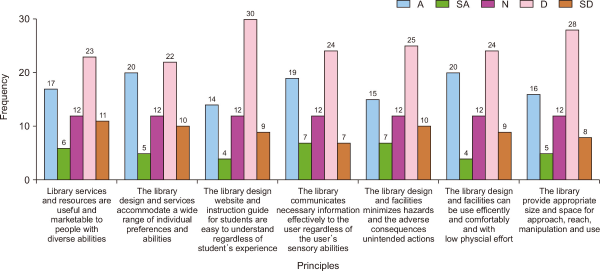
Mobile impaired respondents indicated their agreement with statements regarding UD in libraries. The respondents were given a Likert scale: 1= SD, 2= D, 3= N, 4= A, 5= SA to choose from. The data indicate that most of the respondents disagreed with all the statements. Fig. 1 reflects that students disagreed with assertions that library services and resources are useful and marketable to people with a wide range of abilities (33.3%), the library design and services accommodate a varied range of individual choices and abilities (31.8%), the library design, website, and instructional guide for students are easy to understand, regardless of the student’s experience (43.4%), the library communicates necessary information effectively to the user, regardless of the user’s sensory abilities (34.7%), the library design and facilities minimize hazards and the adverse consequences of unintended actions (36.2%), the library design and facilities can be used efficiently and comfortably and with low physical effort (34.7%), and the library provides appropriate size and space for approach, reach, manipulation and use (40.5%).
Fig. 1
Universal design principles in academic libraries (n=69). A, agree; SA, strongly agree; N, neutral; D, disagree; SD, strongly disagree.
4.1.4. Students with Hearing Impairments
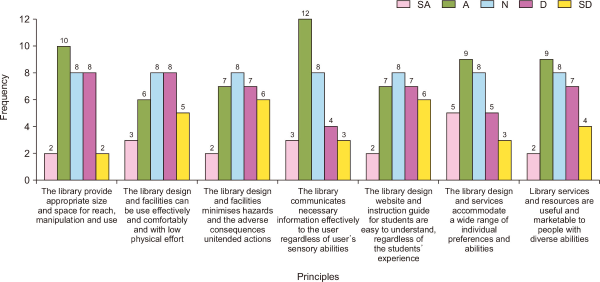
The hearing-impaired were also asked to indicate their agreement with the application of UD in university libraries. As shown in Fig. 2, most of the respondents agreed that the library communicates necessary information effectively to the user, regardless of the user’s sensory abilities (40%), provides appropriate size and space for approach, reach, manipulation, and use (33.3%), the library design and services accommodate a wide range of individual preferences and abilities (30%), and the library services and resources are useful and marketable to people with a wide range of abilities (30%). However, eight (26.6%) of the respondents indicated neutrality toward claims that the library design and facilities can be used effectively and comfortably and with low effort, the library design and facilities minimize hazards and the adverse consequences of unintended actions, and the library website design and instructional guide for students are easy to understand, regardless of the student’s experience.
Fig. 2
Universal design principles in university libraries (n=30). A, agree; SA, strongly agree; N, neutral; D, disagree; SD, strongly disagree.
4.2. Observation of Library Designs, Resources, and Facilities
The researchers further conducted an observation of the design of university libraries, resources, and facilities at the ten (10) public universities. The researchers used the Access to Libraries for Persons with Disabilities checklist by IFLA and UD principles for the observation. The results of the checklist observations are shown in Table 3 below.
Table 3
Observation of library layout, resources, and facilities (n=10)
|
Aspects observed |
Yes |
Frequency |
Percent (%) |
|
• Is there an appropriate symbol of access marked at parking spaces? |
Yes |
0 |
0 |
|
No |
10 |
100 |
|
|
• Are there signs, signage, and pictograms in Braille form that are clear to people with disabilities, especially the visually impaired? |
Yes |
0 |
0 |
|
No |
10 |
100 |
|
|
• Are there restrooms available for students with disabilities? |
Yes |
0 |
0 |
|
No |
10 |
100 |
|
|
• Is there a special room/space designated for people with disabilities? |
Yes |
3 |
30 |
|
No |
7 |
70 |
|
|
• Are there designated computer workstations such as the OPAC adapted for individuals in wheelchairs? |
Yes |
0 |
0 |
|
No |
10 |
100 |
|
|
• Is there a designated toilet facility with a washbasin, a mirror at an appropriate height, handles, and a flushing lever reachable for wheelchair users and persons with disabilities? |
Yes |
2 |
20 |
|
No |
8 |
80 |
|
|
• Are there special media for persons with disabilities, e.g., talking books, Braille books, and/or large print books? |
Yes |
3 |
30 |
|
No |
7 |
70 |
|
|
• Are there ICT and assistive devices like tape recorders, CD players, DAISY, magnifying glasses, CCTV, screen readers, disability software and apps, and adaptive keyboards? |
Yes |
3 |
30 |
|
No |
7 |
70 |
OPAC, Online Public Access Catalogue; ICT, Information and Communication Technology; DAISY, Digital Accessible Information System.
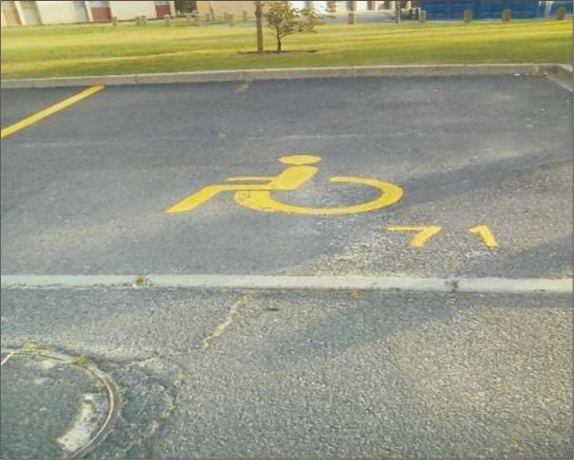
The Persons with Disability Act (Act 715) of 2006, Section 26, enjoins that “parking spaces shall demarcate a special parking slot reserved for the exclusive use of persons with disabilities.” However, the observation results uncovered that in all ten university libraries surveyed, none of the parking areas were marked with the international symbol of access for disabled people. This is illustrated in Fig. 3.
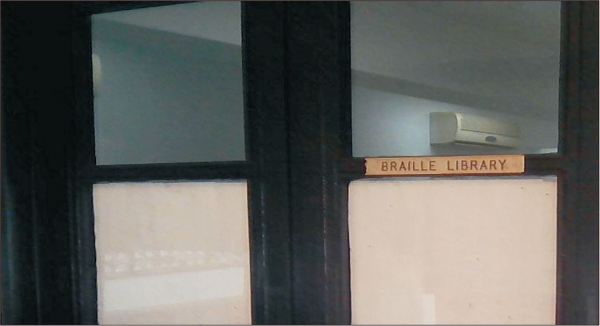
The researchers also observed that none of the ten (10) university libraries had an emergency exit plan posted that catered for the needs of people with disabilities. Although most of the university libraries had signage, none of them had warning signals that were clear to people with disabilities and reachable from a wheelchair. None of the university libraries had restrooms available for students with disabilities. The observation further noted that three (3) of the university libraries had a special room (Braille library) designated for people with visual disabilities. One of them is illustrated in Fig. 4.
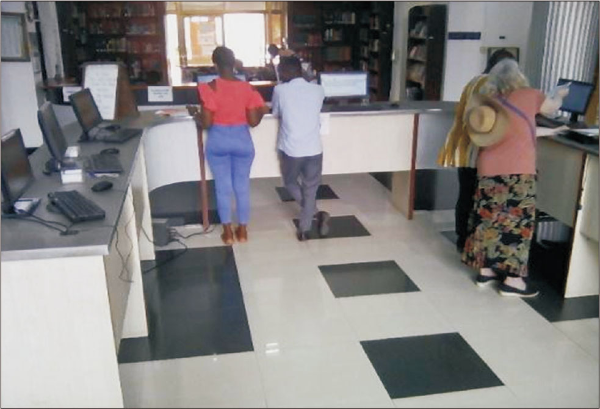
None of the university libraries had computer workstations that were adapted for individuals in wheelchairs (Fig. 5).
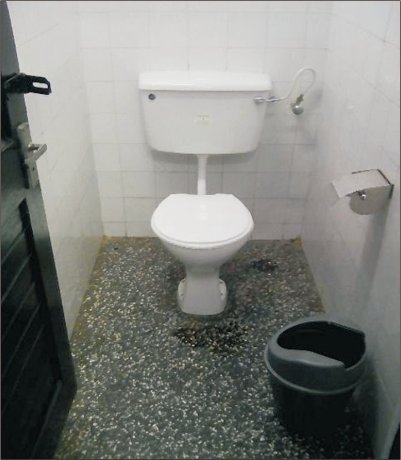
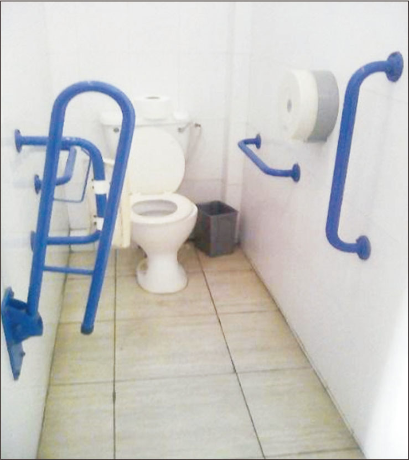
The researcher observed that eight of the university libraries had no designated toilet facilities with a washbasin, mirror at an appropriate height, handles, and a flushing lever that was disability friendly, as can be seen in Fig. 6. Only two libraries had disability-friendly washrooms. Fig. 7 is an example of a disability-friendly washroom.
The researchers observed that three (3) university libraries had special media such as talking books, Braille books, and large print books for students with visual impairments, and in addition, three of the university libraries had assistive devices such as tape recorders, CD players, Digital Accessible Information System (DAISY), magnifying glasses, CCTV, screen readers, disability software and applications, and adaptive keyboards to assist visually impaired students.
4.3. Qualitative Data Analysis
4.3.1. Profile of Interview Respondents
The study discovered that of the 28 respondents interviewed, eighteen (64.3%) were male and ten (35.7%) were female. Two (LIB1, LIB5) out of the ten females had PhD qualifications compared to five males holding PhD degrees (LIB3, LIB8, DU5, DU6, DU8). There is evidence of sex disparity among the interview respondents as more males were employed or appointed as heads of departments in public universities. It appears that there is less emphasis on sex equity as well as social justice and gender fairness regarding employment in higher education institutions in Ghana. A summary is shown in Table 4.
Table 4
Universities, positions, and sex
|
University library |
Respondents |
Total respondents |
Male |
Female |
||
|
LIB |
DU |
PD |
||||
|
UL1 |
1 |
1 |
0 |
2 |
0 |
2 |
|
UL2 |
1 |
1 |
1 |
3 |
1 |
2 |
|
UL3 |
1 |
1 |
0 |
2 |
2 |
0 |
|
UL4 |
1 |
1 |
1 |
3 |
3 |
0 |
|
UL5 |
1 |
1 |
1 |
3 |
2 |
1 |
|
UL6 |
1 |
1 |
1 |
3 |
1 |
2 |
|
UL7 |
1 |
1 |
1 |
3 |
3 |
0 |
|
UL8 |
1 |
1 |
1 |
3 |
3 |
0 |
|
UL9 |
1 |
1 |
1 |
3 |
1 |
2 |
|
UL10 |
1 |
1 |
1 |
3 |
2 |
1 |
|
Total |
10 |
10 |
8 |
28 |
18 |
10 |
UL, University Libraries; LIB, University Librarians; DU, Disability Units; PD, Physical Development Office.
4.4. Interviews
The data were gathered via face-to-face in-depth interviews with University Librarians, Heads of the Physical Development Office, and Heads of the Disability Units from ten (10) Ghanaian public universities. Some similar questions were asked to all three (3) interviewee groups and varied questions aligned to the expertise of the interviewee groups were asked. Responses were transcribed, analyzed, and categorized into themes.
The ten (10) University Libraries were labeled UL1, UL2, UL3,···, UL10.
The ten (10) University Librarians were labeled LIB1, LIB2, LIB3,···, LIB10.
The ten (10) Heads of Disability Units were labeled DU1, DU2, DU3,···, DU10.
The ten (10) Heads of the Physical Development Office were labeled PD1, PD2,···, PD10.
4.4.1. Application of Universal Design Principles in University Libraries
The concept of UD deals with the design of buildings, facilities, communications, services, and products in a way that is accessible to everyone regardless of their abilities. The concept has seven principles with guidelines for the design process. The respondents were asked if they were familiar with the concept of UD and how they incorporated the seven principles in the new design and redesign of library buildings and services to accommodate students with disabilities. Responses are shown in Table 5 below.
Table 5
Application of universal design principles in university libraries
|
Theme |
Responses (n=28) |
|
• Lack of awareness of universal design |
Some libraries and mine are not aware of the universal design principles and their potential to promote inclusion (LIB1, March 2022) Well, the framework/concept you mention is new to me. I am not familiar with the principles, but these principles could have been embedded in the Disability Act (LIB3, May 2022) There is inadequate knowledge and awareness about disability issues and universal design among some librarians (LIB7, February 2022) I am not familiar with the concept of universal design (LIB9, May 2022) Universal design has not been implemented in our library to accommodate differently abled students due to inadequate knowledge of the principles (LIB10, May 2022) |
|
• Lack of incorporation of universal design principles |
Universal design principles were not fully incorporated into the design of the library because access for students with disabilities is restricted (LIB8, July 2022) We have not incorporated these principles into any of the structures we have currently, including the library building (LIB10, May 2022) Sometimes the nature of some library buildings makes them difficult to alter or break down (LIB3, May 2022) These principles of universal design were not applied in the design of the library, so the arrangement is not easy to navigate for students in wheelchairs (DU1, February 2022) Sometimes, we apply some of the principles in the construction of ramps, washrooms, and other facilities (PD2, PD7, PD8, PD9, 2022). |
|
• Expense of implementing universal design |
It is also expensive to implement universal design in libraries due to budget constraints (DU1, February 2022) |
LIB, University Librarians; DU, Disability Units; PD, Physical Development Office.
Table 5 reflects that LIB1, LIB3, LIB7, LIB9, and LIB10 indicated a lack of awareness of UD in university libraries. LIB3, LIB8, LIB10, DU1, and PD9 reported that there is a lack of incorporation of UD principles in the designing and redesigning of facilities and services to accommodate differently abled students. DU1 believes that UD in libraries would be expensive to implement.
4.4.2. Benefits of Universal Design Principles in Academic Libraries
UD principles have contributed greatly to the benefit of everyone, especially differently abled students in institutions of higher learning and their libraries. The responses to the questions on the benefits of UD are presented in Table 6.
Table 6
Benefits of universal design in libraries
|
Theme |
Responses (n=28) |
|
• Eliminates discrimination |
It eliminates discrimination and marginalisation to allow everyone to benefit (DU1, February 2022). It does not discriminate but provides easy accessibility (DU3, May 2022). It eliminates discrimination in buildings and provides access for all (PD2, May 2022). The concept promotes fairness and there is no discrimination (LIB3, May 2022) |
|
• Promotes equity and inclusion |
It allows equal treatment of students irrespective of their abilities and also promotes equity and inclusion of students with disabilities (LIB2, May 2022). It promotes equity and people have equal access to information and facilities (LIB3, May 2022).It promotes equity and allows everyone to access resources, facilities, and services, and it supports the inclusion of persons with different abilities (DU2, May 2022). <br>It promotes all-inclusive buildings that accommodate everyone (PD2, PD7, PD8, PD9, 2022) |
|
• Promotes independence of differently abled students |
The universal design principles promote barrier-free environments (PD2, May 2022) The major benefit is that it accommodates everyone as well as provides easy access for everybody (DU1, DU3, DU7, May 2022) |
LIB, University Librarians; DU, Disability Units; PD, Physical Development Office.
Table 6 reflects that DU1, DU3, PD2, and LIB3 reported that UD eliminates discrimination which allows everyone to benefit, while LIB2, LIB3, DU2, PD2, PD7, PD8, and PD9 indicated that UD promotes equity and inclusion of people with disabilities in universal libraries. DU2, DU3, and DU7 are of the view that UD promotes the independence of students with disabilities.
5. DISCUSSION
5.1. Universal Design in University Libraries
UD principles have attracted interest from educators, including the library community. There is extensive discussion among library professionals, architects, and inclusive educators about how to incorporate UD principles into the design of systems or the redesign of existing ones to accommodate persons with disabilities, thereby improving access, equity, participation, and the quality of services in information organisations (Lund et al., 2020). In recent years, the application of UD principles has increased significantly in higher education, including libraries across the world, particularly in the Global North. However, the review of existing literature reveals a lack of UD applications in Ghanaian public university libraries. Therefore, this study examined UD in ten academic libraries in Ghana to better support students with disabilities and highlighted the benefits of UD in libraries. UD is a strategy associated with various sectors such as health, education, and architecture (Burgstahler, 2014), but its role in providing accessible and usable resources, services, and facilities can foster inclusive practices in higher education, especially within academic libraries (Moriña, 2017).
Accessibility for students with disabilities in academic libraries is crucial, given the diverse nature of higher education institutions. Based on the studies of Tudzi et al. (2018; 2020) and Ayoung et al. (2021) on non-compliance, the present findings revealed a more holistic assessment. There is a complete absence of UD within Ghanaian academic libraries as an operational framework. The results indicate that the majority of differently-abled students (visually impaired 59.3%, mobile impaired 65.1%) unequivocally disagreed that the library design accommodates a varied range of individual choices and abilities, or that facilities minimize hazards, enable efficient and comfortable usage, and provide access with low physical effort, as well as providing an appropriate size and space for approach, reach, manipulation, and use. This subjective experience is confirmed by the absence of parking areas with the disabled international symbol of access, of warning signals clear to people with disabilities and reachable from a wheelchair, of restrooms available for students with disabilities, and of computer workstations adapted for individuals in a wheelchair. The findings further reveal that only three university libraries had a dedicated room (Braille library), media, and assistive devices available for people with disabilities as positive accommodations. However, these resources are ineffective if differently-abled students find it difficult to navigate unmarked pathways, high-threshold doorways, and incomprehensible signage to access these rooms.
These findings above clearly exemplify the failure of these academic libraries to implement UD Principle 1: Equitable use. This means that most differently abled students were not able to access most of the facilities and resources of the libraries like their abled counterparts. Similarly, the principles of flexibility and low physical effort were breached due to the absence of adjustable computer workstations and shelves that are unreachable from a wheelchair. The findings are linked to SMD, which emphasizes the removal of environmental barriers that cause exclusion and barriers experienced in academic libraries, obstructing and limiting access to facilities and resources. These findings support the study of Ochieng et al. (2021), which found that UD principles are minimally applied in buildings and facilities. Ochieng et al. (2021) recommended major retrofitting of public facilities that are not accessible to persons with different abilities. Similar views were expressed by Dempsey et al. (2023), who stated that anatomy educators were unaware of UD, resulting in minimal incorporation. The impact, as noted in the studies by Roberson et al. (2022) and Foxhall et al. (2020), is that students with disabilities rely on classmates and friends for research assistance rather than the librarian because the hostile environment hinders their independent use.
The study by Nazim et al. (2021) contrasts with the current finding, as it demonstrates sufficient, accessible provision at the Helen Keller Library in India, indicating that the Ghanaian situation reflects an institutional and conceptual gap. Therefore, the current study concludes that UD is a new concept among university libraries in Ghana. This corresponds with Prosper (2017)’s and Adom (2022)’s findings in Ghanaian education environments.
The non-compliance with UD principles in Ghanaian university libraries stems from structural issues, limited budgets, low awareness of UD, and policy barriers. University librarians, development officers, and disability unit staff report that most Ghanaian academic libraries were not originally designed as UD compliant. Consequently, it is generally more cost-effective to incorporate UD principles during the initial stages rather than retrofitting existing structures for full compliance. This aligns with Gawronski (2014)’s findings, which showed that retrofitting caused problems and was seen as unattractive and costly at Colorado State University. This reflects the practical and aesthetic challenges faced by academic libraries in Ghana. Additionally, budget constraints are frequently cited as a major obstacle to implementing UD, both in Ghana and across the Global South. Findings note that UD is considered expensive to implement.
However, Ielegems and Vanrie (2024) argue that UD is most affordable when integrated from the onset of new library buildings. Continued absence of UD philosophy results in the ongoing creation of inaccessible spaces that exclude students with disabilities. Another fundamental barrier is the lack of awareness and expertise, as Dempsey et al. (2023) highlight a limited understanding among educators of UD’s benefits. Although disability rights legislation exists in Ghana, there is a significant gap between policies and their enforcement. Accessibility standards are often seen as optional guidelines without effective enforcement mechanisms. These findings are connected to SMD, which challenges the inflexible institutional policies and procedures that fail to accommodate disability as an expected circumstance of one’s diversity. This study advocates for the implementation of SMD, UD principles, and the IFLA checklist for access to libraries for persons with disabilities by university libraries, to promote the inclusion and full participation of disabled students in tertiary education.
5.2. Benefits of Universal Design Principles in University Libraries
UD philosophy in academic libraries has provided numerous benefits for users, especially those with disabilities. Building on the Centre for Excellence in Universal Design (n.d.), findings from university librarians, development officers, and disability officers in Ghana have recognized that UD eliminates discrimination and marginalization, promotes barrier-free environments that accommodate diverse individuals in university libraries, advances equity and inclusion of persons with disabilities in higher institutions, and fosters independence among individuals with disabilities to thrive in learning. This results in fairness in university libraries and higher education institutions. The assertion that UD is a proactive approach that creates inclusive environments benefiting everyone aligns with global studies from Oldham (2019), Ackah-Jnr (2020), and Burgstahler (2014). From the Social Model perspective, libraries are required to remove barriers that hinder students with disabilities and promote equitable, inclusive environments that benefit all, regardless of their abilities.
However, these benefits provide relevant evidence to enhance the understanding of the present state in Ghana by unveiling a critical disconnect. While some authors (Burgstahler, 2014; Spina, 2021) and organisations such as the Centre for Excellence in Universal Design (n.d.) have universally acknowledged the benefits of UD principles, their practical application in the Ghanaian academic library context is abysmal. The studies of Chrzanowska (2020) and Adom et al. (2023) affirm the power of UD to solve various accessibility issues and eliminate restrictions for the effective learning of differently abled students. The gap that exists between UD’s recognition and implemented practice highlights the current state of institutional inertia among academic libraries in Ghana. Hence, the current study findings in Ghana support the global debate that awareness of UD’s benefits is inadequate to drive change. This state is characterized by systemic barriers such as budget constraints and a lack of enforceable policy that prevent the translation of this concept into library design and service delivery. This suggests that future efforts ought to go beyond advocacy to seek how to implement UD in the academic library context.
6. LIMITATIONS OF THE STUDY
This research study was conducted in only ten Ghanaian public academic libraries. Hence, generalizing the findings to other similar higher education institutions is limited.
Participants in the web-based questionnaire responded on their own accord, except for those students with visual impairments, who were accommodated using alternative measures. The tendency of some participants not to disclose disability status, or fatigue from the instrument’s length, led to a higher dropout rate, which may limit the results.
7. IMPLICATIONS OF THE STUDY
UD application in libraries is a new phenomenon in Ghanaian university libraries. This has several implications for libraries and librarians, and notable among them are the knowledge, awareness, and experience required to put into practice.
Firstly, the findings are useful to university librarians in awareness creation of the adoption of UD as a strategy to support the learning of differently abled students among academic libraries in tertiary institutions.
Secondly, to achieve inclusive library resources and services that do not discriminate and stigmatize students with disabilities, this calls for the training of library staff in disability issues and UD. This will provide the support, understanding, and skills required to make resources, facilities, and services marketable, accessible, and usable by diverse people regardless of their abilities.
Thirdly, there is a need to strengthen policy and enforcement. Mandatory UD and accessibility standards implementation must be linked to accreditation or funding as enforcement incentives.
8. CONCLUSION AND RECOMMENDATIONS
This study examined the UD of academic libraries to accommodate differently abled students in ten Ghanaian Universities. The study concludes that UD is a new concept among university libraries and librarians, as there was a lack of awareness and minimal application of the UD principles for the design of their facilities, resources, and services to make them accessible and usable to all individuals irrespective of their abilities. UD not only helps eliminate discrimination and marginalisation but also allows the independence of individuals with disabilities to thrive in learning, resulting in promoting fairness in university libraries and higher institutions.
The study recommends the enforcement of disability policies and accessibility standards by stakeholders such as the Ghana Tertiary Education Commission, university administrators, quality assurance officers, development officers, and university librarians to support access and independent use for differently abled students in academic libraries.
The study highlights the necessity for adequate budget allocation by university management and the government for redesigning library facilities and services to enable the inclusion and equal participation of students with disabilities. There is a need for academic libraries to invest in training library staff in UD to enable the adequate provision of accessible environments and resources to enhance the learning experience of differently abled students.
8.1. Contribution and Originality of the Study
This study contributes to filling the gap in the literature on the extent to which the principles of UD are implemented in university libraries to accommodate differently abled students.
The study is original as it applied theoretical triangulation to determine how Ghanaian academic libraries conform to UD principles to accommodate differently abled students using the IFLA Checklist for Access to Libraries for Persons with Disabilities and SMD.
8.2. Suggestions for Further Research
This study focused on Ghanaian public university libraries. It is suggested that further studies on whether the products, services, built environments, and communication systems of other types of libraries conform to UD to accommodate differently abled students should be done.
REFERENCES
, , , , (2023) Towards an inclusive pedagogy: Applying the universal design for learning in an introduction to history of global art course in Ghana Journal of Contemporary Issues in Education, 18(1), 79-97, https://doi.org/10.20355/jcie29529 .
(2024) How to choose a sampling technique and determine sample size for research: A simplified guide for researchers Oral Oncology Reports, 12, 100662, https://doi.org/10.1016/j.oor.2024.100662 .
, (2024) Disability policies to guide the provision of facilities, services and resources to students with disabilities: The case of ten Ghanaian academic libraries The Journal of Academic Librarianship, 50(6), 102970, https://doi.org/10.1016/j.acalib.2024.102970 .
American Psychological Association APA resolution on support of universal design and accessibility in education, training and practice, 2019, https://www.apa.org/about/policy/universal-design-accessibility-education
Response by the Asian-Pacific Resource and Research Centre for Women (ARROW), 2017, http://www.ohchr.org/Documents/Issues/Disability/ReproductiveHealthRights/NGOS/Asian-PacificResourceandResearchCentreforWomen.docx
, , (2024) Expectations of student with disability living in off-campus student housing in Ghana: A gap model approach PSU Research Review, 8(1), 121-132, https://doi.org/10.1108/prr-07-2021-0033 .
, , (2021) Access to library services and facilities by persons with disability: Insights from academic libraries in Ghana Journal of Librarianship and Information Science, 53(1), 167-180, https://doi.org/10.1177/0961000620917723 .
, (2021) Need of access facilities for persons with hearing disabilities IP Journal of Otorhinolaryngology and Allied Science, 4(2), 64-69, https://doi.org/10.18231/j.ijoas.2021.013 .
(2016) Beyond (models of) disability? The Journal of medicine and philosophy, 41(2), 210-228, https://doi.org/10.1093/jmp/jhv063 .
, , , (2020) Roles and responsibilities of libraries in increasing consumer health literacy and reducing health disparities Emerald Publishing Limited Making health information accessible for all: The impact of universal design in public libraries, https://doi.org/10.1108/s0065-283020200000047007
, , , , (2017) Disability and equity in higher education accessibility IGI Global Scientific Publishing Access and accessibility of academic libraries’ electronic resources and services: Identifying Themes in the literature from 2000 to the present, pp. 242-267, https://doi.org/10.4018/978-1-5225-2665-0.ch011
, Universal design for library buildings, 2017, https://iflalbes.wordpress.com/2017/10/13/universal-design-for-library-buildings/
, (2021) Access to higher education in Ghana: Examining experiences through the lens of students with mobility disabilities International Journal of Disability, Development and Education, 68(1), 95-115, https://doi.org/10.1080/1034912x.2019.1651833 .
Universal design in education: Principles and applications, 2014, https://doit.uw.edu/brief/universal-design-in-education-principles-and-applications/
Centre for Excellence in Universal Design Benefits and drivers, n.d., https://universaldesign.ie/about-universal-design/benefits-and-drivers
(2020) Universal design principles for older people and older people with disabilities during the COVID-19 pandemic Interdyscyplinarne Konteksty Pedagogiki Specjalnej, 31, 267-286, https://doi.org/10.14746/ikps.2020.31.12 .
, (2018) A convergent parallel mixed-methods study of controversial issues in social studies classes: A clash of ideologies Educational Sciences: Theory & Practice, 18(1), 119-149, https://doi.org/10.12738/estp.2018.1.0298 .
, , , (2023) Awareness of universal design for learning among anatomy educators in higher level institutions in the Republic of Ireland and United Kingdom Clinical Anatomy, 36(1), 137-150, https://doi.org/10.1002/ca.23947 .
(2020) Rethinking inclusion and disability activism at academic conferences: Strategies proposed by a PhD student with a physical disability Disability & Society, 35(1), 163-167, https://doi.org/10.1080/09687599.2019.1619234 .
Number of students in tertiary education in Ghana 2005-2022, 2023, https://www.statista.com/statistics/1180524/number-of-students-in-tertiary-education-in-ghana/
, , (2020) University of Zululand library and inclusive education: Responding to the needs of students with disabilities: Students with disabilities Mousaion: South African Journal of Information Studies, 38(1), 20, https://doi.org/10.25159/2663-659X/6966 .
, , (2020) Promoting full utilization of library resources for students & patrons with disabilities: A Conceptual approach The Southeastern Librarian, 68(1), 6, https://doi.org/10.62915/0038-3686.1864 .
Government of Ghana Inclusive education policy, 2015, https://sapghana.com/data/documents/Inclusive-Education-Policy-official-document.pdf
, (2017) Disabilities inclusive education systems and policies guide for low- and middle-income countries RTI Press, Publication No. OP-0043-1707, https://doi.org/10.3768/rtipress.2017.op.0043.1707 .
, , , (2002) Providing new access to the general curriculum TEACHING Exceptional Children, 35(2), 8-17, https://doi.org/10.1177/004005990203500201 .
, (2024) The cost of universal design for public buildings: Exploring a realistic, context-dependent research approach Archnet-IJAR: International Journal of Architectural Research, 18(4), 719-736, https://doi.org/10.1108/ARCH-07-2023-0178 .
, Access to libraries for persons with disabilities checklist, 2005, http://www.ifla.org/files/assets/hq/publications/professional-report/89.pdf
, (2019) Providing access to students with print disabilities: The case of the North-West University in South Africa Journal of Access Services, 16(1), 6-20, https://doi.org/10.1080/15367967.2018.1547641 .
, (2023) Information communication technology use for information access by visually and physically impaired persons in public university libraries in Kenya International Journal of Knowledge Content Development & Technology, 13(1), 43-58, http://dx.doi.org/10.5865/IJKCT.2023.13.1.043 .
, (2016) Access is not problem solving: Disability justice and libraries Library Trends, 64(3), 468-491, https://doi.org/10.1353/lib.2016.0004 .
, , , (2020) Perceptions toward artificial intelligence among academic library employees and alignment with the diffusion of innovations’ adopter categories College & Research Libraries, 81(5), 865-882, https://doi.org/10.5860/crl.81.5.865 .
, , (2024) Inclusion in Ghanaian public universities: A focus on student voices Disability & Society, 39(5), 1173-1195, https://doi.org/10.1080/09687599.2022.2142521 .
(2017) Inclusive education in higher education: challenges and opportunities European Journal of Special Needs Education, 32(1), 3-17, https://doi.org/10.1080/08856257.2016.1254964 .
, , (2021) Access to library facilities and services for users with disabilities: A study of Aligarh Muslim University in India Journal of Access Services, 18(1), 30-49, https://doi.org/10.1080/15367967.2020.1870120 .
NC State University Center for Universal Design, 1997, https://design.ncsu.edu/research/center-for-universal-design/
, , (2023) Sensing technologies, digital inclusion, and disability diversity Journal of Computer-Mediated Communication, 28(5), zmad026, https://doi.org/10.1093/jcmc/zmad026 .
What is universal design: Theories, terms and trends, 2018, https://repository.ifla.org/handle/20.500.14598/6398
, (2022) Utilization of assistive technology for effective school library service delivery to students with disabilities in Nigeria Paper presented at Proceedings of the 50th Annual Conference of the International Association of School Librarianship and the 25th International Forum on Research on School Librarianshi, South Carolina, Columbia
, , (2021) Evaluation of incorporation of universal design parameters in the planning approval process of Kisumu main bus terminus East African Journal of Arts and Social Sciences, 3(1), 12-23, https://doi.org/10.37284/eajass.3.1.261 .
(2019) Systemic workplace barriers for academic librarians with disabilities College & Research Libraries, 80(2), 169-194, https://doi.org/10.5860/crl.80.2.169 .
People with Disability Australia Social model of disability, 2018, https://pwd.org.au/resources/disability-info/social-model-of-disability/
, , (2022) Students with disabilities and library services: Blending accommodation and universal design The Journal of Academic Librarianship, 48(4), 102531, https://doi.org/10.1016/j.acalib.2022.102531 .
, , , (2001) Exploring theories and expanding methodologies: Where we are and where we need to go. Emerald Group Publishing Limited The social model of disability: An outdated ideology?, https://doi.org/10.1016/s1479-3547(01)80018-x
How universal design will make your library more inclusive, 2017a, https://www.slj.com/story/how-universal-design-will-make-your-library-more-inclusive
(2017b) Libraries and universal design Theological Librarianship, 10(1), 5-7, https://doi.org/10.31046/tl.v10i1.464 .
, , , , , , (2019) Strategies for facilitating inclusive campuses in higher education: International perspectives on equity and inclusion Emerald Publishing Limited Ensuring equity and inclusion in higher education provision: Ghana’s approach, https://doi.org/10.1108/s2055-364120190000017017
, , (2020) Experiences of students with disabilities in inaccessible built environments: A case study of a student with mobility impairment in a university in Ghana Scandinavian Journal of Disability Research, 22(1), 116-126, https://doi.org/10.16993/sjdr.539 .
, , (2018) Deterrent libraries: Denying persons with disability Journal of Science and Technology (Ghana), 37(1), 113-126, https://doi.org/10.4314/just.v37i1.10 .
Ronald L. Mace: American architect, 2026, https://www.britannica.com/biography/Ronald-L-Mace
(2019) (Doctoral dissertation. Cape Town, Republic of South Africa: University of the Western Cape.) Scholarly communication guidance as a core service of an academic library to doctoral students: A case study of Kwame Nkrumah University of Science and Technology, doctoral dissertation Article Id (other)
- 투고일Received
- 2026-02-16
- 수정일Revised
- 2026-05-13
- 게재확정일Accepted
- 2026-05-31
- 출판일Published
- 2026-09-30
- 다운로드 수
- 조회수
- 0KCI 피인용수
- 0WOS 피인용수