
- P-ISSN 1225-0163
- E-ISSN 2288-8985



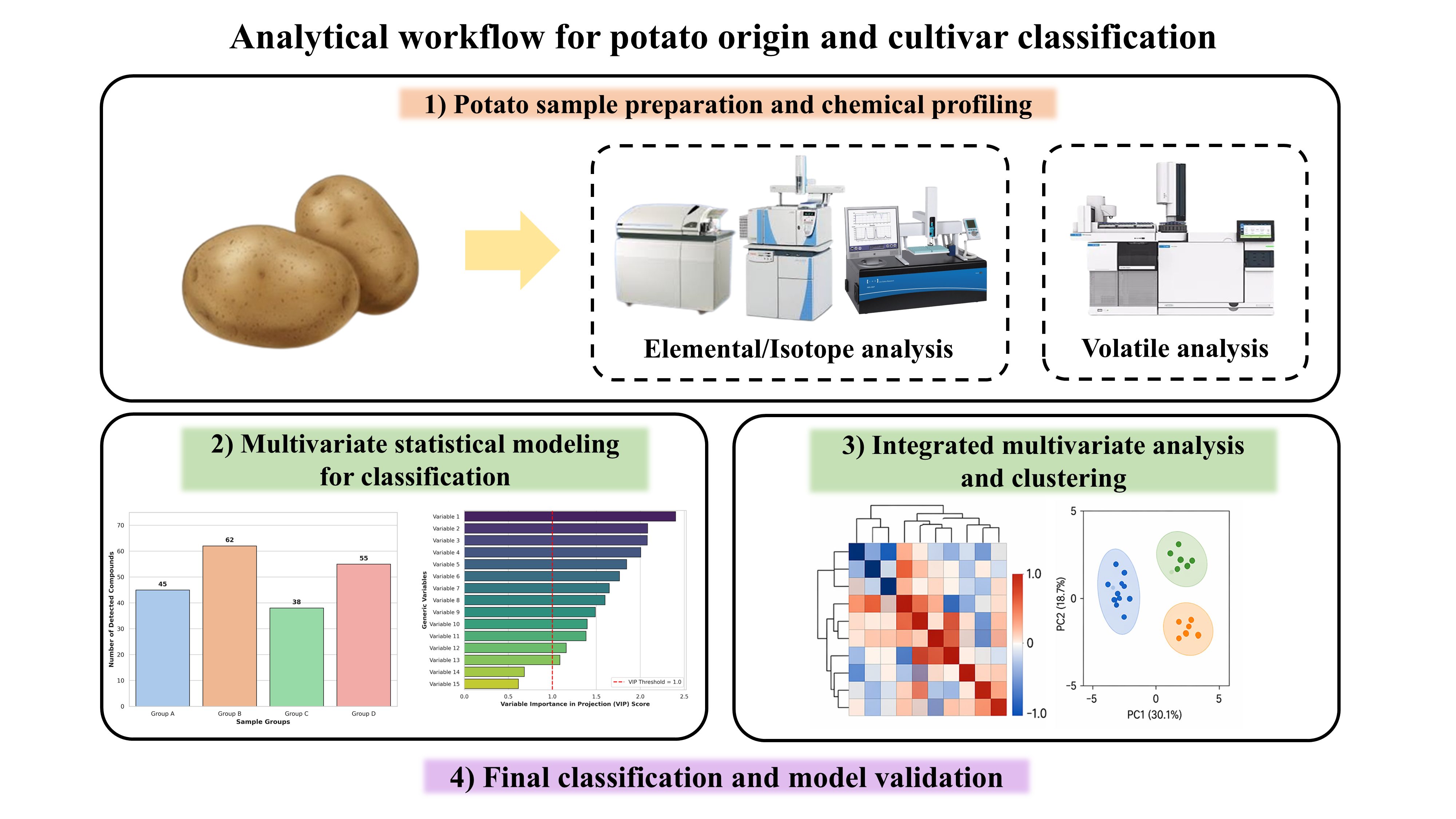
Potatoes exhibit substantial variability in chemical composition depending on cultivar, geographical origin, and environmental factors. This review summarizes compositional and volatile profiles of potatoes from Korea, Europe, China, and the Americas. Thermal processing such as boiling, baking, and frying alters volatile profiles through lipid oxidation and Maillard reactions. Variations in proteins, amino acids, starch, sugars, minerals, and lipids influence processing suitability and flavor development. Recent analytical approaches applying elemental and isotopic analyses, volatile profiling, and multivariate statistics have been used to discriminate potato cultivars and origins. Elemental and isotopic markers provide high accuracy, whereas volatilebased indicators have potential, particularly when used in combination with other compositional markers. Integrating compositional, isotopic, and volatile information offers an effective framework for reliable potato classification.







This website recommended the use the Chrome browser for journal website.