
- P-ISSN 1225-0163
- E-ISSN 2288-8985



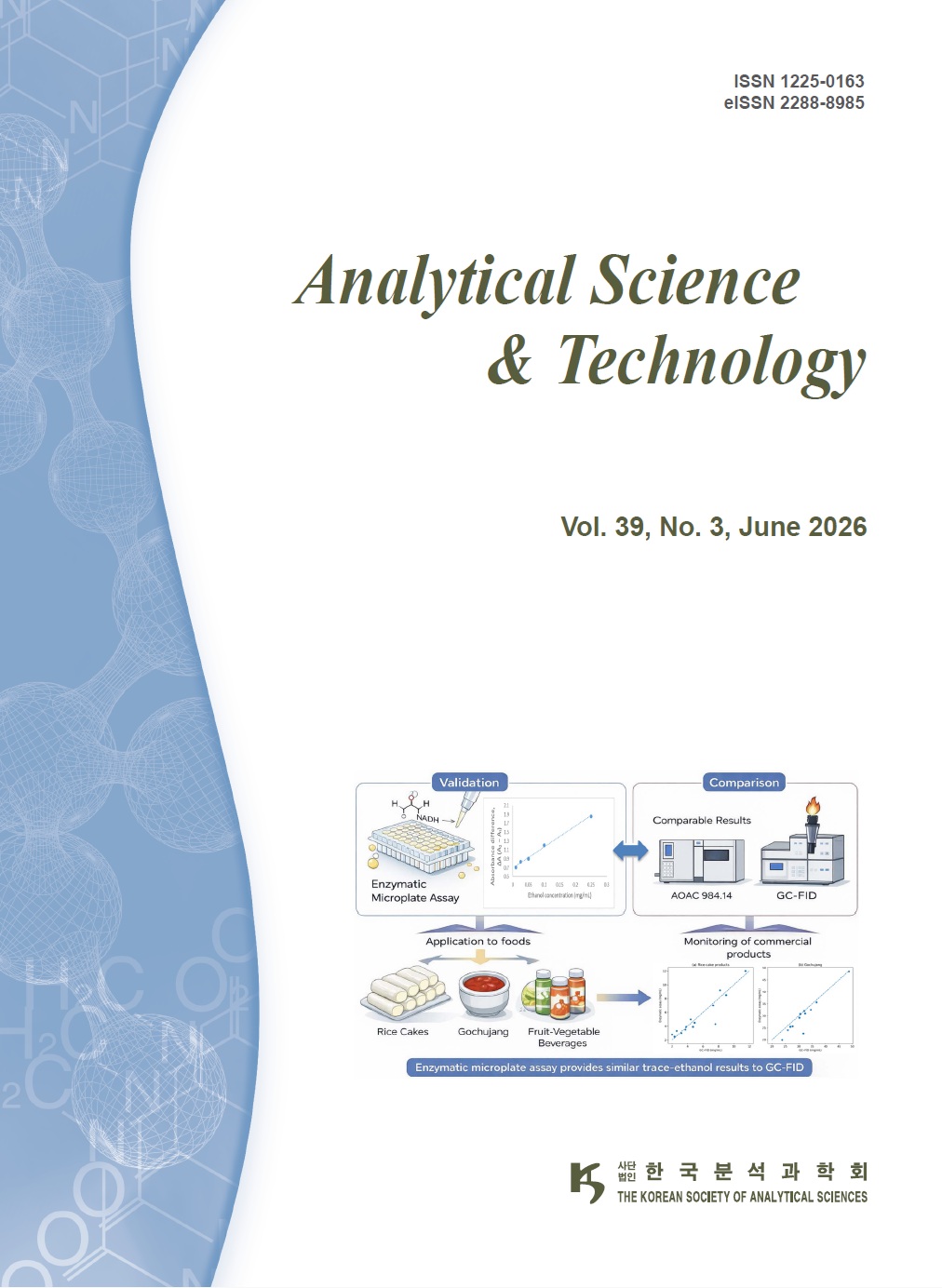
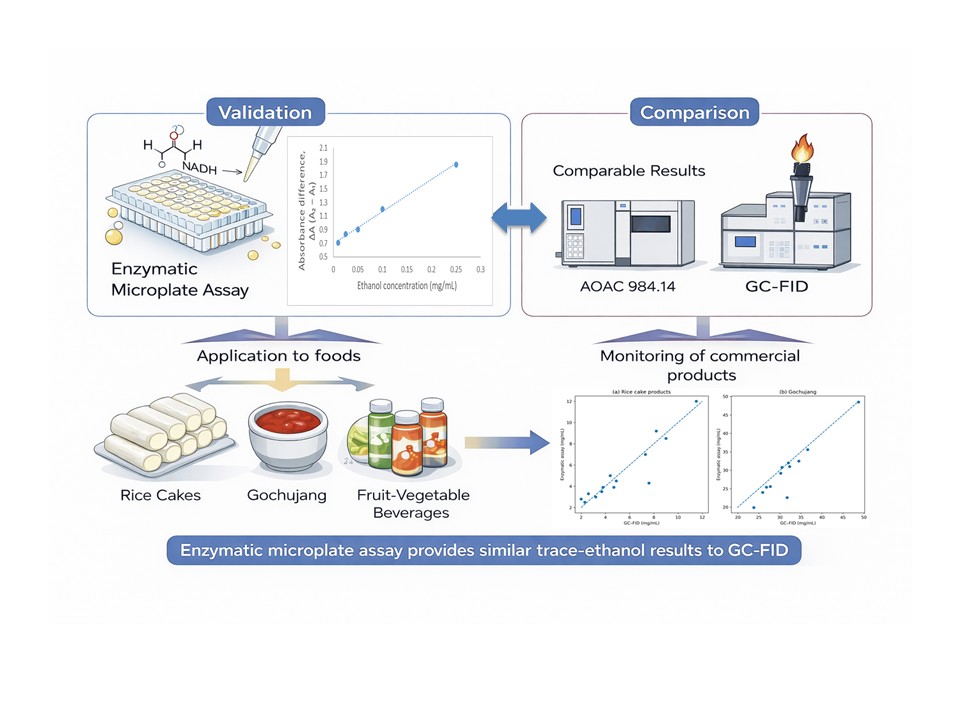
Ethanol may be present in a wide range of foods due to natural fermentation, carry-over from ingredients, or the use of ethanol-containing preservatives, and even trace levels are important for halal compliance and “no- and low-alcohol (NoLo)” labeling. In this study, a single-laboratory validation of an enzymatic microplate assay was conducted for three Korean food matrices (rice cake, gochujang, and fruit–vegetable beverages) and the performance was compared with that of a GC–FID method based on an AOAC INTERNATIONAL (AOAC). The enzymatic assay showed limits of quantification (LOQs) of 0.030–0.076 mg/mL, which were comparable to or lower than those of GC–FID (0.037–0.109 mg/mL) depending on the matrix. Calibration curves were linear over 0.01–0.25 mg/mL with acceptable linearity (R² ≥ 0.991), and spike recoveries (after correcting for background ethanol) were approximately 95–105% across low, medium, and high levels with practical precision. GC–FID also provided excellent linearity (R² ≥ 0.9998) and generally lower RSDs. In addition, commercial product monitoring data were generated for rice cake (n = 14), gochujang (n = 12), and fruit beverages (n = 18), showing that the enzymatic microplate assay provides comparable quantitative results to GC–FID across diverse matrices, supporting its utility for routine trace-ethanol monitoring.







This website recommended the use the Chrome browser for journal website.