
- P-ISSN 1225-0163
- E-ISSN 2288-8985



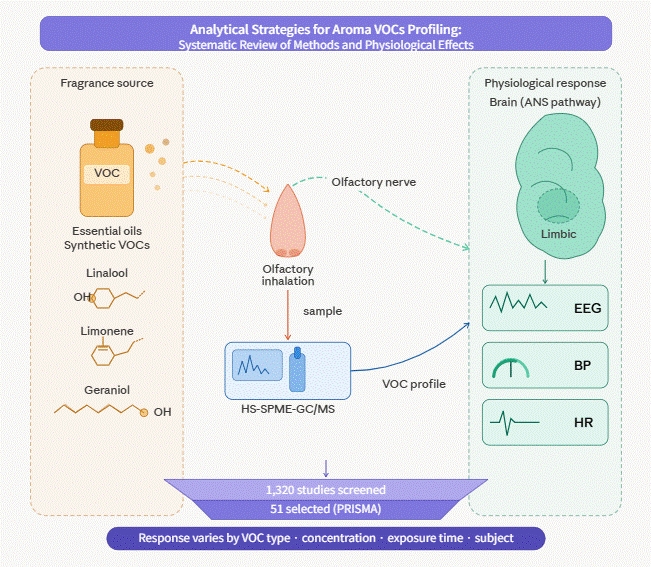
Aroma-related volatile organic compounds (VOCs) may influence the autonomic nervous system (ANS) by stimulating the limbic system and the hypothalamus through the olfactory nerves. Stress, anxiety, and depression may be alleviated, and sedative activity may also be exerted. Since most human studies on aroma inhalation heavily rely on self-reported measures, more valid and objective verification is essential. In addition, comprehensive reviews integrating the chemical diversity, analytical techniques, and physiological effects of aroma VOCs from analytical chemistry perspective remains limited. This systematic review was conducted using the preferred reporting items for systematic reviews and meta-analyses (PRISMA) approach with 51 studies selected from an initial pool of 3,790 records retrieved from multiple electronic databases. Gas chromatography/mass spectrometry (GC/MS) was the predominant analytical method (35 of 38 studies) with headspace solid-phase microextraction (HS-SPME) as the most frequently employed sampling method. Electroencephalogram (EEG), functional near-infrared spectroscopy (fNIRS), blood pressure (BP), and heart rate (HR) were the principal physiological measures used to evaluate stress-relieving and sedative responses. Fragrance inhalation modulated EEG wave activity and induced hemodynamic alterations assessed by fNIRS while reductions in BP and HR suggested parasympathetic nervous system activation. Through this systematic review, it indicates that physiological response may vary depending on aroma type, concentration, exposure duration, and subject characteristics, and such study heterogeneity precluded a formal meta-analysis. Future studies should address to standardize GC/MS profiling conditions, physiological assessment protocols with predefined endpoints, and systematic report of individual differences to strengthen evidence-based applications of aroma VOCs for stress relief and sedation.







This website recommended the use the Chrome browser for journal website.