
- P-ISSN 1225-0163
- E-ISSN 2288-8985



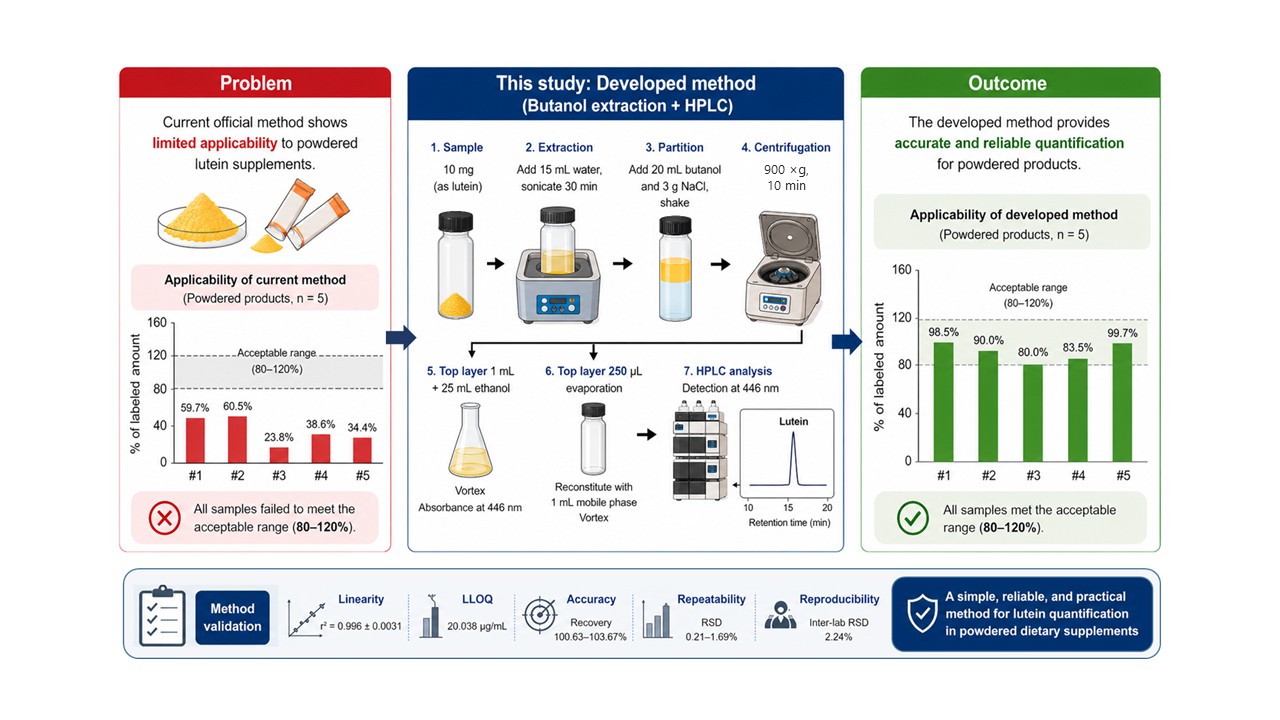
Lutein is a major carotenoid component of macular pigment and is known to contribute to the prevention of age-related macular degeneration through its antioxidant properties and blue light filtering effects. It is widely used in various forms of dietary supplements. However, the current lutein assay method specified in the Health Functional Food Code of South Korea shows limited accuracy and applicability when applied to powdered formulations. In this study, a new analytical method suitable for powdered lutein dietary supplements was developed and its performance was evaluated. The proposed method involves extraction of lutein using n-butanol l followed by quantification by spectrophotometry and high-performance liquid chromatography (HPLC). Method validation was performed according to the Ministry of Food and Drug Safety guidelines, and the method satisfied all required criteria, including linearity (r² = 0.996 ± 0.0031), specificity, lower limit of quantification (20.04 µg/mL), accuracy (recovery 100.63–103.67%), repeatability (RSD 0.37–1.68%), and reproducibility (interlaboratory RSD 2.24%). The applicability of the method was further evaluated using five commercially available powdered lutein dietary supplements, all of which showed contents within the acceptable range of 80.04–99.70% of the labeled amounts (acceptable range: 80–120%). These results indicate that the proposed method provides a reliable and practical alternative to the current assay for powdered formulations and may contribute to improved quality control of lutein-containing dietary supplements.






This website recommended the use the Chrome browser for journal website.