


- ENGLISH
- P-ISSN1229-070X
- E-ISSN2713-9581
- KCI
논문 상세
- 2026 (31권)
- 2025 (30권)
- 2024 (29권)
- 2023 (28권)
- 2022 (27권)
- 2021 (26권)
- 2020 (25권)
- 2019 (24권)
- 2018 (23권)
- 2017 (22권)
- 2016 (21권)
- 2015 (20권)
- 2014 (19권)
- 2013 (18권)
- 2012 (17권)
- 2011 (16권)
- 2010 (15권)
- 2009 (14권)
- 2008 (13권)
- 2007 (12권)
- 2006 (11권)
- 2005 (10권)
- 2004 (9권)
- 2003 (8권)
- 2002 (7권)
- 2001 (6권)
- 2000 (5권)
- 1999 (4권)
- 1998 (3권)
- 1997 (2권)
- 1996 (1권)
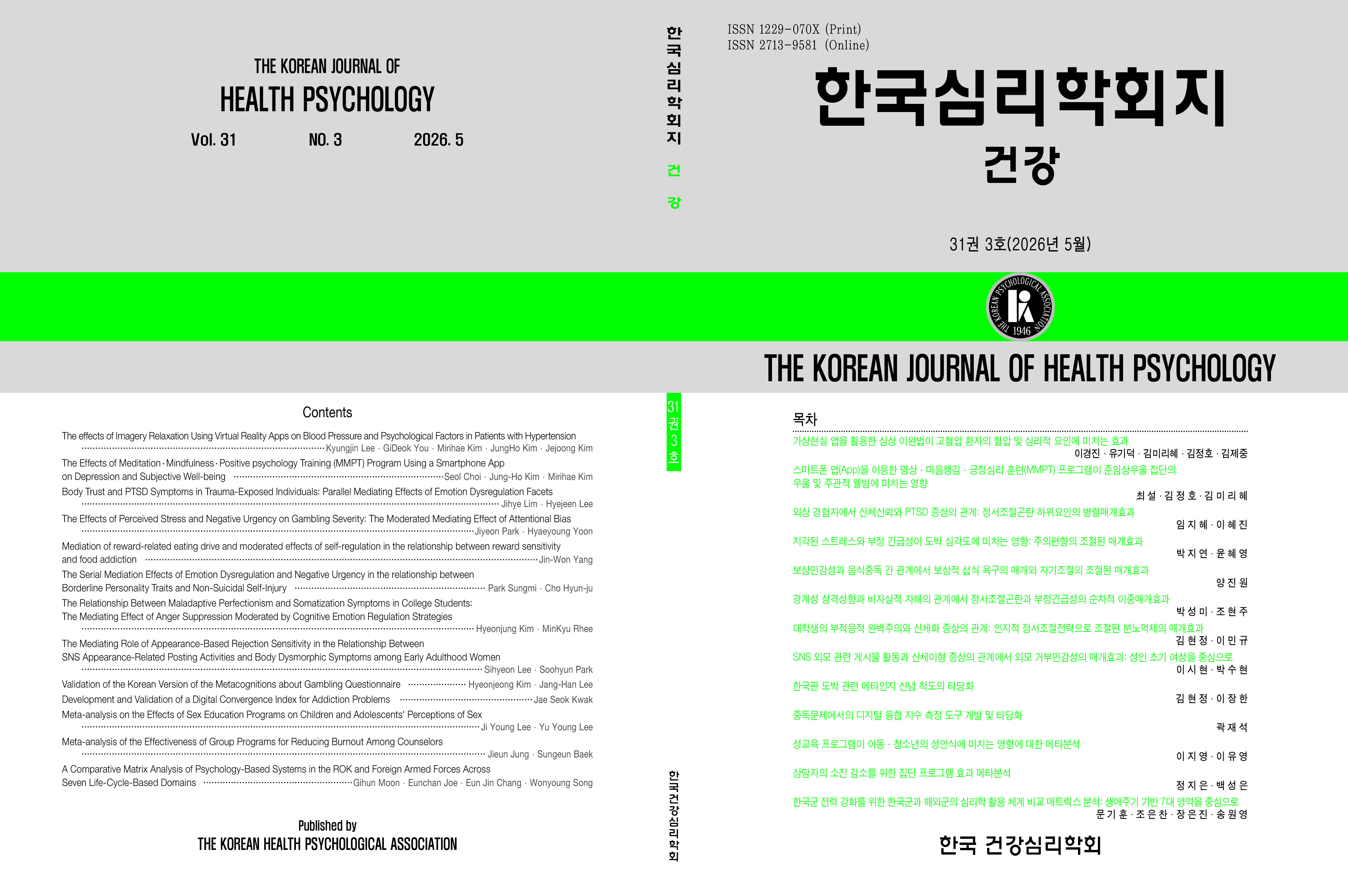
한국군 전력 강화를 위한 한국군과 해외군의 심리학 활용 체계 비교 매트릭스 분석: 생애주기 기반 7대 영역을 중심으로
A Comparative Matrix Analysis of Psychology-Based Systems in the ROK and Foreign Armed Forces Across Seven Life-Cycle-Based Domains
조은찬 (건양대학교 상담심리학과)
장은진 (한국침례신학대학교 상담심리학과)
송원영 (건양대학교 심리상담치료학과)

초록
이 연구는 현대 전장 환경에서 인지적 수행 역량과 심리적 준비 태세가 전력 유지의 중요한 요소로 주목받는 상황을 고려하여, 한국군에 적용가능한 전력 강화 과제를 도출하는 것을 목적으로 하였다. 국내외 학술논문, 국방 및 보건정책 문서, 법령과 훈령 및 공개 평가자료를 수집하여 비교 매트릭스 분석을 수행하였다. 구체적으로 한국군의 심리학 활용 체계를 선발 및 복무 적합, 정신전력과 무형전력, 정신건강 증진 및 상담, 자살예방과 고위험군 개입, 병영조직문화, 전역 이후 지원, 연구 및 정책 개선의 7대 영역으로 구조화하여 현황과 한계를 진단하고, 미국·영국·캐나다·이스라엘의 제도 및 프로그램 운영 원리를 비교 분석하였다. 분석 결과 한국군은 전수 선별 및 정밀평가 체계, 정신전력 교육, 병영생활 전문상담관 제도를 포함한 다차원적 상담 및 진료 인프라, 국방 헬프콜 포함 위기상담 체계 등 제도적으로 폭넓은 지원 기반을 갖추고 있었다. 반면 비교 대상 국가들은 선발 정보를 보직 배치와 성과 준거에 연계하여 타당도를 점검하고, 회복탄력성 및 동료 기반 현장 개입을 예방훈련으로 제도화하며, 근거 기반 치료 표준화와 장기 추적 자료에 기반한 연구 및 정책의 연계를 강화하는 경향이 확인되었다. 이를 토대로 이 연구는 선발 데이터 활용 범위의 보직 및 초기 적응지원으로의 확장, 정신전력 교육에 회복탄력성과 전투 스트레스 및 급성 위기 대응 기술 통합, 상담과 진료 및 사례관리 표준화, 전역 이후까지 연계되는 성과관리 파이프라인 구축을 제언한다. 결과적으로 이러한 개선 방향은 한국군 전력강화가 보편적 지원, 위험군 선별, 집중적 개별 지원이 연속적으로 연결되는 다층 지원체계의 관점에서 통합적으로 이해될 필요가 있음을 시사한다.
- keywords
- 한국군 전력강화, 생애주기 기반 분석, 군사심리학 활용체계, 전력 유지 체계
Abstract
This study aimed to identify strategic tasks for enhancing military capability within the Republic of Korea (ROK) Armed Forces, emphasizing the growing significance of cognitive performance and psychological readiness for maintaining combat effectiveness in modern operational environments. A document-based analysis was conducted, utilizing domestic and international academic literature, defense and public health policy documents, legal and regulatory materials, and publicly available evaluation reports, through a comparative matrix approach. The military psychology application system of the ROK Armed Forces was organized into seven domains: selection and service suitability, mental force and intangible capabilities, mental health promotion and counseling, suicide prevention and high-risk intervention, organizational culture, post-discharge support, and research and policy development. This structure was used to assess its status and limitations, comparing it to systems in the United States, the United Kingdom, Canada, and Israel. The findings reveal that the ROK Armed Forces have established a robust institutional foundation, including comprehensive screening and evaluation systems, mental force education, multi-layered counseling and medical services such as the military counseling officer system, and crisis intervention mechanisms like the Defense Helpline. In contrast, the comparison countries more effectively connect selection data to job placement and performance criteria, institutionalize resilience training and peer-based interventions, and strengthen ties between evidence-based treatment, long-term data tracking, and policy development. Based on these insights, the study recommends expanding the use of selection data for job assignment and early adaptation support, incorporating resilience, combat stress, and acute crisis response skills into mental force education, standardizing counseling, medical, and case management processes, and establishing a performance management pipeline that extends into the post-discharge phase. These recommendations are best understood within a multi-tiered support system, systematically integrating universal support, risk screening, and intensive individualized interventions.
- keywords
- Republic of Korea Military, Life Cycle Analysis, Military Psychology, Force Readiness
- 투고일Received
- 2026-03-25
- 수정일Revised
- 2026-04-15
- 게재확정일Accepted
- 2026-04-15
- 출판일Published
- 2026-05-30
- 다운로드 수
- 조회수
- 0KCI 피인용수
- 0WOS 피인용수