- P-ISSN2765-2203
- E-ISSN2765-2211
- KCI Candidate

Vol.6 No.2
Abstract
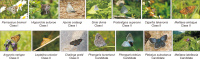
Butterflies are known to play an important role in pollination and have been a target for several taxonomical and ecological studies. Butterflies are particularly used as indicators of various environmental issues, such as environmental change, habitat land use changes, environmental pollution, etc. In the present review, we collected information on their morphology, distribution, and wintering, and analyzed the three traits for all the endangered butterfly species (n=14). Fourteen previous studies were used for this review. For the morphological analysis, both Aporia crataegi (56.0 and 66.5 mm for male and female, respectively) and Argynnis nerippe (62.5 mm) were determined to have the longest wingspan, and Cigaritis takanonis the shortest (29.0 mm). In terms of distributional analysis, five species (Hipparchia autonoe, Sinia divina, Protantigius superans, Chalinga pratti, and Plebejus subsolanus) used the forest center habitat at high elevation, but nine species used the forest boundary habitat at low elevation. For the wintering analysis, ten species were found to spend the winter as larvae, and P. superans and P. subsolanus spent the winter as eggs; S. divina spent the winter as a pupa. This review is the first to comprehensively summarize the ecological characteristics (morphology, distribution, and wintering) of the whole endangered butterfly species in South Korea. In particular, the review could provide scientific information on the endangered butterflies to establish their future restoration plans.

Abstract
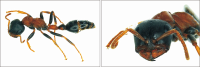
In this study, we report the first confirmed detection of Tetraponera rufonigra (Hymenoptera: Formicidae) in South Korea through international cargo. On August 3, 2024, a specimen of T. rufonigra was discovered at a logistics center in Icheon, a city in the midwestern part of the Korean Peninsula, during the inspection of cargo originating from Vietnam. The specimen was reported to the Invasive Species Reporting Center and subjected to field and laboratory investigations. A follow-up field survey on August 5, 2024, confirmed the absence of additional individuals, and disinfection measures were completed. DNA barcoding analysis identified the species as T. rufonigra. This report provides precise species-level information to support early response measures in the future.
Abstract
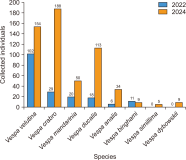
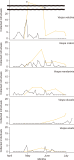
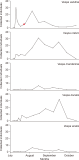
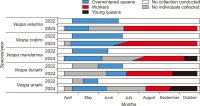
This study investigated the seasonal occurrence patterns of overwintered queens and hornet workers (Vespa spp.) collected over two years (2022 and 2024) at an apiary in Daegu, South Korea. Using hornet attractant traps, 744 individuals representing eight Vespa species were collected, of which Vespa velutina Lepeletier, 1836 and Vespa crabro Linnaeus, 1758 were the most frequently observed. The timing of the emergence of overwintered queens varied by species: Vespa mandarinia Smith, 1852 and V. velutina were the earliest to appear in early April, followed by V. crabro, Vespa analis Fabricius, 1775, and Vespa ducalis Smith, 1852. Workers began to emerge predominantly in mid-July, with populations peaking in August and September and declining sharply in October. Notably, following the application of a control method using an insecticide (clothianidin) in late July 2024, a marked decrease in the number of V. velutina workers was observed. This study highlights interspecific differences in the timing of colony development and provides foundational data for the effective management of hornets in apiary environments.
Abstract
Bucket light traps are widely used in nocturnal insect surveys due to their effectiveness in attracting diverse insect taxa. To enhance the efficiency of bucket light traps and reduce survey costs, recent studies have examined various light sources, including conventional black-light UV (BL_UV) and newly introduced LED light sources. This study was conducted to improve the National Ecosystem Survey methodology, aimed at evaluating the efficiency of different light sources in bucket light traps and proposing optimized insect survey methods. We compared the capture efficiency of the current BL_UV light source with those of three LED types (UV [LED_UV], Blue [LED_B], and Green [LED_G]). Field surveys were conducted at six sites under consistent conditions, and samples were analyzed by taxonomic experts specializing in Lepidoptera, Coleoptera, Hymenoptera/Diptera, and Hemiptera/other taxa. In total, 2,036 individuals from 430 species, 92 families, and 11 orders were captured using four light sources. BL_UV and LED_UV showed significantly higher species richness and abundance than LED_B and LED_G. Statistical analyses (one-way analysis of variance and Scheffé tests) indicated no significant differences between BL_UV and LED_UV, but both outperformed LED_B and LED_G. Our results indicate that shorter wavelengths (355-405 nm) are more effective at attracting diverse nocturnal insects. We recommend the continued use of UV-type light sources, particularly LED_ UV, for long-term monitoring in the National Ecosystem Survey of Korea. Additionally, the combination of UV and medium wavelengths can further improve the capture efficiency.
Abstract
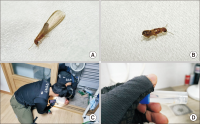
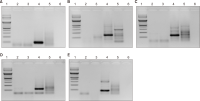
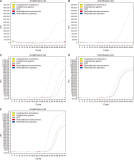
Invasive alien species pose significant threats to global biodiversity, and early detection is critical for effective management. Cryptotermes domesticus is a destructive pest known to infest timber, furniture, and wooden structures, causing economic and ecological damage. This study aimed to develop a high-specificity and highly- sensitive quantitative polymerase chain reaction (qPCR) probe-based assay for precise identification of C. domesticus. C. domesticus samples, collected from an apartment in the Seoul metropolitan area, South Korea, specifically from the interior of a sliding door frame infested with termites, were subjected to whole-genome sequencing to pinpoint species-specific genetic sequences. Species-specific primer sets were designed based on whole-genome sequencing data, and after the evaluation of the amplification efficiency and specificity through qPCR, the optimal primer set was selected. The developed qPCR assay effectively distinguished the target species without cross-reactivity with native termite species or foreign termite species confirmed to have entered the country. The molecular diagnostic method developed in this study enables quick and accurate detection of C. domesticus, offering a reliable tool with potential applications in pest management and ecological research.
Abstract
This study investigated the presence of alien hitchhiker insect species detected in empty international containers entering South Korea in 2024. A total of 12 species were identified, among which six species are not distributed in South Korea. Among them, Erthesina fullo (Pentatomidae, Hemiptera) and Trochoideus desjardinsi (Endomychida, Coleoptera) were identified as a stored product pests. If established in South Korea, these species could cause both agricultural and ecological disruptions, highligthing the importance of rigorous inspections. These findings emphasize the need for rigorous inspections and continuous monitoring of various entry pathways to mitigate and prevent the risks associated with hitchhiker insects.
Abstract
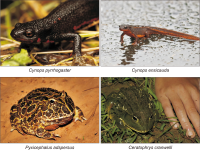
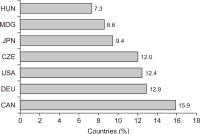
This study investigated the import status of pet amphibians in South Korea from 2023 to 2024 and updated the list of alien amphibian species. Based on quarantine data, 22,572 individuals from 167 species were imported from 14 countries. Among them, 47 species were listed as internationally endangered, with the Dendrobatidae family accounting for the largest share. Although most species originate from tropical rainforests and are unlikely to establish in Korea’s ecosystem, their introduction may pose ecological risks through competition or disease transmission. Continuous monitoring is recommended.