_학술지_디자인_시안_koar_top_300x55.png)
- P-ISSN2765-2203
- E-ISSN2765-2211
- KCI Candidate

7권 1호
초록
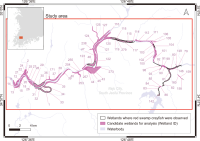
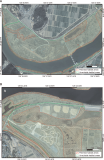
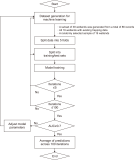
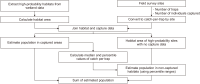
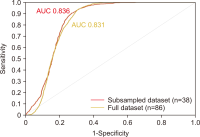
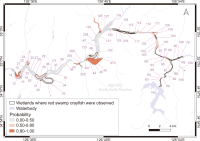
The Invasive red swamp crayfish, Procambarus clarkii is rapidly expanding in Korean inland waters, yet its population size and habitat use remain poorly quantified. This study developed a machine learning-based framework to assess the distribution and population size of P. clarkii in gravel-bar and abandoned-channel wetlands of southern Korea. Environmental and capture data were compiled for 86 wetlands along the Yeongsangang River and Jiseokcheon Stream surveyed between 2021 and 2023. A Random Forest model with balanced presence–absence sampling and repeated five-fold cross-validation was applied to predict wetland-level habitat suitability. The best model achieved an area under the curve of 0.836 and identified channel and pool density, available habitat area, total wetland area, and permanet surface water bodies as the most important predictors of occurrence. Population density was then estimated from baited umbrella-shaped hexagonal traps with six entrances in eight wetlands, assuming a 4 m effective capture radius and a capture probability of 0.265, and extrapolated to 36 wetlands classified as high or moderate suitability or with confirmed occurrence. Median estimates indicated that approximately 8.2×10⁵ individuals (range: 6.1×10⁵-1.6×10⁶) inhabit these wetlands. Dense populations were associated with large wetlands that maintain permanent surface water, highlighting such sites as priorities for control. Overall, this study demonstrates that integrating habitat suitability modelling with trap-based density estimation can support tiered management of invasive crayfish under limited resources.
Abstract
The Invasive red swamp crayfish, Procambarus clarkii is rapidly expanding in Korean inland waters, yet its population size and habitat use remain poorly quantified. This study developed a machine learning-based framework to assess the distribution and population size of P. clarkii in gravel-bar and abandoned-channel wetlands of southern Korea. Environmental and capture data were compiled for 86 wetlands along the Yeongsangang River and Jiseokcheon Stream surveyed between 2021 and 2023. A Random Forest model with balanced presence–absence sampling and repeated five-fold cross-validation was applied to predict wetland-level habitat suitability. The best model achieved an area under the curve of 0.836 and identified channel and pool density, available habitat area, total wetland area, and permanet surface water bodies as the most important predictors of occurrence. Population density was then estimated from baited umbrella-shaped hexagonal traps with six entrances in eight wetlands, assuming a 4 m effective capture radius and a capture probability of 0.265, and extrapolated to 36 wetlands classified as high or moderate suitability or with confirmed occurrence. Median estimates indicated that approximately 8.2×10⁵ individuals (range: 6.1×10⁵-1.6×10⁶) inhabit these wetlands. Dense populations were associated with large wetlands that maintain permanent surface water, highlighting such sites as priorities for control. Overall, this study demonstrates that integrating habitat suitability modelling with trap-based density estimation can support tiered management of invasive crayfish under limited resources.
초록
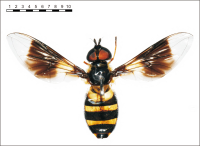
The genus Dideopsis (Diptera: Syrphidae) is a monotypic genus of the family Syrphidae. Dideopsis aegrota (Fabricius, 1805) is reported for the first time from South Korea. This species is mainly distributed in subtropical regions and has never been recorded in temperate regions. Digital image and diagnostic description of this species are provided.
Abstract
The genus Dideopsis (Diptera: Syrphidae) is a monotypic genus of the family Syrphidae. Dideopsis aegrota (Fabricius, 1805) is reported for the first time from South Korea. This species is mainly distributed in subtropical regions and has never been recorded in temperate regions. Digital image and diagnostic description of this species are provided.
초록
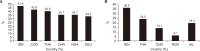
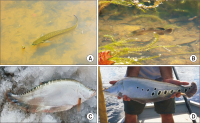
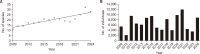
This study investigates the importation of ornamental Osteoglossiformes into Korea from 2009 to 2024 using National Fishery Products Quality Management Service quarantine records and international databases (CITES, GBIF). A total of 175,797 individuals representing 42 species from six families were imported, with Mormyridae being the most diverse. Imports increased steadily over time, averaging 19.9 species and 6,746.0 individuals annually. Six species, led by Osteoglossum bicirrhosum and Scleropages formosus, accounted for nearly 80% of total imports. Two species—S. formosus (CITES Appendix I) and Arapaima gigas (Appendix II)—were identified as internationally threatened but are continuously traded. Imports originated from 16 countries, with Indonesia, Thailand, China, and Nigeria being major suppliers. Ecological risks are highlighted for large carnivorous species such as A. gigas and Chitala ornata, which have established invasive populations elsewhere, causing declines in native fish. Their potential establishment in Korean rivers, particularly those influenced by warm-water discharge, underscores the need for long-term monitoring and biosecurity measures.
Abstract
This study investigates the importation of ornamental Osteoglossiformes into Korea from 2009 to 2024 using National Fishery Products Quality Management Service quarantine records and international databases (CITES, GBIF). A total of 175,797 individuals representing 42 species from six families were imported, with Mormyridae being the most diverse. Imports increased steadily over time, averaging 19.9 species and 6,746.0 individuals annually. Six species, led by Osteoglossum bicirrhosum and Scleropages formosus, accounted for nearly 80% of total imports. Two species—S. formosus (CITES Appendix I) and Arapaima gigas (Appendix II)—were identified as internationally threatened but are continuously traded. Imports originated from 16 countries, with Indonesia, Thailand, China, and Nigeria being major suppliers. Ecological risks are highlighted for large carnivorous species such as A. gigas and Chitala ornata, which have established invasive populations elsewhere, causing declines in native fish. Their potential establishment in Korean rivers, particularly those influenced by warm-water discharge, underscores the need for long-term monitoring and biosecurity measures.