Korean Journal of Psychology: General
- KOREAN
- P-ISSN1229-067X
- E-ISSN2734-1127
- KCI
 ISSN : 1229-067X
Browse Articles
- 2026 (Vol.45)
- 2025 (Vol.44)
- 2024 (Vol.43)
- 2023 (Vol.42)
- 2022 (Vol.41)
- 2021 (Vol.40)
- 2020 (Vol.39)
- 2019 (Vol.38)
- 2018 (Vol.37)
- 2017 (Vol.36)
- 2016 (Vol.35)
- 2015 (Vol.34)
- 2014 (Vol.33)
- 2013 (Vol.32)
- 2012 (Vol.31)
- 2011 (Vol.30)
- 2010 (Vol.29)
- 2009 (Vol.28)
- 2008 (Vol.27)
- 2007 (Vol.26)
- 2006 (Vol.25)
- 2005 (Vol.24)
- 2004 (Vol.23)
- 2003 (Vol.22)
- 2002 (Vol.21)
- 2001 (Vol.20)
- 2000 (Vol.19)
- 1999 (Vol.18)
- 1998 (Vol.17)
- 1997 (Vol.16)
- 1996 (Vol.15)
- 1995 (Vol.14)
- 1994 (Vol.13)
- 1993 (Vol.12)
- 1992 (Vol.11)
- 1991 (Vol.10)
- 1990 (Vol.9)
- 1989 (Vol.8)
- 1988 (Vol.7)
- 1987 (Vol.6)
- 1986 (Vol.5)
- 1985 (Vol.5)
- 1984 (Vol.4)
- 1983 (Vol.4)
- 1982 (Vol.3)
- 1981 (Vol.3)
- 1980 (Vol.3)
- 1979 (Vol.2)
- 1976 (Vol.2)
- 1974 (Vol.2)
- 1971 (Vol.1)
- 1970 (Vol.1)
- 1969 (Vol.1)
- 1968 (Vol.1)
Vol.45 No.4
Abstract
This study aimed to develop machine learning-based classification models for suicidal behaviors (suicidal ideation, planning, and attempt) among young adults in their 20s and to provide empirical evidence for establishing tailored prevention strategies by exploring major risk factors at each stage. To this end, data from 828 young adults in their 20s were analyzed, incorporating variables from diverse domains such as sociodemographic factors, health-related variables, substance abuse, sleep, trauma, self-harm, interpersonal relationships, and psychological variables. A total of ten machine learning algorithms-including Logistic Regression, LASSO, Ridge, Elastic Net, Random Forest, GRRF, XGB, SVM, Naive Bayes, and KNN-were utilized to construct the classification models, and their validity was verified through ten repetitions of 10-fold cross-validation. The performance evaluation of the predictive models revealed that LASSO showed the best performance for classifying suicidal ideation, while Elastic Net demonstrated superior performance for classifying suicidal planning and attempts. From the exploration of major variables, 20 core risk factors were identified across four categories: suicide contagion-related factors, non-suicidal self-injury related factors, psychological factors, and sociodemographic and medical history factors. This study is significant in that it established precise machine learning-based classification models by subdividing suicidal behavior stages and provided empirical evidence for young adults in their 20s. In particular, by confirming that the optimal algorithms and core risk factors may vary according to the stage of suicidal behavior, these findings are expected to contribute to the construction of stage-specific, tailored suicide prevention strategies and crisis intervention systems for the young adult population.
Abstract
This study developed and validated the Korean Psychotherapy Preference Scale (KPPS) to systematically assess client preferences in counseling and psychotherapy settings. In Study 1, an initial pool of 43 items was developed, and exploratory structural equation modeling (ESEM) was applied to data from 400 adults to examine the factor structure. A four-factor model was identified as the optimal solution. The four preference factors were labeled as (1) Time Orientation (2) Intervention Method, (3) Intervention Focus, and (4) Relational Stance/Style. In Study 2, the same four-factor ESEM structure was cross-validated in an independent sample of 600 adults, demonstrating acceptable model fit. One item with a low primary loading was removed, resulting in a final scale consisting of 15 items across four factors. The McDonald’s ω coefficients for the subscales ranged from .54 to .76. Regarding construct validity, the time orientation factor showed negative correlations with beliefs about counseling, whereas the intervention method factor showed positive correlations with counseling intention. In addition, neither factor showed a significant correlation with depressive symptoms, supporting discriminant validity. The implications of using the KPPS as a multidimensional measure of client preferences in early counseling assessment are discussed.
Abstract
The debate over the diagnostic coding of gaming disorder has largely been framed as a binary dispute over whether such coding should be adopted. However, explicit decision rules remain underdeveloped for determining the empirical conditions under which the current classification should be maintained, reclassified, or withdrawn. This conceptual paper reframes the issue through the principle of falsifiability and proposes a hierarchical decision tree for evaluating the diagnostic coding of gaming disorder. It reviews the history of psychiatric classification and the depathologization of homosexuality and gender incongruence, differences in classification strategies between Internet Gaming Disorder (IGD) in the DSM-5/DSM-5-TR and Gaming Disorder (GD) in the ICD-11, and the major arguments surrounding diagnostic coding. Six evaluative conditions are derived and hierarchically integrated: validity as an independent disorder, measurement validity, causal direction, course of the disorder, clinical utility, and social costs and benefits. A provisional review of these conditions suggests that the evidence supporting gaming disorder as an independent disorder category and the additional practical benefits of diagnostic coding are not yet sufficiently stable. This is not intended as a definitive conclusion for or against coding; rather, the framework clarifies what additional evidence is required and under what conditions existing judgments should be revised. The proposed framework may provide a basis for public deliberation in future reviews of the Korean Standard Classification of Diseases (KCD) and for setting related research agendas.
Abstract
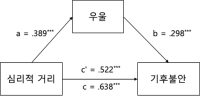
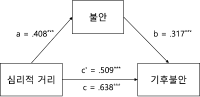
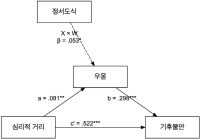
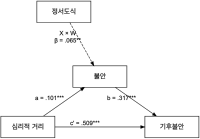
This study examined the psychological mechanisms underlying climate anxiety among Korean adolescents and adults by investigating the roles of psychological distance, depression, anxiety, and emotional schemas. A nationwide online survey was conducted with 700 participants, including 350 adolescents (ages 13-18) and 350 adults (ages 19-77). Participants completed measures of climate anxiety, psychological distance, depression, anxiety, and emotional schemas. Analyses showed that adults reported higher levels of climate anxiety than adolescents, and men reported higher levels than women. Correlational analyses indicated that climate anxiety was positively associated with psychological proximity to climate change, depression, anxiety, and maladaptive emotional schemas. Mediation analyses demonstrated both a direct effect of psychological distance on climate anxiety and indirect effects through depression and anxiety, indicating that perceiving climate change as psychologically closer was linked to greater negative affect, which in turn heightened climate anxiety. Moderated mediation analyses further revealed that emotional schemas amplified the indirect effect of psychological distance on climate anxiety through both depression and anxiety; specifically, individuals with more maladaptive emotional schemas showed a stronger pathway from psychological proximity to increased depression and anxiety, which subsequently elevated climate anxiety. These findings suggest that climate anxiety reflects a complex interplay among threat perception, negative emotional states, and emotional belief systems. Rather than focusing solely on reducing climate anxiety, interventions should promote adaptive regulation by addressing depression, anxiety, and maladaptive emotional schemas to prevent excessive climate anxiety from escalating into functional impairment.
Abstract
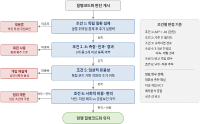
This article offers a narrative and integrative review of social-scientific discussions of precarity and considers their implications for psychology in Korea. Precarity overlaps with inequality, poverty, vulnerability, and job insecurity, but it should not be reduced to a lack of resources or an unequal distribution of opportunities. Rather, it captures a process through which the structural and material conditions that sustain life become weakened, uncertain, and individualized. Drawing on domestic and international literature, this review conceptualizes precarity in Korea as organized across the domains of labor, housing, education, and health and care. It then examines how these conditions may be translated into subjective and psychological experiences, including chronic uncertainty, a narrowed sense of the future, relative deprivation and perceived unfairness, diminished control, self-responsibilization, emotional distress, and weakened relational security. The review further organizes psychosocial responses to precarity into four modes: over-adaptation, resignation and social withdrawal, resistance and solidarity, and hostile attribution and defensive meaning-making. By connecting structural and material conditions with psychological experience and psychosocial responses, this article argues that Korean psychology can better address social suffering without reducing it to individual deficit or maladaptation. The proposed framework is not an empirically verified causal model, but a critical heuristic for future research, measurement, and psychosocial interventions.
Abstract
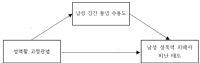
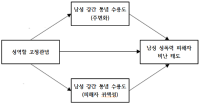
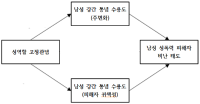
This study aimed to examine negative social attitudes toward male victims of sexual violence in South Korea and the psychological processes underlying these attitudes. In Study 1, participants were presented with sexual violence scenarios that varied in the gender combination of the perpetrator and victim, and differences in victim-blaming were examined after controlling for participants’ gender and age. The results showed that victim-blaming was significantly higher in the female-perpetrator-male-victim condition than in the prototypical male-perpetrator-female-victim condition. This finding suggests the potential presence of victim-blaming attitudes toward male victims of sexual violence. In Study 2, the mediating effects of male rape myth acceptance on the relationship between gender role stereotypes and victim-blaming attitudes toward male victims of sexual violence were examined. Confirmatory factor analysis indicated that male rape myth acceptance consisted of two subfactors: marginalization myths and victim culpability myths. Structural equation modeling revealed that victim culpability myths fully mediated the relationship between gender role stereotypes and victim-blaming attitudes toward male victims of sexual violence, whereas the mediating effect of marginalization myths was not statistically significant. Furthermore, no significant gender differences were found in the structural paths of the final model. These findings suggest that gender role stereotypes influence victim-blaming attitudes toward male victims of sexual violence indirectly through victim culpability myths rather than directly. Based on these findings, the study discusses its significance and implications, limitations, and suggestions for future research.
Abstract
Self-report questionnaires are widely used in social surveys and psychological assessment to measure individuals’ attitudes, personality traits, values, emotions, and behavioral tendencies. However, self-report data rely on the assumption that respondents answer items based on their substantive content. When respondents tend to answer in particular ways regardless of item content, the validity of measurement may be compromised. One representative phenomenon of this problem is response style. Response styles can be understood not as random error, but as systematic measurement error arising from various factors, including individual differences, item format, scale construction, survey context, and cultural norms. This study reviews previous research on major response styles observed in self-report measurement. Specifically, it examines key types of response styles, including extreme response style, midpoint response style, and acquiescent and disacquiescent response styles. It also discusses the causes of response styles, methods for their detection, statistical correction procedures, and preventive strategies at the stages of scale design and survey administration. In addition, the study reviews the influence of response styles in the context of cross-cultural research. Finally, this study presents practical guidelines that researchers and practitioners should consider in identifying and managing response styles.
Abstract
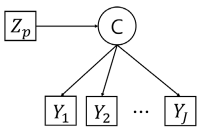
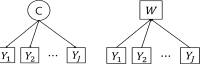
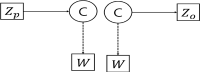
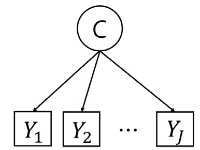
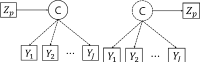
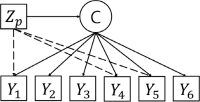
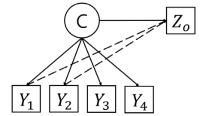
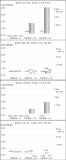
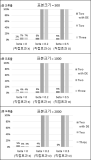
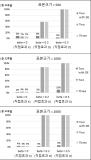
This study investigated estimation bias arising from the omission of direct effects between external variables and indicators in latent class analysis (LCA) and latent profile analysis (LPA). Two studies were conducted, each addressing a different type of external variable and mixture model. Specifically, Study 1 examined situations in which covariates directly affected indicators in LCA, whereas Study 2 examined situations in which indicators directly affected an outcome variable in LPA. In both studies, parameters were estimated using two-step and three-step approaches, and the results were compared across models with and without direct effects. In Study 1, the two-step approach yielded lower overall bias when covariate direct effects were included in the model than when they were omitted. Bias increased with the magnitude of the covariate direct effects and the number of omitted direct effects. Similarly, in Study 2, models that included direct effects of indicators on the outcome variable exhibited substantially lower mean relative bias and Type I error rates than models that omitted these effects. These findings suggest that explicitly modeling direct effects between external variables and indicators can improve the accuracy of parameter estimation.
Abstract
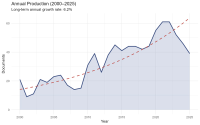
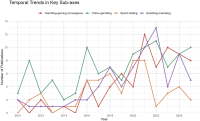
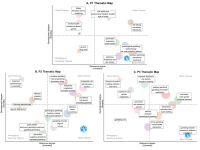
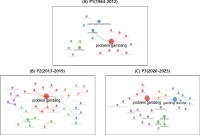
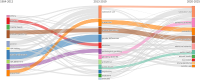
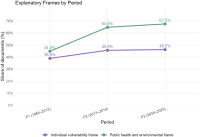
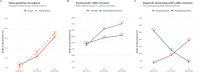
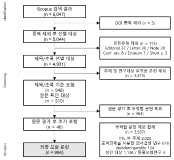
This study used bibliometric methods to examine changes in the themes and explanatory perspectives of adolescent gambling research. A total of 994 publications published between 1964 and 2026 were selected from Scopus through a PRISMA-based screening process. Period-based analyses included 949 publications after excluding 45 records from the incomplete year of 2026. The study period was divided into P1 (1964-2012), P2 (2013-2019), and P3 (2020-2025). Using bibliometrix and biblioshiny in R, this study analyzed publication trends, thematic maps, author-keyword co-occurrence networks, thematic evolution, and the prevalence of terms reflecting personal vulnerability and public health and environmental perspectives. The consistency of the main findings was examined using 554 publications from the Web of Science. Problem gambling and prevention remained central themes throughout the study period, while diagnostic themes shifted from pathological gambling toward gambling disorder and behavioral addiction. The convergence of gaming and gambling emerged as an independent central theme in P3, particularly around loot boxes. The proportion of publications containing terms reflecting the personal vulnerability perspective increased from 38.9% in P1 to 45.6% in P2 and 46.2% in P3, although the difference across periods was not significant. In contrast, the proportion containing terms reflecting the public health and environmental perspective increased significantly from 44.8% to 64.8% and 67.5%. These findings suggest that adolescent gambling research has expanded while maintaining attention to individual vulnerabilities, increasingly incorporating digital platforms, advertising and marketing, accessibility, payment environments, and regulatory conditions.