Korean Journal of Psychology: General
- KOREAN
- P-ISSN1229-067X
- E-ISSN2734-1127
- KCI
 ISSN : 1229-067X
Browse Articles
- 2026 (Vol.45)
- 2025 (Vol.44)
- 2024 (Vol.43)
- 2023 (Vol.42)
- 2022 (Vol.41)
- 2021 (Vol.40)
- 2020 (Vol.39)
- 2019 (Vol.38)
- 2018 (Vol.37)
- 2017 (Vol.36)
- 2016 (Vol.35)
- 2015 (Vol.34)
- 2014 (Vol.33)
- 2013 (Vol.32)
- 2012 (Vol.31)
- 2011 (Vol.30)
- 2010 (Vol.29)
- 2009 (Vol.28)
- 2008 (Vol.27)
- 2007 (Vol.26)
- 2006 (Vol.25)
- 2005 (Vol.24)
- 2004 (Vol.23)
- 2003 (Vol.22)
- 2002 (Vol.21)
- 2001 (Vol.20)
- 2000 (Vol.19)
- 1999 (Vol.18)
- 1998 (Vol.17)
- 1997 (Vol.16)
- 1996 (Vol.15)
- 1995 (Vol.14)
- 1994 (Vol.13)
- 1993 (Vol.12)
- 1992 (Vol.11)
- 1991 (Vol.10)
- 1990 (Vol.9)
- 1989 (Vol.8)
- 1988 (Vol.7)
- 1987 (Vol.6)
- 1986 (Vol.5)
- 1985 (Vol.5)
- 1984 (Vol.4)
- 1983 (Vol.4)
- 1982 (Vol.3)
- 1981 (Vol.3)
- 1980 (Vol.3)
- 1979 (Vol.2)
- 1976 (Vol.2)
- 1974 (Vol.2)
- 1971 (Vol.1)
- 1970 (Vol.1)
- 1969 (Vol.1)
- 1968 (Vol.1)
Vol.45 No.3
Abstract
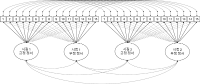
In longitudinal data analysis of multidimensional factor models, the simple structure assumed by independent clusters model of confirmatory factor analysis (ICM-CFA) often fails to adequately capture the complex factor structures present in real data. The constraint in ICM-CFA that each indicator variable loads on only one factor tends to yield poor model fit, particularly when combined with additional constraints such as longitudinal measurement invariance, and post hoc modifications to improve fit risk producing sample-specific results. This study introduces exploratory structural equation modeling (ESEM) and penalized structural equation modeling (PSEM) as approaches that systematically allow cross-loadings, and proposes their application to longitudinal data analysis of multidimensional factor structures. For illustrative purposes, the analysis used responses from 1,796 participants on items measuring positive and negative affect experience collected in 2008 and 2020 from the Health and Retirement Study (HRS) in the United States. The analyses demonstrated that ESEM and PSEM can provide superior model fit compared to ICM-CFA within a given model, and are particularly useful when imposing measurement invariance constraints. Furthermore, in the case of PSEM, by specifying a partial invariance model that imposes measurement invariance constraints only on primary loadings, it was shown that the core elements of the measurement structure can be held consistent while the invariance assumption for secondary relationships is relaxed. This study provides practical guidance for applying ESEM and PSEM in situations where relaxing the simple structure assumption is warranted in longitudinal multidimensional factor analysis. This approach reduces arbitrariness in the modification process of complex longitudinal factor models and enables systematic exploration of changes in multidimensional factor structures over time.
Abstract
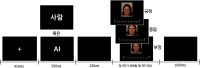
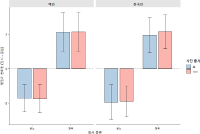
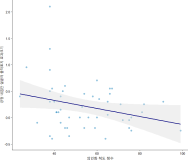
With the advancement of Generative AI, the proliferation of deepfake stimuli that are difficult to distinguish from reality has made understanding how people perceive computer-generated faces an important research topic. This study examined how emotional responses to identical faces differ depending on labels (human vs. AI), facial race (in-group vs. out-group), and individual attitudes toward AI. Fifty Korean university students participated in the experiment. Participants were presented with either a “human” or “AI” source label, followed by photos of Korean (in-group) or Caucasian (out-group) faces displaying positive (happy), negative (angry), or neutral expressions, which they then rated for emotional valence. General attitudes toward AI and AI anthropomorphism tendency were also measured. All stimuli were photographs of actual actors, with only the source labels manipulated. Results showed main effects of emotion type, with positive expressions rated more positively and negative expressions rated more negatively compared to neutral expressions. In-group faces were rated more positively than out-group faces, and human-labeled photos were rated more positively than AI-labeled photos. Interestingly, the interaction effect between the label and the emotion variables was observed only for in-group faces. Specifically, for in-group positive expressions, human-labeled photos were rated more positively than AI-labeled photos. This label effect was attenuated among participants with high AI anthropomorphism tendency. This study contributes to an integrated understanding of how perceptions of AI influence emotional processing by demonstrating that the effects of labels can vary depending on group identity and attitudes toward AI.
Abstract
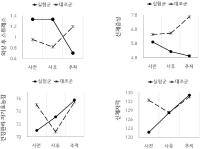
This study aimed to examine the effectiveness of Maeum, Pause, a short-term group psychological intervention integrating psychoeducation and mind-body activities for disaster response personnel. Employing a non-equivalent control group pretest-posttest design, the study compared an intervention group (n=29) with a comparison group (n=34) that received disaster mental health education during the same period. Quantitative data were collected at baseline, post-intervention, and a one-month follow-up, and analyzed using mixed-effects linear regression models. In addition, in-depth interviews were conducted with five participants and analyzed using thematic analysis to explore participants’ experiences and perceived changes following program participation. Results indicated that the intervention group exhibited significantly greater reductions in post-traumatic stress symptoms and somatic symptoms at follow-up compared to the comparison group. Self-efficacy for health practices and interoceptive awareness also significantly improved following the intervention, with increases in interoceptive awareness significantly predicting reductions in somatic symptoms at follow-up. Qualitative findings identified two core themes: expansion of internal self-awareness and enhancement of self-regulation capacity. Participants reported that heightened interoceptive awareness facilitated the application of self-regulation strategies in daily life, promoting both psychological and physical recovery. Integrated findings further showed that the mental health and psychological changes observed following program participation were generally consistent with participants’ reported experiences of expanded self-awareness and self-regulation. Our results suggest that even short-term group interventions can promote improvements in mental health among disaster response personnel, with these benefits maintained over time. This study provides empirical support for evidence-based programs for disaster response personnel.
Abstract
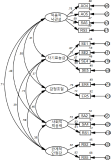
The present study aimed to validate the Korean version of the Five-by-Five Resilience Scale (5×5RS-K), developed by DeSimone et al. (2017), and to examine its factor structure within the cultural context of Korean adults. A total of 450 adults aged 19 to 64 years participated in an online survey, of whom 50 completed a two-week retest to assess temporal stability. An exploratory factor analysis was conducted initially to identify the latent structure of the scale. The results supported a five-factor solution consistent with the conceptual framework of the original measure, although some items loaded onto different factors than expected. The initial 25-item structure demonstrated inadequate model fit in confirmatory factor analysis. Following item removal based on standardized factor loadings (<.50) and squared multiple correlations (<.40), the final model showed satisfactory fit indices (χ²=167.336, TLI=.905, CFI=.928, RMSEA=.070). Convergent and criterion validity were supported by significant positive correlations with the Korean CD-RISC (r=.683, p<.01) and life satisfaction (SWLS), as well as significant negative correlations with depression (K-DEP; r=-.546, p < .01) and anxiety (K-ANX;r=-.567, p<.01). The Standard Error of Measurement (SEM) was calculated at 3.45, and the test-retest reliability also demonstrated an excellent level of stability (ICC = .958). These findings suggest that the 5×5RS-K is a reliable and valid instrument for assessing resilience among Korean adults, while the structural modifications identified underscore the importance of re-evaluating resilience constructs within differing cultural contexts. Implications, limitations, and directions for future research are discussed.
Abstract
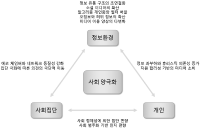
Social polarization has emerged as a global concern due to the hyper-connected media environment that has fundamentally changed how information is created and consumed. Social polarization undermines social cooperation and promotes prejudice and discrimination which calls for urgent attention. Despite the urgency of this issue, its developmental mechanisms remain poorly understood. This review aims to provide an integrative account of social polarization through a multi-level and multidisciplinary framework examining interactions between individual, social group, and information environmental factors. First, we discuss key characteristics of the modern media environment that facilitate polarization, including rapid information circulation, social media expansion, mis- and disinformation, personalized algorithms, and shifts in media consumption behavior. Second, we examine echo chambers and group polarization as group and environment level processes that foster homogeneous groups and reinforce polarized beliefs. Third, we review cognitive biases associated with social identity and categorical thinking as psychological mechanisms contributing to polarization, and propose that interactions among these biases may further intensify polarization. Fourth, we discuss how information overload may increase reliance on heuristics grounded in resource rationality, alter media consumption patterns, and exacerbate polarization. Individual factors that may increase susceptibility to polarization are also discussed. Finally, we discuss promising computational modeling approaches across social science domains and consider potential interventions and future directions for reducing social polarization.
Abstract
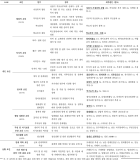
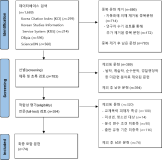
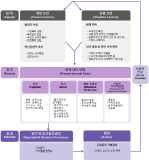
This study systematically examined psychological risk factors associated with dating violence perpetration in South Korea and conceptualized the pathways through which these variables contribute to abusive behavior. A systematic review was conducted in accordance with the PRISMA guidelines, including studies published in Korean academic journals between 2015 and 2025. Seventy-four studies were selected, and 83 unique variables were extracted and analyzed. Based on the General Aggression Model, variables were classified into person factors, developmental experiences, and relational contexts. Findings indicated that cognitive norms and emotional vulnerabilities shaped by childhood exposure to violence formed the central pathways to perpetration. Violence acceptance and gender-role stereotypes functioned as cognitive mechanisms that justified abuse, whereas vulnerable narcissism, rejection sensitivity, shame, and anger intensified relational frustration. Situational factors, including conflict themes and relationship dissatisfaction, also contributed. This study integrates fragmented findings, identifies gaps in Korean research, and suggests future directions emphasizing coercive control and relational characteristics.
Abstract
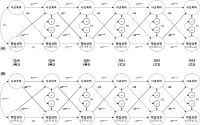
The relationship between private supplementary education (including hagwon and private tutoring) and academic achievement has been widely discussed, yet the direction of influence between the two remains unclear. Using six-year longitudinal data tracking the same individuals from middle school to high school (N = 2,568), the present study examined within-person associations between parental spending on private supplementary education and perceived academic achievement. Spending on private supplementary education was reported by parents, whereas perceived academic achievement was assessed using both parent- and child-reports. At the between-person level, children from families with higher spending showed higher overall academic achievement. At the within-person level, however, increases in spending did not predict subsequent improvements in achievement, whereas increases in achievement were followed by increases in spending. This pattern was consistently observed across both the parent-reported and child-reported achievement models. That is, when children’s achievement exceeded their usual level, parents increased subsequent private education spending. These findings remained robust after controlling for family socioeconomic status and were more pronounced among males. Overall, parental spending on private supplementary education appears not to precede academic improvement, but rather to function as a selective, reactive investment in response to changes in their children’s performance.
Abstract
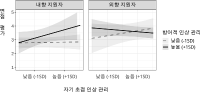
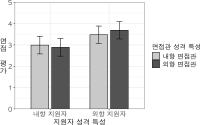
Employment interviews are one of the most widely used selection procedures; however, concerns regarding their fairness and validity have been consistently raised, given that applicants' personality traits and interviewer characteristics may systematically influence evaluative judgments. The present study examined the effects of applicants' extraversion-introversion, interviewers' extraversion-introversion, and impression management behavior on interview evaluations. Across a series of four stages, mock interviews were conducted with extraverted and introverted applicants, recorded, and subsequently evaluated by extraverted and introverted interviewers. The main findings were as follows. First, extraverted applicants received higher interview evaluations than introverted applicants overall. Second, the effect of applicants' extraversion-introversion on interview evaluations differed depending on interviewers' extraversion- introversion. Both extraverted and introverted interviewers rated extraverted applicants more favorably than introverted applicants; however, this difference was larger among extraverted interviewers. Third, with respect to impression management, introverted applicants received higher interview evaluations when they actively utilized both self-focused and defensive strategies, whereas this interaction effect was not observed among extraverted applicants. The present study contributes to the literature by empirically examining the complex interplay between applicant and interviewer factors in interview evaluation, and is expected to serve as a foundational resource for developing interview preparation strategies for introverted applicants and for enhancing the fairness of interview evaluations. Limitations and directions for future research are discussed.